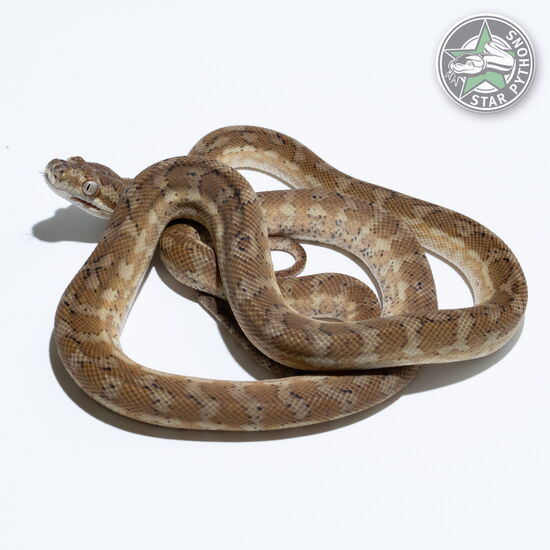
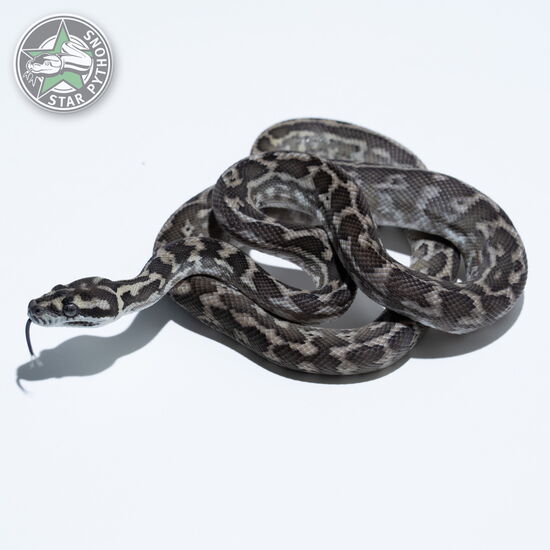
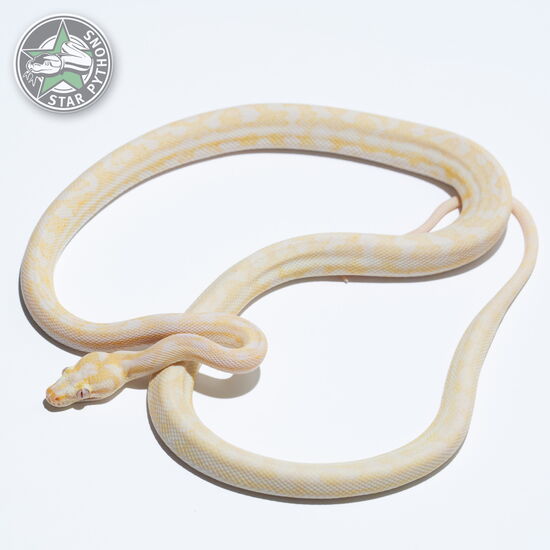
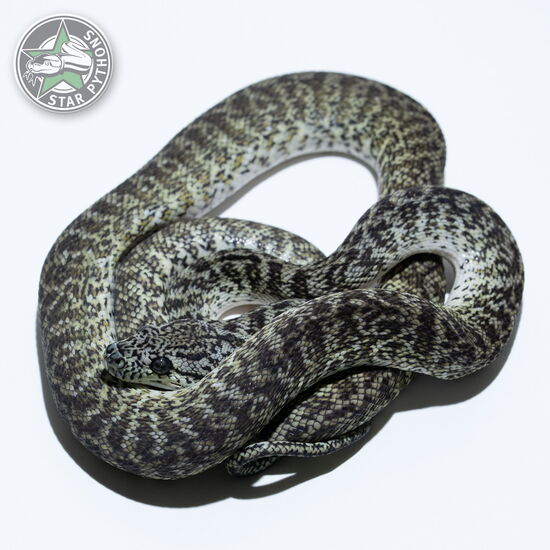
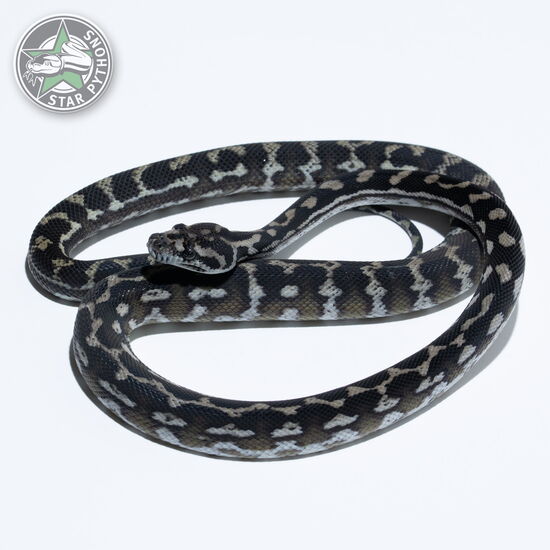
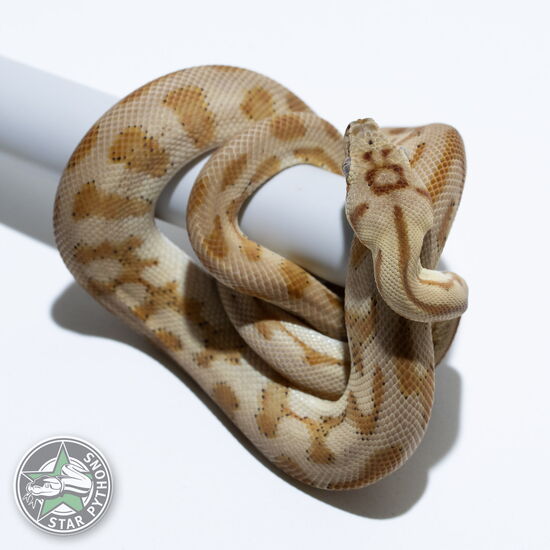
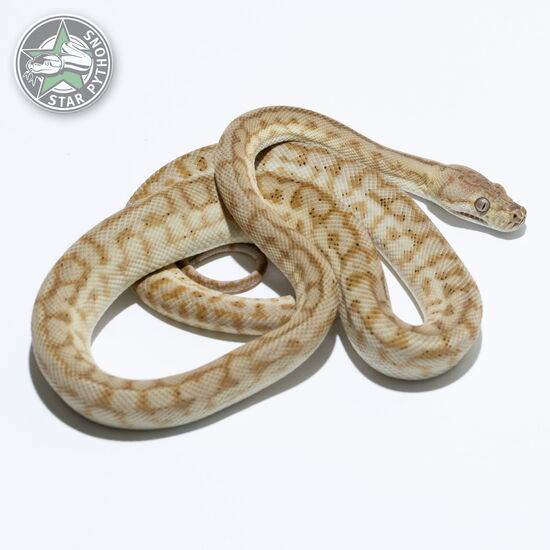
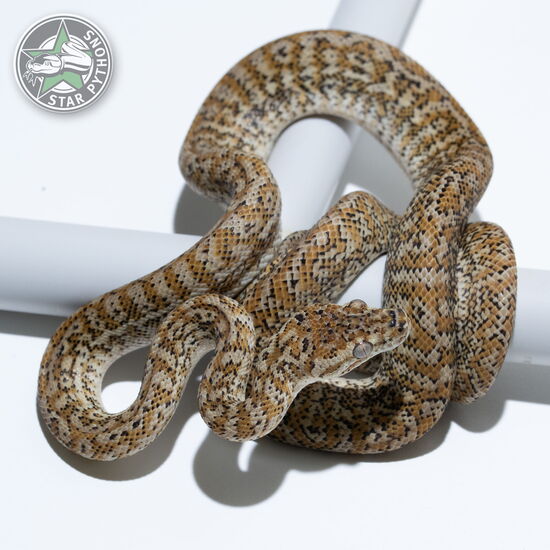
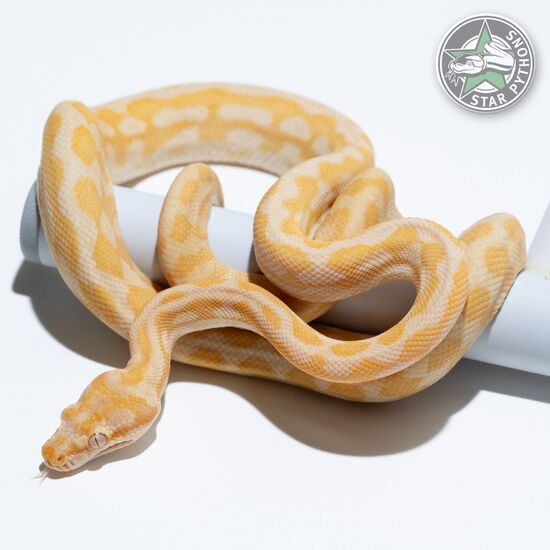
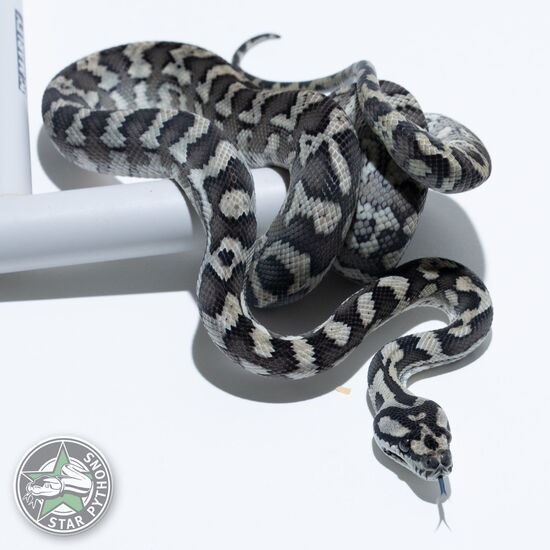
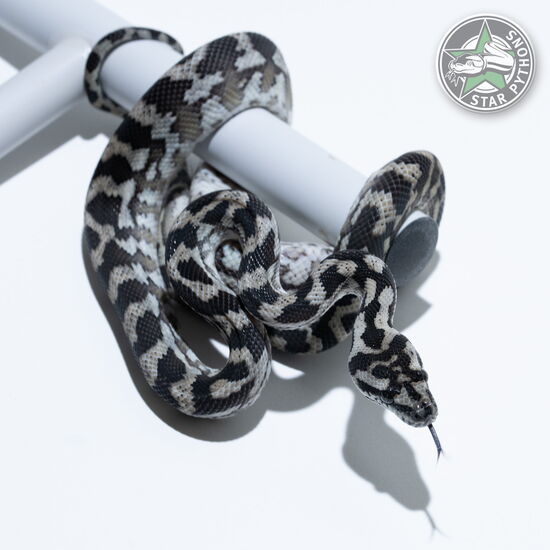
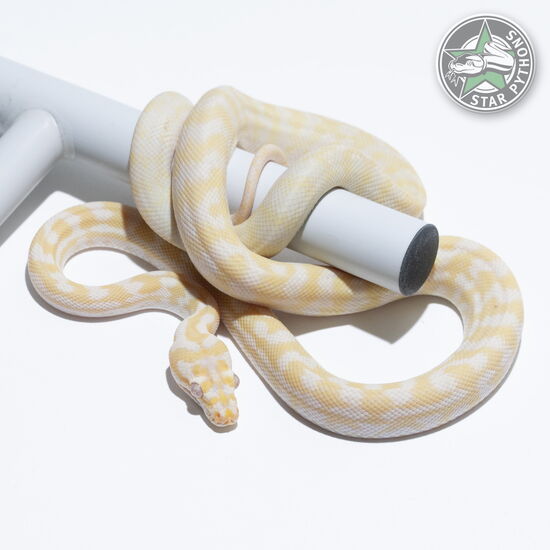
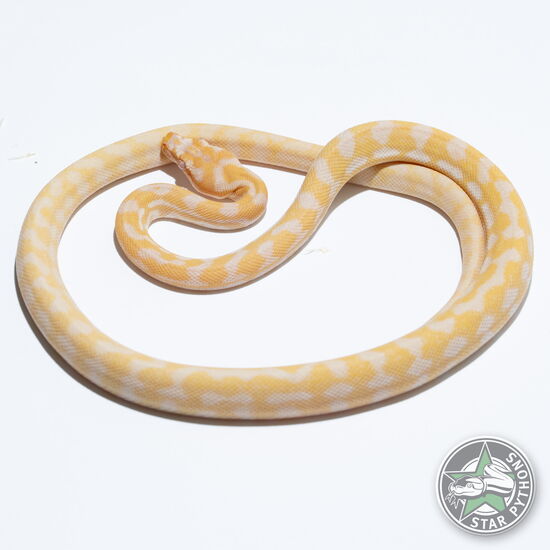
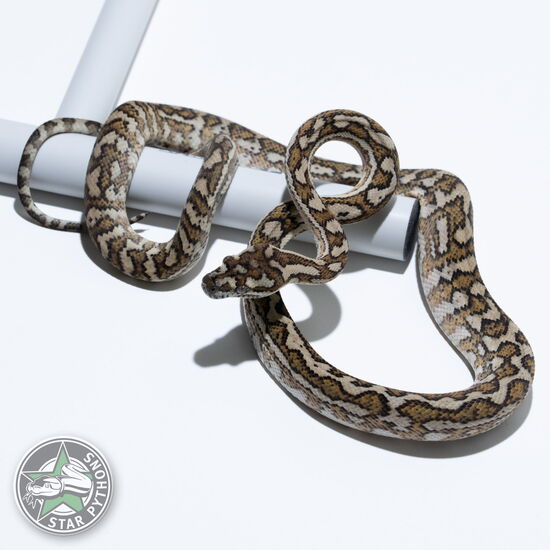
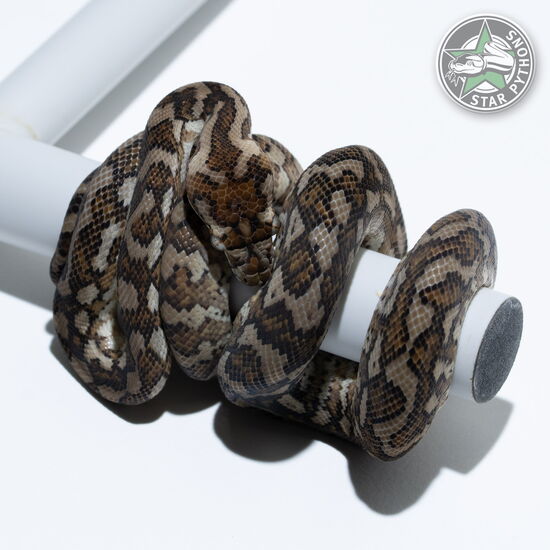
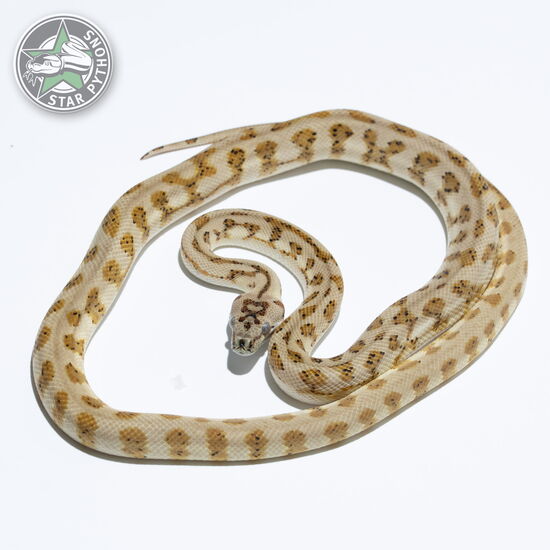
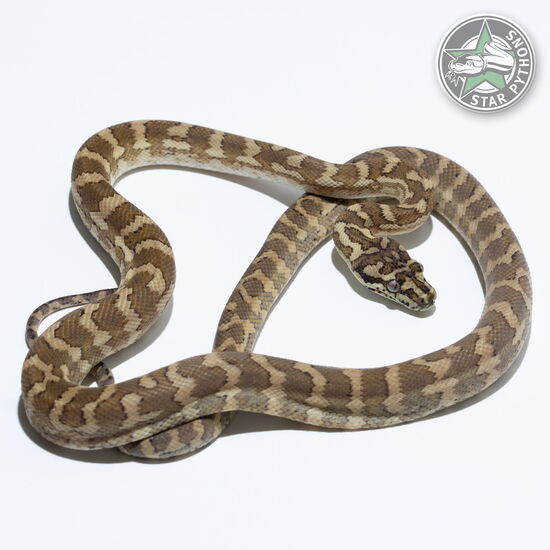
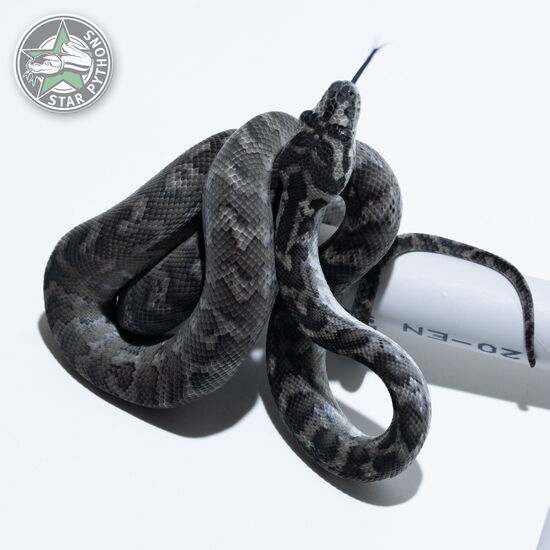
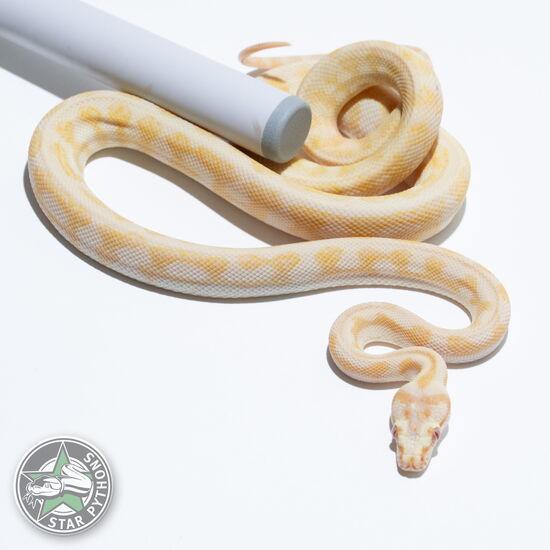
Carpet Pythons by StarPythons

Feeding Carpet Pythons: Diet, Prey Size and Schedule

Carpet pythons (Morelia spilota) are among the most enthusiastic feeders in the python family. Their strong feeding response makes routine husbandry straightforward — provided the keeper understands the basics of prey selection, feeding intervals and proper preparation. This guide reflects our daily practice at StarPythons, where we maintain roughly 260 adult carpet pythons and produce 800 to 1,000 hatchlings each year. Every recommendation below has been tested across thousands of individual feedings, refined over nearly two decades of professional breeding, and supported by a feeding study conducted at our facility in collaboration with the University of Hamburg (Schwenk & Starcky, 2020).

Whether you have just acquired your first carpet python or you are scaling up a breeding collection, the principles are the same: choose the right prey type early, feed at consistent intervals, and resist the temptation to overcomplicate things. At the bottom of this page, you will find a wide selection of available carpet pythons that are well-started on frozen rodents.


Frozen Rodents: Why We Feed Exclusively Frozen–Thawed

At StarPythons, every animal — from the youngest hatchling to the largest breeding female — is fed frozen–thawed rodents. There are three practical reasons for this.

Safety comes first. Live rodents can injure a snake, particularly one that is not immediately hungry. A defensive rat is capable of inflicting serious bite wounds, and the risk increases with prey size. Frozen–thawed feeding eliminates this danger entirely.

Hygiene is the second consideration. Frozen rodents that have been properly stored carry a far lower parasite and pathogen load than live prey. In a facility housing over a thousand animals, biosecurity is not optional — it is fundamental.

Convenience matters at scale. We can count, sort and store frozen rodents by weight class, defrost them on a predictable schedule and feed an entire room of carpet pythons in a single session. When you purchase a hatchling from StarPythons, it will already accept frozen–thawed prey reliably, so you can continue the same routine at home without any transition period.


Feeding Hatchling Carpet Pythons

First Meals After Hatching

Neonate carpet pythons receive their first meal after completing their initial shed, which typically occurs 7 to 14 days post-hatching. We start every hatchling on fuzzy mice — small enough to be swallowed without difficulty, yet substantial enough to trigger a feeding response.

Preparation and Technique

We remove the required number of frozen fuzzy mice from the freezer the evening before a feeding day and place them in covered plastic containers inside one of our temperature-controlled breeding rooms. By morning, the prey items are fully defrosted and close to room temperature.

Using feeding tweezers or a hemostat, we grasp each prey item gently and present it in front of the hatchling with slow, deliberate movement. Most carpet pythons strike immediately. For the occasional hesitant animal, lightly touching the prey to the snake's neck — just behind the head — usually provokes a feeding response within seconds. If you are using a hemostat or metal tweezers, take care that an enthusiastic hatchling does not strike the instrument itself; soft-tipped feeding tongs are a worthwhile investment.

Our Feeding Schedule: From Hatchling to Adult

A feeding trial conducted at our facility by Cindy Schwenk of the University of Hamburg (Schwenk & Starcky, 2020) confirmed what our experience had long suggested: juvenile carpet pythons fed weekly show significantly greater weight gain than those fed every two weeks. The correlation between prey weight (as a percentage of body weight) and growth was remarkably strong (R² = 0.94 for weekly feeding). We therefore recommend weekly feeding for growing carpet pythons — this is the protocol we use for all animals we retain for our own breeding program.

The same study included bomb calorimetry measurements of different prey types and sizes (Schwenk & Starcky, 2020). Prey items were dried, ground and their energy content measured in a bomb calorimeter. The results revealed that a 10 g (0.35 oz) mouse contains more energy per gram than a 10 g (0.35 oz) rat. The explanation is straightforward: a 10 g (0.35 oz) mouse is already a fairly complete vertebrate — it has developed fur, a mineralized skeleton and functional organs. A 10 g (0.35 oz) rat, by contrast, is a neonate only a few days old — essentially a hairless sac of water and protein with minimal fat reserves and soft, poorly mineralized bones.

This finding changed our practice. Rather than switching hatchlings to rats as early as possible — the conventional advice — we now keep growing carpet pythons on mice until they are large enough to take a rat of approximately 35–45 g (1.2–1.6 oz). At that weight, the rat is a sufficiently developed animal with a nutritional profile comparable to that of an adult mouse. The transition is seamless, and we see fewer refusals than we did under our old protocol.

Here is the feeding schedule we recommend, based on our current practice at StarPythons. Each prey size is fed approximately the number of times indicated before moving up to the next size. These are averages — every animal is an individual, and growth rates as well as the tendency to accumulate excess body fat vary. Adjust based on your snake's body condition rather than following the schedule rigidly.

Prey Item Approx. Weight Feeds at This Size Interval
Fuzzy mouse 6–9 g (0.2–0.3 oz) Variable Weekly
Hopper mouse 10–15 g (0.35–0.5 oz) ~7 Weekly
Adult mouse 21–25 g (0.7–0.9 oz) ~8 Weekly
Small rat 35–45 g (1.2–1.6 oz) ~7 Weekly
Medium rat 60–70 g (2.1–2.5 oz) ~7 Weekly
Rat ~100 g (3.5 oz) ~10 Weekly
Rat ~150 g (5.3 oz) ~12 Weekly → every 14 days
Rat ~200 g+ (7 oz+) Ongoing Every 14 days
Large rat 300–400 g+ (10.6–14 oz+) Ongoing (large adults) Every 21–28 days

Animals transition from weekly to every-14-days feeding once they reach the 150 g (5.3 oz) rat stage. At StarPythons, we sell well-started hatchlings that are feeding reliably on frozen–thawed prey. The animals we sell are fed every two weeks; the protocol above reflects the more intensive weekly schedule we use for animals destined for our own breeding program. Either approach produces healthy animals — the weekly schedule simply accelerates growth towards breeding size.

A Note on Growth Rate and Health

It is worth emphasizing that slower growth is both healthier and more natural than so-called "power feeding." In the wild, carpet pythons do not eat on a predictable schedule, and their growth is correspondingly gradual. Our weekly protocol already represents the upper end of what we consider responsible — we would not recommend feeding more frequently than this.

Monitor your snake's body condition throughout its development. A healthy carpet python has a smooth, gradual taper from the body into the prehensile tail. If that transition becomes abrupt — if the body appears noticeably thicker than the base of the tail — the animal is carrying excess fat. In that case, reduce the prey size, extend the feeding interval, or both, until body condition improves. Obesity in pythons is a serious welfare concern that can lead to fatty liver disease and reduced reproductive success. It is far easier to prevent than to correct.

Why We Start With Mice — and When to Switch to Rats

The conventional wisdom in carpet python keeping has long been to switch from mice to rats as early as possible. We used to follow that advice ourselves. Our research changed that view.

Because small mice deliver more energy per gram than small rats of the same weight, keeping a growing carpet python on mice during its first months makes nutritional sense. The snake receives a denser energy package with each meal. This aligns with observations by Mutton and Julander (2022), who note that hopper mice provide more complete nutrition than similarly sized pinky rats due to their more developed skeletal structure and lower fat content. Once the animal is large enough to accept a rat in the 35–45 g (1.2–1.6 oz) range — a rat that is itself a more fully developed vertebrate — the transition to rats becomes both nutritionally sound and practical.

From that point on, rats are the superior choice for the rest of the animal's life. They are available in a far wider range of sizes, they scale efficiently with the snake's growth, and they are considerably more economical. The University of Hamburg study calculated that feeding the equivalent weight in mice rather than rats costs roughly 260 % more (Schwenk & Starcky, 2020) — an expense that compounds rapidly in any collection.

At StarPythons, fewer than 1 % of our adults refuse rats. We attribute this to the timing of the switch: by the time the snake moves to rats, it is taking a prey item large enough that the difference in taste or texture is negligible.

Prey Size as a Rule of Thumb

The prey item should produce a visible but modest bulge after swallowing. If it looks slightly too large for the snake, it is probably correct. Carpet pythons naturally prefer substantial meals over frequent small ones. Offering prey that is too small often causes a snake to refuse — it simply does not register as worth the effort.


Feeding Adult Carpet Pythons

Routine and Prey Categories

Once a carpet python has progressed to 200 g+ (7 oz+) rats — as shown in the schedule above — it is functionally adult for feeding purposes. At StarPythons, we organize our adults into broad prey-weight groups and reassess each animal during quarterly checks. Animals on 200 g (7 oz) rats feed every 14 days. Those eating 300–400 g (10.6–14 oz) rats move to a three-week cycle. The largest individuals — typically breeding females of subspecies like M. s. mcdowelli or M. bredli — receive a 500–600 g (1.1–1.3 lb) rat every four weeks.

If you keep only one or two carpet pythons, you have the flexibility to fine-tune prey weight to each individual. In a professional facility with over 200 breeders, standardized weight classes are essential — they allow any member of the team to feed correctly without guesswork.

Defrosting Large Rats

We remove the required rats from the freezer approximately 24 hours before feeding and place them in covered containers in a warm room. The key is to ensure the prey is fully defrosted to the core without allowing it to begin decomposing. A rat that still has a frozen center can cause regurgitation; a rat that has been sitting at room temperature for too long is a hygiene risk.

Some keepers accelerate thawing by placing rodents in warm water. This works well if you use newspaper or paper towel as substrate, since the wet surface of the prey does not pick up loose particles. We use softwood pellet substrate across our facility, so we prefer the slower air-thaw method to keep prey items dry and prevent substrate from sticking to the rodent — and ultimately to the snake's mouth.

Feeding Technique for Adults

Present the defrosted rat using a hemostat, gripping the prey by the back. Move it gently in front of the carpet python. Thanks to their exceptional feeding response, the vast majority of animals strike and constrict within seconds. There is no need for elaborate scenting, braining or other tricks that are sometimes recommended for more reluctant python species.

Seasonal Feeding

In the wild, carpet pythons are capital breeders — they feed heavily during periods of prey abundance and fast during cooler months and the reproductive season. At StarPythons, we replicate this natural rhythm. From approximately mid-November through April or May, our breeding adults are not fed at all. This extended fasting period coincides with winter cooling, mating, and — for females — follicle development and egg incubation. It is entirely normal and, in our experience, beneficial for reproductive health and longevity. Note that this seasonal pause applies to mature breeding animals only — growing juveniles should continue to be fed year-round according to the schedule above.

Many keepers find it difficult to withhold food for months at a time, but an understanding of carpet python physiology makes the case clearly. A well-conditioned adult carpet python that has fed properly throughout the warmer months enters the breeding season with ample energy reserves. Attempting to feed during cooling or gravidity is counterproductive — the snake's metabolism is suppressed, and undigested food can cause serious complications.

After the breeding season ends, adults resume feeding eagerly. Females that have incubated a clutch will feed heavily for several months to rebuild their reserves. This post-breeding hunger also creates an excellent window for converting stubborn feeders to a new prey type (see below).


Feeding Problems and Refusal

Common Causes of Food Refusal

No matter how well-established your routine is, some carpet pythons will occasionally refuse a meal. The most frequent triggers include:

Husbandry issues — temperature is the first thing to check. A basking spot that has dropped even a few degrees below optimal can suppress appetite entirely. Verify your temperature gradient and humidity levels before assuming the problem lies with the snake.

Stress — recent transport, a cage move, or handling too close to a feeding attempt can all cause temporary refusal. Newly acquired animals may need two to four weeks to settle in before feeding reliably.

Seasonal fasting — pythons are well known for voluntary fasting periods, and carpet pythons are no exception. We have had otherwise healthy females refuse food for over 12 months without any identifiable cause. This can be alarming, but it is a natural behavior.

Breeding season — males in particular may go off feed during the winter cooling period and mating season. Females may refuse food in the late stages of follicle development or during gravidity.

Our Approach to Non-Feeders

If a carpet python refuses four consecutive offerings without any sign of illness or environmental problem, we stop offering prey entirely and leave the animal undisturbed for at least four weeks. The logic is straightforward: a snake that "knows" food arrives on a predictable schedule has little urgency to eat. Removing that predictability often reignites the feeding response.

After four weeks, we offer a single prey item. If the snake feeds, it goes back into the normal rotation. If it refuses, we wait another four weeks and try again. This patient approach is far more effective than the common mistake of offering food more frequently to a fasting snake — which only adds stress and reinforces the refusal.

Converting Problem Feeders to Rats

If you have a carpet python that accepts mice — or another prey type — but refuses rats, you have two options. The first is to accept the situation and continue feeding mice, understanding that you may eventually need to offer several mice per session as the snake grows. The second, which we strongly recommend, is to hold firm. Offer a rat instead of the preferred prey. If the snake refuses, wait two full weeks and offer a rat again. Do not offer the old prey type in between. Every healthy carpet python will eventually accept a rat when sufficiently hungry.

One of the best opportunities to convert a stubborn feeder is immediately after the breeding season. An animal that has fasted for four to six months is genuinely hungry and far less particular about what it eats. We had one Jungle Zebra female that would eat nothing but hamsters — she refused mice and rats entirely. After her first breeding season, with nearly six months of fasting behind her, she accepted a rat without hesitation and has been feeding on rats ever since.


Research: Feeding Experiments at StarPythons

In January 2020, Schwenk and Starcky conducted a series of controlled feeding experiments at our facility as part of Schwenk's vertebrate nutritional ecology coursework at the University of Hamburg. The study (Schwenk & Starcky, 2020) addressed three questions: how feeding interval affects juvenile growth, whether mice or rats produce better weight gain at comparable prey sizes, and how the energy content of different prey types and sizes compares.

Experiment 1 — Feeding Interval

Twenty-six juvenile Morelia spilota (approximately two months old) were divided into two groups: 19 animals fed weekly and 7 fed every two weeks, both receiving fuzzy mice of comparable size. Over the five-week trial period, weekly feeding produced significantly greater weight gain. The correlation between prey weight (expressed as a percentage of body weight) and growth was strong, with an R² of 0.94 for the weekly group and 0.76 for the every-two-weeks group.

Experiment 2 — Prey Type (Mouse vs. Rat)

Ten carpet pythons (approximately one year old) were split into equal groups: five fed rats and five fed hopper mice of similar weight (approximately 10 g (0.35 oz) each) over four weeks. The results showed no statistically significant difference in growth between the two groups, though a slight trend favored mice.

Experiment 3 — Bomb Calorimetry

To investigate the trend observed in Experiment 2, prey items of various types and sizes were dried, ground and analyzed in a bomb calorimeter. The measurements confirmed that a 10 g (0.35 oz) mouse contains more energy per gram than a 10 g (0.35 oz) rat — a difference explained by the mouse's more advanced developmental stage at that weight (see above for the full biological reasoning).

What This Means for Keepers

The study's three findings combine into a coherent feeding strategy. First, weekly feeding during the juvenile phase accelerates growth significantly. Second, mice and rats produce comparable growth at the same prey weight — but mice deliver slightly more energy per gram at small sizes. Third, once a rat is large enough to be a fully developed animal (roughly 35 g (1.2 oz) and above), this energy-density advantage disappears.

These results led us to revise our own protocol. We no longer rush the transition from mice to rats. Instead, we keep growing carpet pythons on mice until they are large enough to accept a rat of approximately 35–45 g (1.2–1.6 oz) — a prey item that is nutritionally comparable to an adult mouse. This approach maximizes energy delivery during the critical juvenile growth phase, avoids the problem of feeding nutritionally "empty" neonatal rats, and still transitions every animal to rats well before adulthood. The economic advantage of rats then takes effect for the remainder of the snake's life, with feeding costs roughly 260 % lower than the equivalent weight in mice.

While the sample sizes were modest and the authors recommended further research, the results align closely with what we have observed empirically across nearly two decades and tens of thousands of feedings.


Hydration and Water Provision

Proper hydration is as important as feeding, yet often receives less attention. We use three different watering systems at StarPythons, matched to the housing stage of each animal.

Neonates in Rearing Tubs

Hatchlings kept in small plastic tubs (approximately 20 × 20 × 20 cm (8 × 8 × 8 inches)) do not receive a standing water bowl — they would simply push substrate into it within hours. Instead, we use a hand-pump garden sprayer to mist two of the four interior walls with fresh water at least once daily. During warmer months, we spray both morning and late afternoon. The droplets provide drinking water and help maintain adequate humidity for healthy shedding.

Juveniles in Medium Enclosures

Animals housed in medium enclosures (approximately 40 × 40 × 40 cm (16 × 16 × 16 inches)) receive a disposable plastic water dish with fresh water daily. If the water becomes soiled — which happens more frequently at this active growth stage — the dish is replaced immediately.

Adults in Permanent Enclosures

If you keep one or a small number of carpet pythons, a solid, heavy ceramic water bowl is the best choice. Ceramic is preferable to plastic because its weight prevents tipping, and it is easy to disinfect thoroughly. Clean and refill the bowl daily without exception.

At StarPythons, we use disposable plastic water dishes for our adult animals as well, replacing and discarding them weekly. In a facility with over 200 adult carpet pythons, this approach is more hygienic than attempting to scrub and reuse hundreds of bowls — it eliminates the risk of biofilm accumulation and cross-contamination between enclosures.


FAQ - Feeding Carpet Pythons

How often should I feed my carpet python?

We recommend weekly feeding for growing carpet pythons up to the 150 g (5.3 oz) rat stage. Once they reach that size, every 14 days is sufficient. Large adults on 300 g+ (10.6 oz+) rats can move to a 21–28 day cycle. Adjust based on body condition — not every animal grows at the same rate, and some individuals are more prone to accumulating excess body fat than others.

What size prey should I offer?

The prey item should be roughly the same diameter as — or slightly larger than — the widest part of the snake's body. If it produces a modest, visible bulge after swallowing, the size is correct. Offering prey that is too small often leads to refusal.

My carpet python has stopped eating. Should I worry?

Not immediately. Check your temperatures, humidity and whether the snake is approaching a shed cycle. If all husbandry parameters are correct, the snake shows no signs of illness, and it is maintaining reasonable body condition, a fasting period of several weeks to a few months is normal for this species. See our section on feeding problems above.

Can I feed my carpet python chicks or quail?

While carpet pythons will readily accept poultry, rodents provide a more balanced nutritional profile for long-term captive maintenance. We recommend rats as the primary diet, with occasional variety being a matter of keeper preference rather than nutritional necessity.

Should I feed in a separate enclosure?

We feed all our carpet pythons inside their home enclosure. The common advice to use a separate feeding tub is based on the theory that it prevents cage aggression — but in our experience with hundreds of animals, feeding in the enclosure does not make carpet pythons more defensive during handling. A snake hook used consistently when opening the enclosure is a far more practical solution.

Do carpet pythons need vitamin or mineral supplements?

Whole prey items — particularly rats — provide a complete nutritional profile. We do not supplement our animals' diet. If you are feeding a varied diet of appropriately sized whole prey at correct intervals, supplementation is unnecessary.
References

Mutton, N., & Julander, J. (2022). The more complete carpet python: A comprehensive guide to the natural history, care, and breeding of the "Morelia spilota" complex. ECO Publishing. ISBN 978-1938850424.

Schwenk, C., & Starcky, P. (2020). Growth performance of carpet pythons (Morelia spilota) under different dietary regimes. Unpublished coursework, University of Hamburg, Department of Biology.

Available Carpet Pythons — Well-Started on Frozen Rodents

Sex
Category
Morph
This beautiful female Hypo Caramel (pure Coastal) carpet python with id 24-466 is for sale.
Animal ID: 24-466

Hypo Caramel (pure Coastal)

700 € US$ 900 ₩ 1,599,000

Details

This beautiful male Axanthic het Granite carpet python with id 24-015 is for sale.
Animal ID: 24-015

Axanthic het Granite

500 € US$ 650 ₩ 999,000

Details

This beautiful male Hypo Zebra Jaguar carpet python with id 23-916 is for sale.
Animal ID: 23-916

Hypo Zebra Jaguar

900 € US$ 1,300 ₩ 1,499,000

Details

This beautiful female Snow carpet python with id 23-777 is for sale.
Animal ID: 23-777

Snow

900 € US$ 1,100 ₩ 1,599,000

Details

This beautiful male Axanthic Jaguar carpet python with id 23-527 is for sale.
Animal ID: 23-527

Axanthic Jaguar

550 € US$ 700 ₩ 849,000

Details

This beautiful female Hypo (pure Coastal) carpet python with id 23-343 is for sale.
Animal ID: 23-343

Hypo (pure Coastal)

700 € US$ 900 ₩ 1,299,000

Details

This beautiful male Hypo Jaguar (pure Coastal) carpet python with id 23-336 is for sale.
Animal ID: 23-336

Hypo Jaguar (pure Coastal)

700 € US$ 900 ₩ 1,299,000

Details

This beautiful female Hypo Caramel (pure Coastal) carpet python with id 23-333 is for sale.
Animal ID: 23-333

Hypo Caramel (pure Coastal)

700 € US$ 900 ₩ 1,599,000

Details

This beautiful male het Granite carpet python with id 23-324 is for sale.
Animal ID: 23-324

het Granite

130 € US$ 250 ₩ 299,000

Details

This beautiful female Albino het Axanthic carpet python with id 23-314 is for sale.
Animal ID: 23-314

Albino het Axanthic

750 € US$ 750 ₩ 999,000

Details

This beautiful female Granite het Axanthic carpet python with id 23-170 is for sale.
Animal ID: 23-170

Granite het Axanthic

600 € US$ 750 ₩ 999,000

Details

This beautiful male Axanthic dblhet Albino Granite carpet python with id 23-078 is for sale.
Animal ID: 23-078

Axanthic dblhet Albino Granite

950 € US$ 1,100 ₩ 1,299,000

Details

This beautiful female Hypo Jaguar carpet python with id 24-791 is for sale.
Animal ID: 24-791

Hypo Jaguar

600 € US$ 900 ₩ 1,199,000

Details

This beautiful female Hypo (pos Super) Zebra Jaguar carpet python with id 24-786 is for sale.
Animal ID: 24-786

Hypo (pos Super) Zebra Jaguar

1.000 € US$ 1,400 ₩ 1,699,000

Details

This beautiful male Hypo Zebra carpet python with id 24-738 is for sale.
Animal ID: 24-738

Hypo Zebra

600 € US$ 900 ₩ 1,299,000

Details

This beautiful male Sunglow het Axanthic carpet python with id 24-716 is for sale.
Animal ID: 24-716

Sunglow het Axanthic

1.800 € US$ 1,900 ₩ 2,799,000

Details

This beautiful female Axanthic het Granite carpet python with id 24-527 is for sale.
Animal ID: 24-527

Axanthic het Granite

600 € US$ 750 ₩ 999,000

Details

This beautiful male Axanthic het Granite carpet python with id 24-525 is for sale.
Animal ID: 24-525

Axanthic het Granite

500 € US$ 650 ₩ 999,000

Details

This beautiful male Snow carpet python with id 24-490 is for sale.
Animal ID: 24-490

Snow

900 € US$ 1,100 ₩ 1,599,000

Details

This beautiful male Albino het Axanthic carpet python with id 24-486 is for sale.
Animal ID: 24-486

Albino het Axanthic

750 € US$ 750 ₩ 999,000

Details

This beautiful female Hypo Caramel het Axanthic carpet python with id 24-471 is for sale.
Animal ID: 24-471

Hypo Caramel het Axanthic

800 € US$ 900 ₩ 1,299,000

Details

This beautiful male Caramel het Axanthic carpet python with id 24-469 is for sale.
Animal ID: 24-469

Caramel het Axanthic

200 € US$ 300 ₩ 1,299,000

Details

This beautiful male Hypo Jaguar dblhet Axanthic Granite carpet python with id 24-452 is for sale.
Animal ID: 24-452

Hypo Jaguar dblhet Axanthic Granite

1.800 € US$ 2,100 ₩ 2,899,000

Details

This beautiful female Ghost Zebra carpet python with id 24-442 is for sale.
Animal ID: 24-442

Ghost Zebra

1.900 € US$ 2,100 ₩ 2,899,000

Details

This beautiful female Albino het Axanthic carpet python with id 24-426 is for sale.
Animal ID: 24-426

Albino het Axanthic

750 € US$ 750 ₩ 999,000

Details

This beautiful female Albino dblhet Axanthic Granite carpet python with id 24-243 is for sale.
Animal ID: 24-243

Albino dblhet Axanthic Granite

950 € US$ 1,100 ₩ 1,599,000

Details

This beautiful male Granite dblhet Snow carpet python with id 24-240 is for sale.
Animal ID: 24-240

Granite dblhet Snow

950 € US$ 1,100 ₩ 1,499,000

Details

This beautiful male Hypo carpet python with id 24-097 is for sale.
Animal ID: 24-097

Hypo

600 € US$ 800 ₩ 1,199,000

Details

This beautiful male Axanthic het Granite carpet python with id 24-082 is for sale.
Animal ID: 24-082

Axanthic het Granite

650 € US$ 800 ₩ 999,000

Details

This beautiful male Albino Jaguar het Axanthic carpet python with id 24-076 is for sale.
Animal ID: 24-076

Albino Jaguar het Axanthic

850 € US$ 1,100 ₩ 1,499,000

Details