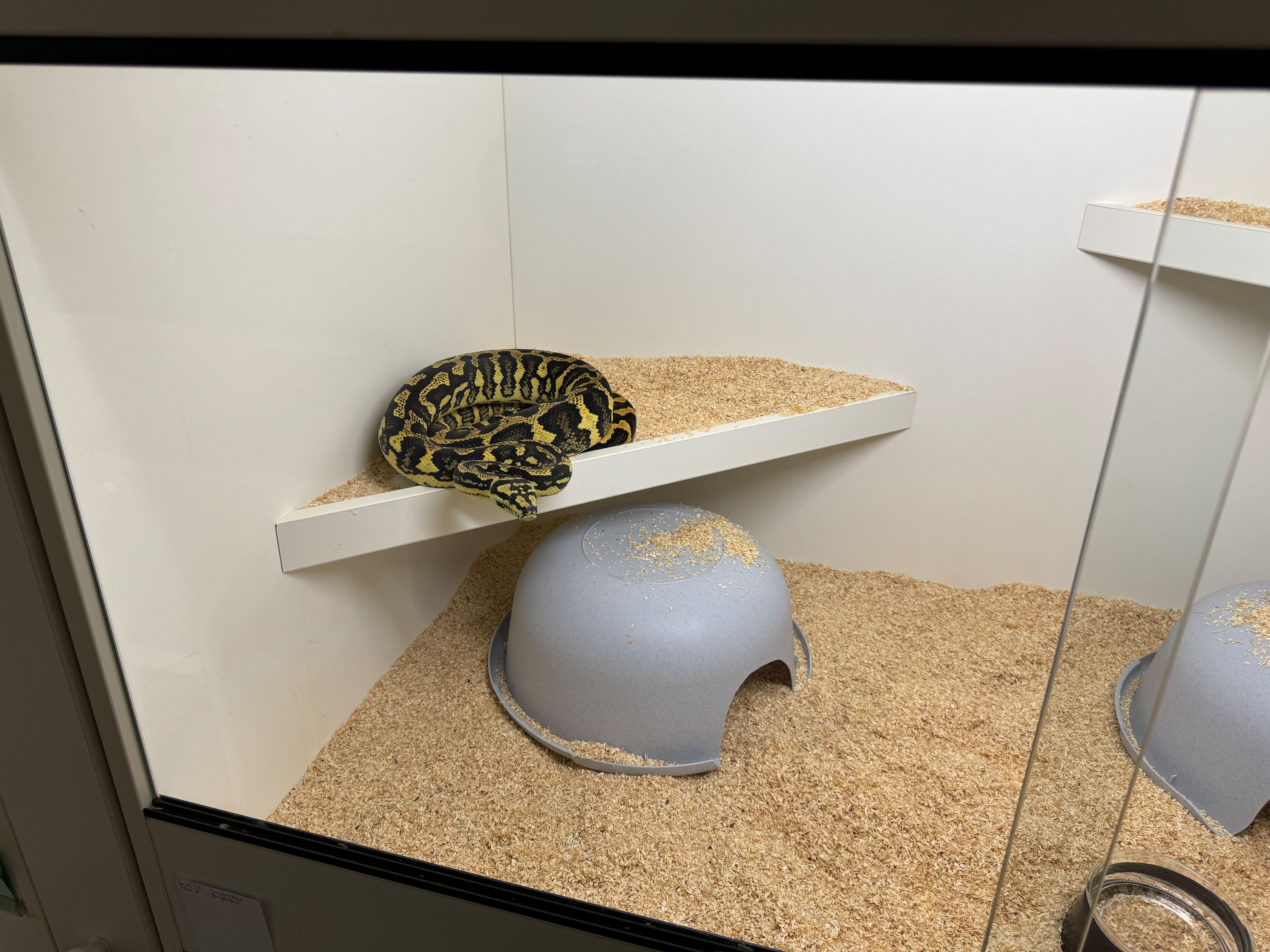
German Bloodline Jungle Carpet Python, high-contrast black and yellow – StarPythons

Buying a Jungle Carpet Python: Everything You Need to Know

The Jungle Carpet Python (Morelia spilota cheynei) is one of the most fascinating members of the Australian herpetofauna. In the reptile-keeping hobby, it is often reduced to its spectacular black-and-yellow coloration, yet current field studies paint a picture of a highly complex, adaptable python. This article covers both the practical husbandry parameters and the in-depth biological background essential for a true understanding of these animals.

At StarPythons, we have been breeding Jungle Carpet Pythons for over 17 years and work with several breeding groups of the legendary "German Bloodline" – compact, high-contrast animals from selective German breeding. If you are looking for a Jungle Carpet Python, check out our currently available animals.

Quick Facts: Jungle Carpet Pythons at a Glance

Feature Details
Scientific Name Morelia spilota cheynei
Size 1.2–2.4 m (3.9–7.9 ft) (Rainforest: 1.2–1.5 m / 3.9–4.9 ft, Atherton Tablelands: up to 2.4 m / 7.9 ft)
Life Expectancy 20–25 years
Minimum Enclosure Size 120 × 70 × 80 cm (48 × 28 × 32 in) (L × W × H)
Temperature Summer (Day) 27–28 °C (80–82 °F), basking spot 36 °C (97 °F)
Temperature Winter (Day) 25–27 °C (77–80 °F), basking spot 33 °C (92 °F)
Feeding Adult Animals Every 14 days
Winter Cooling Moderate cooling recommended
Suitable for Beginners Yes (hardy, adaptable species)
Distribution Northeastern Australia (Queensland)

Introduction

The Myth of the "Jungle" Coloration: For a long time, the high-contrast black-and-yellow coloration was considered a definitive taxonomic trait that clearly distinguished the Jungle Carpet Python from other variants. However, more recent genetic studies fundamentally challenge this traditional view (Ciavaglia et al., 2014).

A key factor is the so-called Black Mountain Corridor (BMC) south of Cooktown – a significant biogeographic barrier. Genetic analyses show that carpet pythons south of this boundary form a remarkable genetic unit: from the Atherton Tablelands all the way down to Bundaberg, they are closely related to one another, regardless of whether they phenotypically match the classic "Jungle" type (black-and-yellow) or the "Coastal" type (brown-olive).

These findings suggest that the intense black-and-yellow coloration does not constitute taxonomic distinctiveness but rather represents an evolutionary adaptation to specific habitats. In the rainforest, where this color variant predominantly occurs, the black-and-yellow blotch pattern provides perfect camouflage in the dense understory under the unique light conditions – a striking example of ecological adaptation within a genetically homogeneous population (Mutton & Julander, 2022).

Even though current research suggests that the animals we commonly know in the hobby as Morelia spilota cheynei and Jungle Carpet Pythons may represent a specialized subpopulation of Northern Coastal Carpet Pythons, this article follows the traditional view and treats them as a distinct subspecies.

Distribution and Natural Habitat

The Jungle Carpet Python is endemic to Queensland, Australia, and inhabits an impressive variety of habitats along the northeastern coast. Its range extends from the rainforests of the Atherton Tablelands – an elevated plateau between 600 and 900 m (2,000–3,000 ft) – down to the coastal lowlands north of Bundaberg (Mutton & Julander, 2022).

Habitat Types

Dense Rainforest: The classic "Jungle" populations are found in the tropical rainforests between Townsville and Kuranda. These animals live in the dense forests along river systems. The rainforest provides them with shelter, hunting opportunities, and the humid microclimate that is important for their well-being. Here, the snakes are often encountered along stream courses and near rocky gorges.

Atherton Tablelands: This highland plateau west of Cairns is known for its larger specimens. Jungle Carpet Pythons from this area reach total lengths of up to 2.4 m (7.9 ft), making them some of the largest representatives of this form. The cooler nights on the plateau and the available prey density promote the growth of these animals.

Coastal Regions: Along the coast, Jungle Carpet Pythons also inhabit mangroves, dune landscapes, and near-coastal forests. These habitats give them access to different prey species and demonstrate their remarkable ecological adaptability.

Adaptation to Human Proximity: A remarkable trait of these snakes is their ability to utilize human-modified landscapes. Jungle Carpet Pythons have been observed repeatedly in agricultural areas, residential neighborhoods, and even inside houses, where they hunt rodents. This flexibility demonstrates their hardiness and adaptability – the very qualities that also make them ideal captive animals.

Climate in the Natural Habitat

The climate across the range is typically tropical to subtropical with distinct wet and dry seasons, with average temperatures varying by region. While daytime highs around Cairns fluctuate between 26 °C (79 °F) in winter and 31 °C (88 °F) in summer, with high humidity (70–80%) and approximately 2,000 mm (79 in) of annual rainfall, the Atherton Tablelands are somewhat cooler due to their elevation, at 23–28 °C (73–82 °F). Along the coast near Townsville or Mackay, temperatures are similar but conditions are somewhat drier, with only 1,100–1,400 mm (43–55 in) of annual rainfall.

These climatic data form the basis for temperature and humidity management in the enclosure. Unlike Diamond Pythons from temperate southeastern Australia, Jungle Carpet Pythons do not require dramatically lowered winter temperatures but still benefit from a moderate seasonal cooling for overall well-being and breeding readiness.

Size and Regional Variation

A fascinating characteristic of Jungle Carpet Pythons is their pronounced size variability, which is strongly correlated with the respective habitat. This variation is not only biologically interesting but also practically relevant for choosing the appropriate enclosure.

Rainforest Populations: The Compact Climbers

Jungle Carpet Pythons from dense rainforests remain considerably smaller, averaging only 1.2 to 1.5 m (3.9–4.9 ft) in total length. It is hypothesized that this reduced body size represents an ecological adaptation that allows them to survive in a habitat they share with the significantly larger Australian Scrub Python (Simalia kinghorni). This theory of ecological niche partitioning suggests that both species avoid competition for prey and habitat through different body sizes. While the massive Australian Scrub Python claims the larger prey items and sturdier branches, the smaller Jungle Pythons hunt in the finer structures of the rainforest and capture smaller mammals (Fill et al., 2012; Mutton & Julander, 2022).

Important for Breeding: The rather small-bodied rainforest populations have gained particular significance in the reptile-keeping hobby. Breeding lines such as the "German Bloodline" are based on these compact animals and remain relatively small in captivity as well, at around 1.5 m (4.9 ft) adult size – an advantage for keepers with limited space.

Atherton Tablelands: The Larger Specimens

In contrast are the populations of the Atherton Tablelands. These animals reach impressive total lengths of up to 2.4 m (7.9 ft), making them some of the largest representatives of this subspecies. The reasons for this enhanced growth are likely multifactorial: cooler nighttime temperatures on the plateau, a different prey composition, and the absence of competitors like the Scrub Python may all play a role (Stock, 2009; Fill et al., 2012).

Sexual Dimorphism

Currently, no robust data exist for Morelia spilota cheynei that would indicate a pronounced sexual dimorphism. In the study by Fill et al. (2012), the seven measured male specimens had a maximum length of 173 cm (68 in), smaller than the females, which reached lengths of up to 226 cm (89 in). However, the overall sample size is not large enough to draw reliable conclusions from these data.

Hatchlings emerge at a length of approximately 35–40 cm (14–16 in). Growth is relatively rapid during the first two to three years of life but then slows considerably. Males reach sexual maturity at about 2–3 years, while females do not become reproductively mature until 3–4 years of age.

Coloration and Pattern

The color variability of Jungle Carpet Pythons is extraordinary. From brightly yellow-and-black animals with high contrast to subdued, almost uniform-looking specimens – the spectrum is enormous. This diversity makes choosing a Jungle Python a very personal decision where every keeper can express their own aesthetic preferences.

The Typical Jungle Pattern

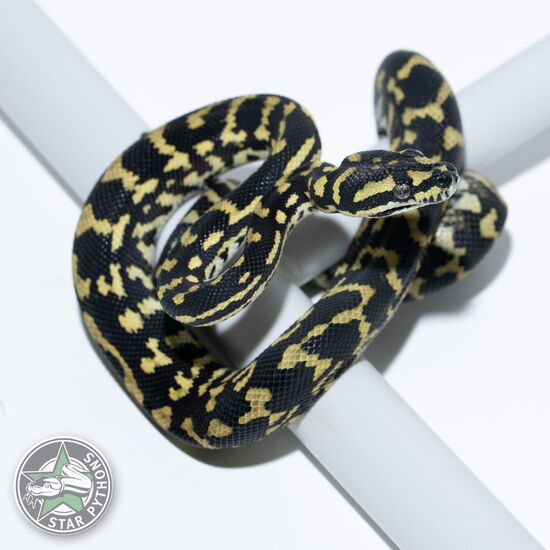
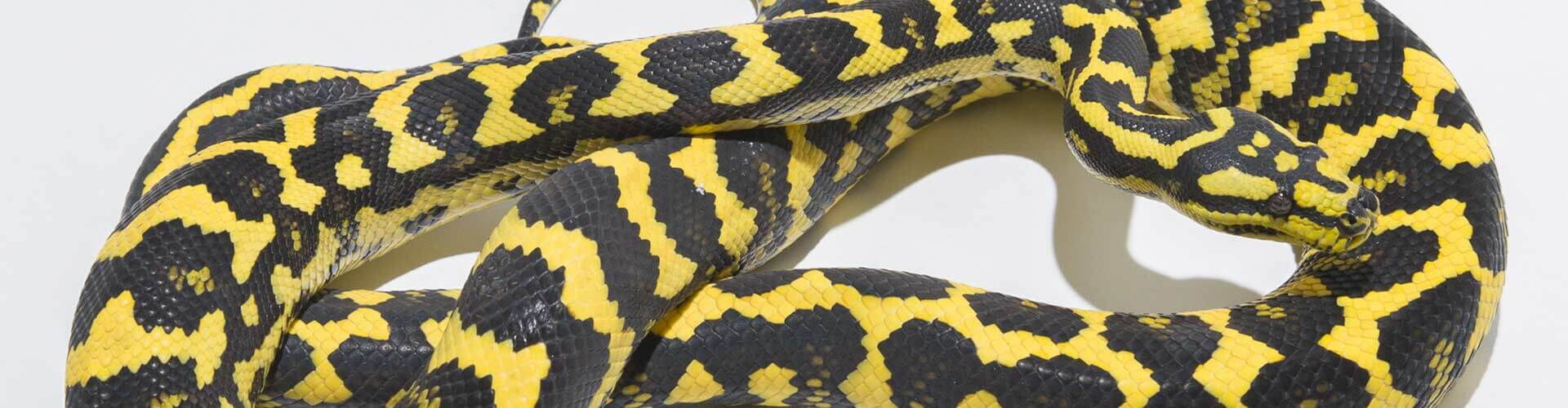
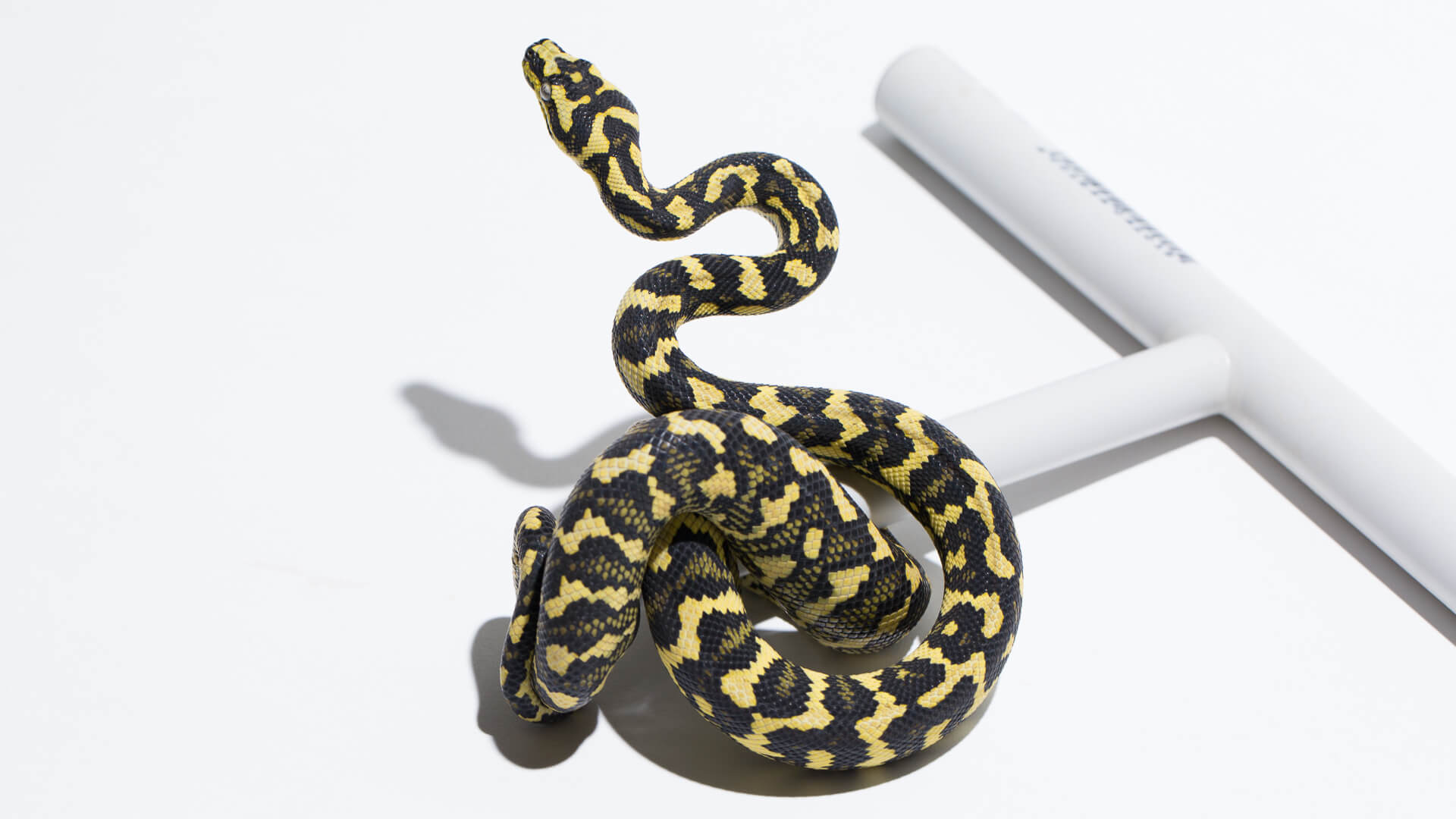
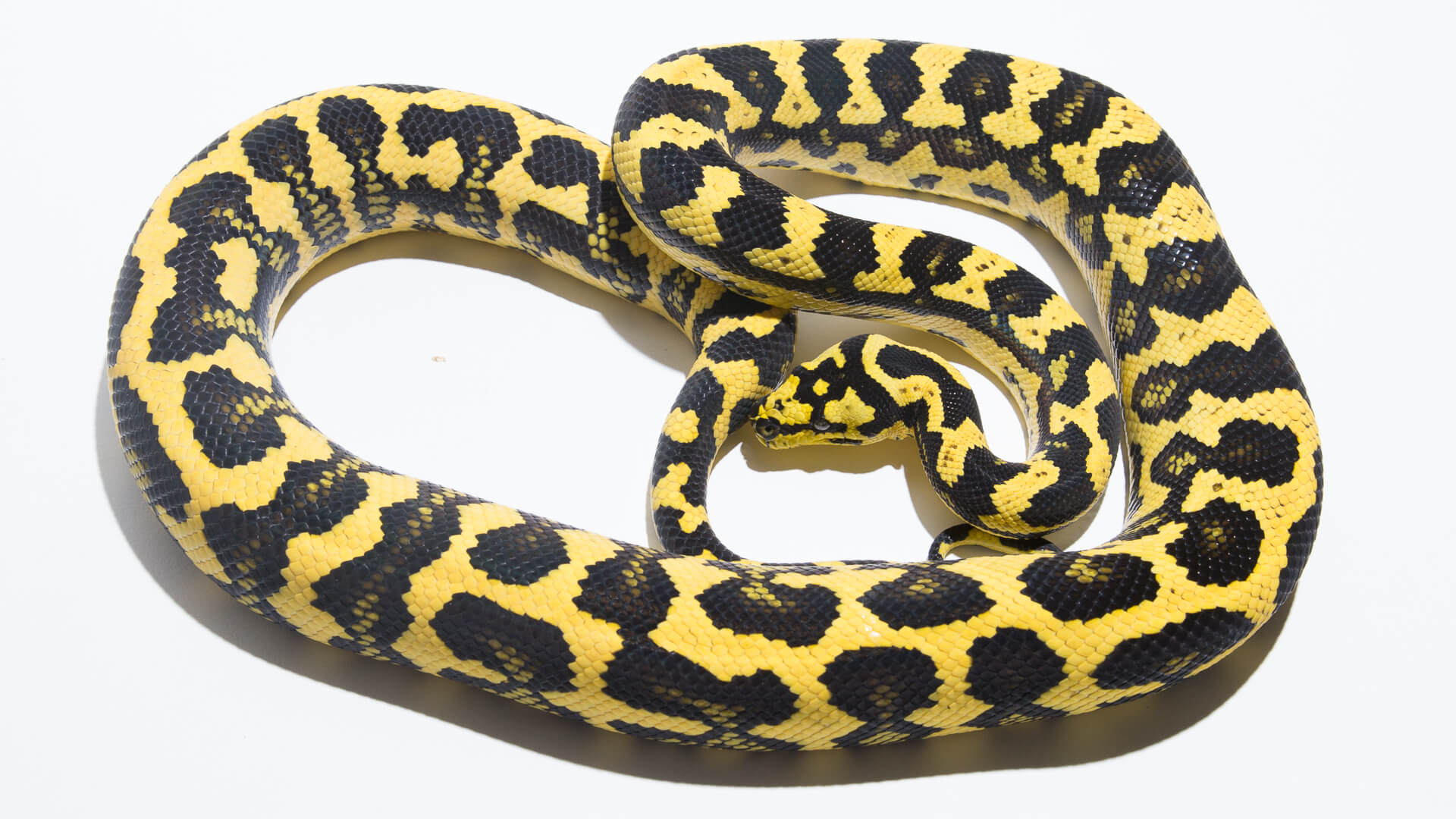
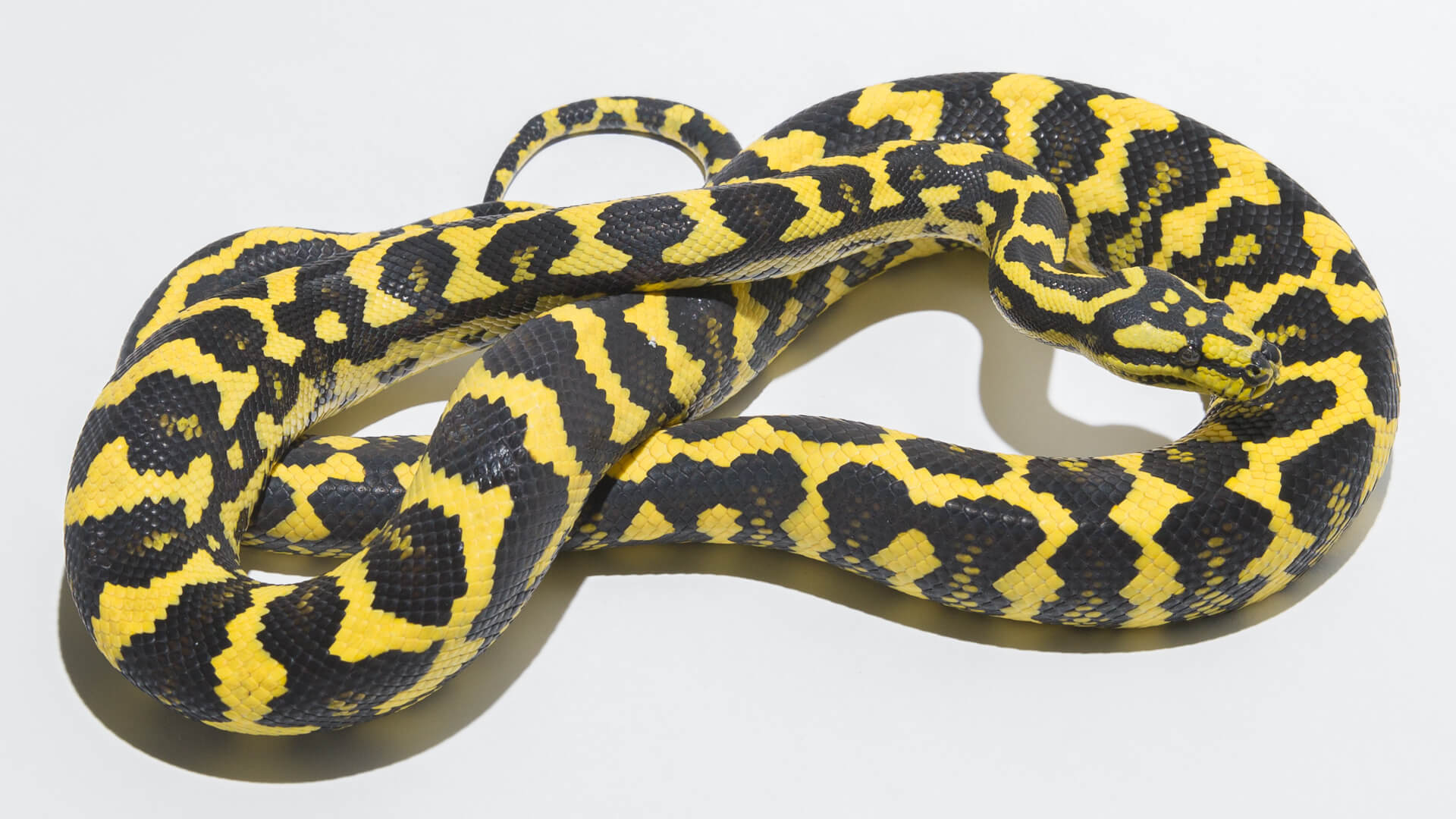
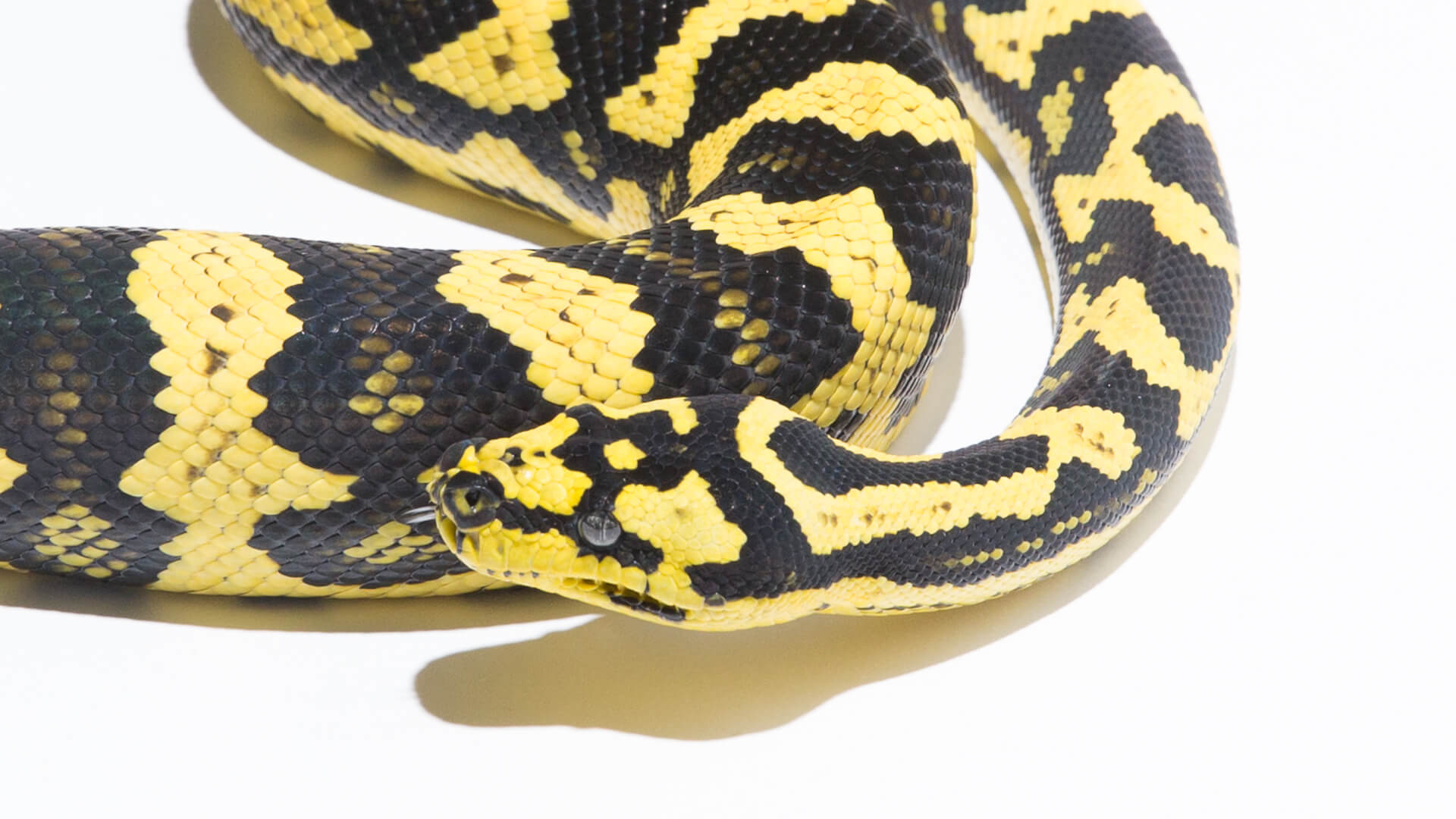
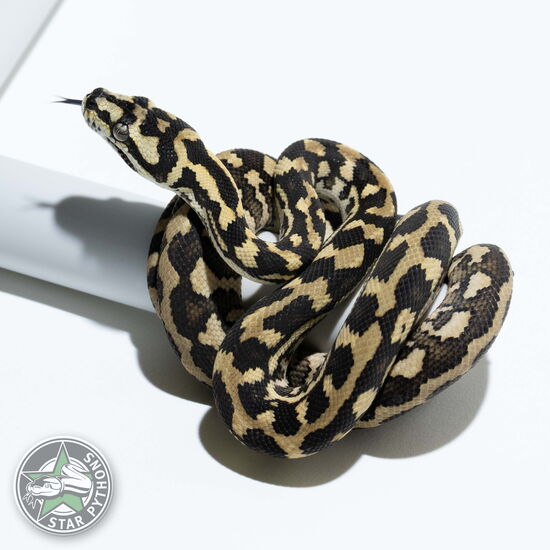
The iconic appearance is that of a snake with intensely bright yellow or golden bands on a deep black base color. These animals display a pattern of alternating yellow and black crossbands that often appears irregular and almost "chaotic" – in contrast to the more orderly patterns of other carpet python subspecies. Particularly striking is the head with its distinctive yellow striping. Head pattern varies greatly between individuals, ranging from fine yellow lines to large yellow areas. Many keepers pay close attention to a high-contrast, unique head pattern when selecting animals.

Color Variants in the Wild

Bright Yellow Rainforest Dwellers: The animals with the most intense colors are frequently found in the dense rainforests. The deep black contrasts with a bright lemon yellow that almost seems to glow in the light. These animals are particularly sought after in the hobby and form the foundation of many high-contrast breeding lines.

Subdued Color Variants: There are numerous specimens whose base color is more gray, olive-green, brown, or cream. These variants are more commonly found in drier or more open habitats and demonstrate how adaptable these snakes are. While they may not have the spectacular brightness of the classic black-and-yellow form, they possess a subtler, earthy charm.

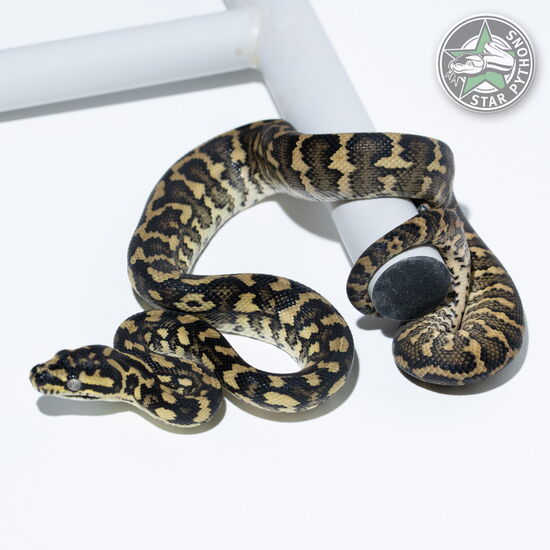
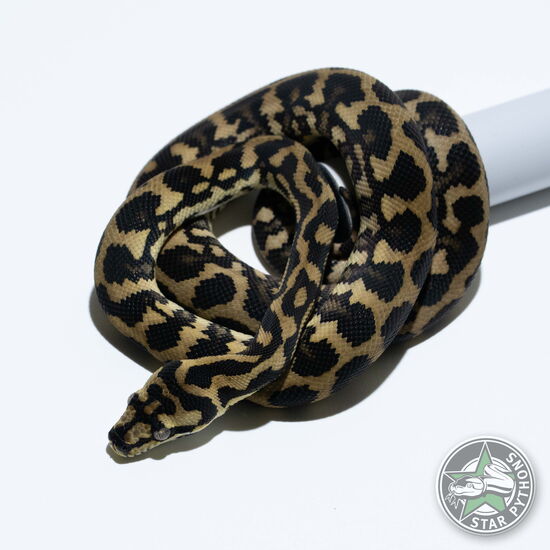
Ontogenetic Color Change: As with many carpet pythons, Jungle Carpet Pythons also undergo color changes as they age. Hatchlings often emerge dull and brownish but already show the basic pattern, which becomes noticeably more intense and higher in contrast during the first months and years of life. The final expression of coloration is typically not reached until 2–3 years of age.

The "German Bloodline"

The most well-known and sought-after breeding line is the "German Bloodline," which was developed through decades of selective breeding in Germany. This line is distinguished by its extreme contrast pattern, combining deep black with intense lemon yellow. An additional advantage of this breeding line is its compact body size – the animals typically remain under 1.5 m (4.9 ft) and are therefore ideal for standard-sized enclosures. Particularly noteworthy is the high color stability: the vibrant pattern is maintained throughout the entire lifespan and does not fade with age.
It is fair to say that "German Bloodline" animals represent the pinnacle of Jungle Carpet Python breeding and the well-deserved result of careful selection over multiple generations. At StarPythons, we work with several breeding groups of this line and can confirm the exceptional appearance of these animals firsthand.

Enclosure and Setup

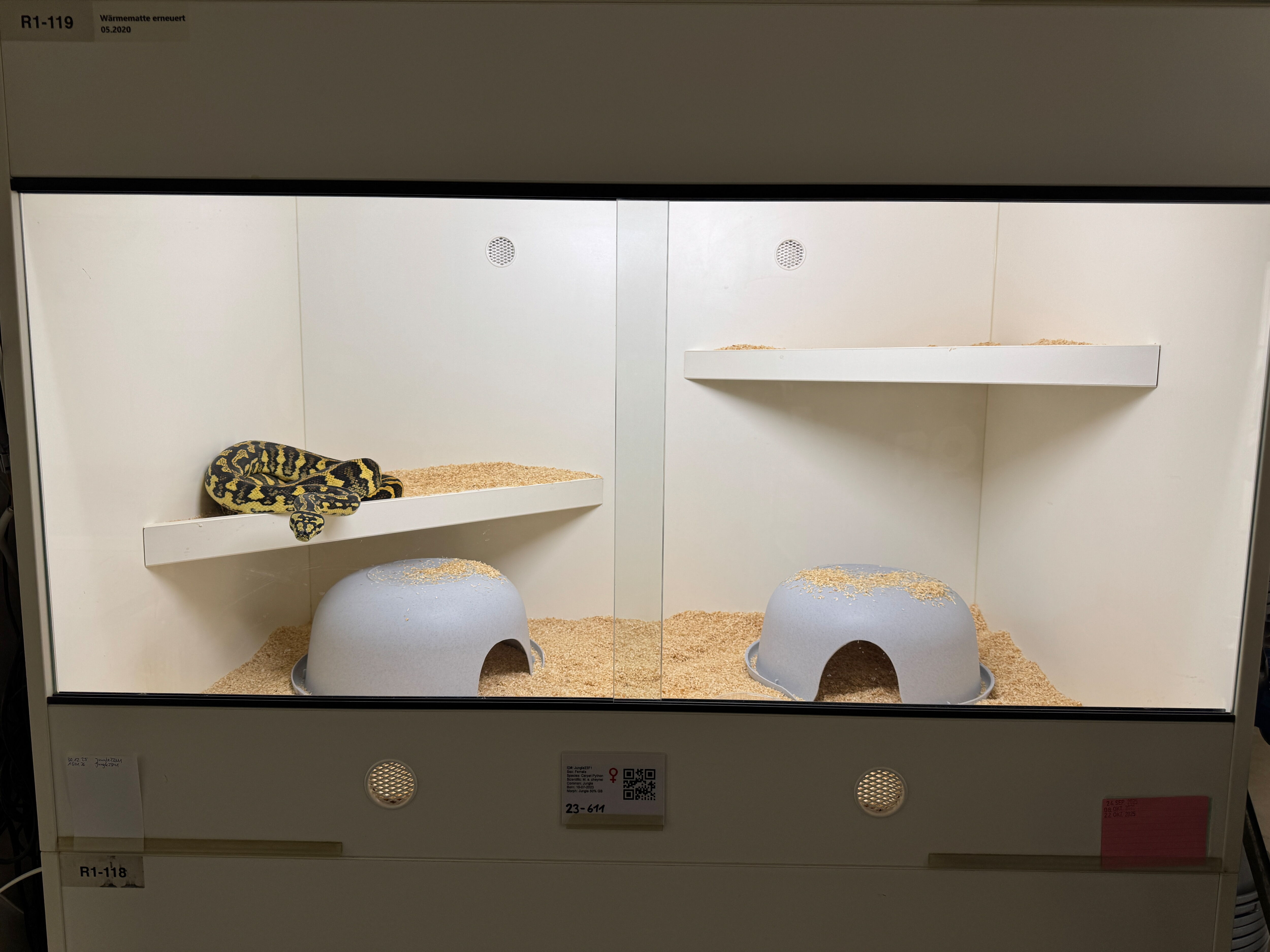
A species-appropriate enclosure takes its cues from the natural habitat: climbing opportunities, hiding spots, and a temperature gradient are essential. While the breeding enclosures at StarPythons are designed with functionality and hygiene in mind, you naturally have access to a wide range of visually appealing décor and furnishings from specialized retailers for your home setup.

Enclosure Size

The enclosure for an adult animal should be no smaller than 120 × 70 × 80 cm (48 × 28 × 32 in) (L × W × H). Height is particularly important, as Jungle Carpet Pythons are semi-arboreal and avid climbers. Juveniles can initially be kept in smaller rearing tubs (e.g., 40 × 40 × 40 cm / 16 × 16 × 16 in). This gives them a greater sense of security. After about 6–12 months, the move to a larger enclosure should follow. In addition to enclosure size, air circulation is important to prevent mold growth, especially at the higher humidity levels recommended for Jungle Carpet Pythons. A chimney effect (vents at the bottom and top) is ideal. The lower vent should be on the cooler side, and the upper vent on the warm side, so that rising warm air creates natural circulation.

Climbing Branches and Vertical Structures

Jungle Carpet Pythons are pronounced arboreal dwellers in their natural habitat, spending a significant portion of their time in trees and shrubs. To accommodate this natural behavior, the enclosure must provide ample sturdy climbing opportunities. Branches should be at least the diameter of the snake's body and arranged both horizontally and vertically within the enclosure to create a three-dimensional climbing framework.

Various natural woods are well suited for furnishing the enclosure. Oak branches are robust and extremely long-lasting, while cork offers a lightweight alternative that still provides sufficient stability. Mangrove wood impresses with its durability and decorative appearance, and bogwood brings interesting structures with many natural branching points that add additional complexity to the enclosure.

Alternative: Platform System

A proven alternative to natural branches is sturdy platforms mounted at different heights on the enclosure walls. The advantage of this solution lies in easy cleaning and the ability to flexibly adjust height and position. Platforms should be made of sturdy, easy-to-clean material and have sufficient depth for the snake to rest comfortably on them.
When positioning either branches or platforms, it is important to ensure that the python can reach different height levels. A diagonally running main branch leading from the floor to the upper half of the enclosure forms the backbone of the climbing structure. Additional horizontal branches or platforms should be added. These provide the animal not only with varied resting spots but also allow it to access areas with different temperatures, enabling optimal thermoregulatory behavior.

Hides

Hides are essential for the well-being of Jungle Carpet Pythons and are part of the basic equipment of any species-appropriate enclosure. A good hide should be sized so that the snake fits inside while its body touches the walls. This snug fit simulates the natural rock crevices or hollow tree trunks that these animals use as retreats in the wild, providing a sense of security.
The enclosure should offer at least two hides: one in the warmer zone near the basking spot and one in the cooler area. This arrangement allows the python to retreat while still choosing its preferred body temperature, without having to sacrifice a sense of safety.
Various materials are suitable as hides. Cork or bark caves offer a natural look and good insulation, while ceramic cave replicas are valued for their longevity and easy cleaning. Custom-built wooden hides can be individually adapted to the size of the animal, and plastic caves are particularly practical and hygienic to maintain.

Our Choice for Breeding Enclosures: Plastic Hides

In our breeding rooms, we use artificial hides made from durable plastic. These have proven excellent in practice, combining several advantages: they are extremely easy to clean and disinfect, exceptionally durable, and available in various sizes so that the right hide is available for every growth stage of the python. The smooth surface also prevents injuries and enables hygienic keeping without compromising the animal's sense of security.

Substrate & Bedding

The substrate in the enclosure serves several important functions: it should be able to retain moisture without developing mold, allow for good hygiene, and be easy to clean. Several proven substrates are available for Jungle Carpet Pythons. Bark mulch retains moisture well and provides a natural appearance but must be regularly checked for mold. Coconut fiber excels at moisture retention and is odor-neutral. Newspaper is a practical and hygienic solution, particularly suitable for juveniles or during quarantine. Terrarium soil can be mixed with bark mulch to achieve a natural look.

Our Recommendation: Softwood Granulate

In our breeding operation, we use softwood granulate as substrate. This substrate has proven itself over many years and offers numerous practical advantages: it is low-dust, highly absorbent, and reliably binds odors. Softwood granulate is easy to handle, allows for spot-cleaning of soiled areas, and is economical to purchase. The bedding should be applied to a depth of approximately 3–5 cm (1–2 in) to ensure good moisture regulation while providing the animals with a stable surface.

Temperatures and Seasons

Proper temperature management for Jungle Carpet Pythons is less critical than for their more southern relative, the Diamond Python, but still important for health, well-being, and breeding readiness. As ectothermic animals, they are entirely dependent on external heat sources.

During the summer phase, the animals are most active and feed most regularly. The ambient temperature in the enclosure should range between 27–28 °C (80–82 °F). Particularly important, however, is the basking spot, which must be considerably warmer at 35–38 °C (95–100 °F). After feeding, the pythons actively seek out warmer areas to optimize digestion.

At night, the temperature should drop to 23–25 °C (73–77 °F). This nighttime drop is not only natural but also helps the animal with thermoregulation and promotes a healthy day-night cycle.

Summer

Daytime 27–28 °C (80–82 °F)
Spot / Heat Mat 36 °C (97 °F)
Nighttime 23–25 °C (73–77 °F)
Humidity 70% rH

Winter

Daytime 25–27 °C (77–80 °F)
Spot / Heat Mat 33 °C (92 °F)
Nighttime 20–23 °C (68–73 °F)
Humidity 70% rH

Although Jungle Carpet Pythons originate from tropical regions, they benefit from a moderate "winter phase." In nature, there is a dry season with slightly cooler temperatures, and this cooling triggers important physiological processes in the animals – particularly breeding readiness.

The winter phase should last approximately 8–10 weeks, ideally from December through February. The daytime temperature is reduced to 25–27 °C (77–81 °F), and the basking spot to 31–34 °C (88–93 °F). At night, temperatures may drop as low as 20 °C (68 °F). During this time, many animals reduce their food intake or stop eating entirely – this is completely normal and no cause for concern.

Transition Periods

The shift between summer and winter temperatures should not be abrupt but rather gradual over 2–3 weeks. Reduce temperatures step by step and observe your animal closely. Start by reducing nighttime temperatures, then daytime temperatures, and finally the basking spot.

Feeding Jungle Carpet Pythons

Jungle Carpet Pythons are classic ambush predators in their natural habitat, often remaining motionless at a favorable position for days, patiently waiting for prey. This energy-efficient hunting strategy has direct implications for feeding in captivity and explains why overfeeding is a real concern with these animals.

The natural prey spectrum of Jungle Carpet Pythons changes with age. While hatchlings and juveniles utilize a broader diet that also includes lizards, particularly skinks, which they actively hunt, adult animals switch their diet almost entirely to mammals. The natural prey of adult Jungle Carpet Pythons primarily consists of mice and rats, which represent the main food source and make up the bulk of prey items. In addition, smaller possum species are regularly captured, while bats are occasionally taken during their resting phases in tree hollows or rock crevices. Birds and nestlings are part of the prey spectrum on a more opportunistic basis and are taken when the opportunity arises (Freeman & Bruce, 2007; Fill et al., 2012).

When feeding in captivity, we follow the natural feeding habits and energy requirements of the different age classes:

Juveniles (0–2 Years):
Juveniles are in their most intensive growth phase and require correspondingly regular meals. Feeding every 7–10 days has proven effective. Prey items should be approximately two to three times the diameter of the snake's body just behind the head. Start with pinky mice, then progress to juvenile and eventually adult mice.

Sub-adults (2–3 Years):
During this transitional phase, growth already slows somewhat. Feeding every 10–14 days is sufficient. This is when the transition from mice to small rats occurs, with prey size continuously adjusted to the growing snake.

Adults (3+ Years):
Fully grown Jungle Carpet Pythons require considerably less frequent feedings. A medium to large rat is offered every 14–21 days, with the exact size depending on the individual body size of the snake. Body condition should be checked regularly, and feeding intervals adjusted accordingly.

Frozen/Thawed vs. Live Prey
In modern reptile keeping, frozen/thawed prey – pre-killed, previously frozen food items that are thawed before feeding – has become the standard, and for several good reasons.
Frozen/thawed prey offers decisive advantages: it is significantly safer for the snake, as there is no risk of injury from bites by the prey animal. It is hygienically superior, as parasites are reliably killed by the freezing process. The practicality of easy storage and stockpiling considerably simplifies keeping, and from an animal welfare perspective, frozen/thawed prey is unproblematic and in some countries even legally required.
Live prey, on the other hand, carries considerable disadvantages: there is a real risk of injury to the snake from bites and scratches by a defending prey animal. The live prey animal experiences significant stress, and in many countries, feeding live vertebrates is legally problematic or prohibited.
The vast majority of captive-bred animals accept frozen/thawed prey without issue from the start. Even if an animal initially only accepts live prey, it can usually be successfully transitioned to frozen/thawed prey with some patience and the right techniques.

Breeding and Reproduction

Captive breeding of Jungle Carpet Pythons is generally straightforward and readily achievable. Unlike Diamond Pythons, no extreme winter cooling is required, but a moderate temperature reduction of 8–10 weeks is still beneficial to trigger breeding readiness. Clutch sizes are smaller than those of other subspecies, typically comprising about 13–16 eggs. Larger clutches are rather uncommon. The eggs are incubated at 31 °C (88 °F) and a humidity above 90%. After an average of 60 days, the hatchlings emerge, measuring approximately 44 cm (17 in) in length and weighing 32 g (1.1 oz).

Buying a Jungle Carpet Python

As always, the golden rule applies: buy exclusively captive-bred animals from reputable breeders. Captive-bred animals are healthier, calmer, and do not impact wild populations, and an experienced breeder will be available as a knowledgeable point of contact even after the purchase. Fortunately, wild-caught animals from Australia are virtually unavailable due to strict legal protections.

Health Check Before Buying

A reputable breeder will gladly show you their animals and provide information about feeding history, sheds, and health status. Look for:

  • Quiet, clear breathing
  • No mucus in the mouth
  • No mites or skin abnormalities
  • Clean cloaca without discharge or residue
  • Active, alert behavior

Documentation and Legal Considerations

Registration Requirement: In Germany, Jungle Carpet Pythons, like all carpet pythons (Morelia spilota), are subject to mandatory registration. You must register your animal with the responsible authority (usually the local public order office or the lower nature conservation authority). Check with your municipality or county before purchasing to learn the exact registration deadlines and required documentation.

Proof of Origin: The seller is legally required to provide you with proof of origin. This document certifies the legal origin of the animal and is required for your own registration with the authorities. Never buy an animal without valid proof of origin!

CITES: Jungle Carpet Pythons are listed in CITES Appendix II. For trade within the EU, no additional CITES permits are required for captive-bred animals. However, when trading with third countries (outside the EU), a CITES permit is necessary. Reputable breeders within the EU will provide you with all required documentation.

Preparation is Everything

Set up the enclosure completely before purchasing your python and bringing it home. The animal should be able to move straight into its properly set-up new home. Run the enclosure for at least 48 hours to ensure that all temperatures and humidity levels are stable.

Price and Availability

The price for juvenile Jungle Carpet Python hatchlings varies depending on age, lineage, and pattern quality. High-contrast lines such as the "German Bloodline" are particularly sought after. Expect to pay between €500 and €800 for high-quality juveniles. Especially beautiful adult animals with pronounced patterning can be considerably more expensive. When buying, pay attention not only to the price but above all to reputable breeding, health status, and lineage.

Common Mistakes to Avoid

From decades of breeding and keeping experience, we know which mistakes are made most frequently – and how to avoid them.

1. Rushing Acclimation and Excessive Handling

Newly acquired animals need time to settle in. Immediate, frequent handling leads to stress and food refusal. Give the animal at least 1–2 weeks of undisturbed rest after it arrives and offer the first meal only after successful acclimation. Then start with short handling sessions of 5–10 minutes.

2. Overfeeding

This is the most common husbandry mistake and leads to reduced life expectancy. Jungle Carpet Pythons, as ambush predators, have an efficient metabolism and do not require large amounts of food. Overfed animals become obese, which puts strain on internal organs and leads to liver problems. Feed adult animals only every 14–21 days and monitor body condition rather than adhering to a rigid feeding schedule. The animal should be muscular but lean. If the transition from body to prehensile tail appears misshapen, feeding must be reduced immediately. In the wild, a snake often waits motionless for days for prey and easily endures extended periods without food – it is not dependent on a constant food supply.

3. Humidity Too Low

Jungle Carpet Pythons originate from tropical rainforests with high humidity. Persistently low humidity often leads to shedding problems, where the skin comes off in pieces or remains stuck on the eyes and tail tip. Maintain humidity consistently at about 70% through regular misting, moisture-retaining substrate, and a large water bowl. Use a hygrometer for monitoring. When a shed is approaching, recognizable by cloudy (opaque) eyes, humidity can be temporarily increased slightly.

FAQ - Jungle Carpet Pythons

How big do Jungle Carpet Pythons get?

Size varies considerably depending on origin. Rainforest populations typically reach only 1.2–1.5 m (3.9–4.9 ft), while animals from the Atherton Tablelands can grow up to 2.4 m (7.9 ft). In captivity, compact breeding lines such as the "German Bloodline" generally stay around 1.5 m (4.9 ft), making them one of the smaller carpet python forms available.

What is the "German Bloodline"?

The "German Bloodline" is a selectively bred line of Jungle Carpet Pythons developed over decades in Germany. These animals are known for their extreme black-and-yellow contrast, compact adult size of around 1.5 m (4.9 ft), andexceptional color stability – their vibrant pattern does not fade with age. At StarPythons, we work with several breeding groups of this line.

How often should I feed my Jungle Carpet Python?

Feeding frequency depends on age. Juveniles (0–2 years) should be fed every 7–10 days, sub-adults (2–3 years) every 10–14 days, and adults (3+ years) every 14–21 days. Overfeeding is the single most common husbandry mistake with these snakes. As ambush predators, they have an efficient metabolism and require less food than many keepers assume. Always monitor body condition rather than following a rigid schedule.

Do Jungle Carpet Pythons need a winter cooling period?

A moderate cooling period of 8–10 weeks is recommended, particularly if you plan to breed. During this time, daytime temperatures are reduced to 25–27 °C (77–81 °F) and nighttime temperatures may drop to 20 °C (68 °F). Unlike Diamond Pythons, Jungle Carpet Pythons do not require dramatically low winter temperatures, but the seasonal variation promotes overall health and breeding readiness.

Are Jungle Carpet Pythons good for beginners?

Yes, Jungle Carpet Pythons are one of the most beginner-friendly carpet python subspecies. They are hardy, adaptable, and tolerate a wider range of conditions than, for example, Diamond Pythons. Their manageable size – especially compact breeding lines like the "German Bloodline" at around 1.5 m (4.9 ft) – makes them well suited to standard-sized enclosures. As with any snake, however, proper preparation and a correctly set up enclosure are essential before bringing one home.

Why is my Jungle Carpet Python not as colorful as expected?

Jungle Carpet Pythons undergo significant ontogenetic color change. Hatchlings typically emerge dull and brownish, and the full black-and-yellow contrast usually does not develop until 2–3 years of age. High-quality breeding lines like the "German Bloodline" are specifically selected for color stability throughout the animal's lifetime.
References

Ciavaglia, S. A., Donnellan, S. C., Henry, J. M., & Linacre, A. M. T. (2014). Species identification of protected carpet pythons suitable for degraded forensic samples. Forensic Science, Medicine and Pathology, 10, 295–305. https://doi.org/10.1007/s12024-014-9562-5

Ciavaglia, S. A., Tobe, S. S., Donnellan, S. C., Henry, J. M., & Linacre, A. M. T. (2015). Molecular identification of python species: Development and validation of a novel assay for forensic investigations. Forensic Science International: Genetics, 16, 64–70. https://doi.org/10.1016/j.fsigen.2014.12.002

Fill, J. M., McBride, P., Powell, A. J., Shanahan, L. K., Stark, J. R., Freeman, A. B., & Curran, T. J. (2012). Diet of amethystine (Morelia kinghorni) and carpet pythons (Morelia spilota) in North Queensland, Australia. Herpetological Review, 43(1), 30–34.

Freeman, A. B., & Bruce, C. (2007). The things you find on the road: Roadkill and incidental data as an indicator of habitat use in two species of tropical pythons. In R. W. Henderson & R. Powell (Eds.), Biology of the Boas and Pythons (pp. 153–165). Eagle Mountain Publishing.

Mutton, N., & Julander, J. (2022). The More Complete Carpet Python: A Comprehensive Guide to the Natural History, Care, and Breeding of the "Morelia spilota" Complex. ECO Publishing. ISBN 978-1938850424.

Stock, R. (2009). Rumble in the jungle: A look at this stunning species. Scales & Tails, 3(1), 21–25.

Available Pure Jungle Carpet Pythons (Morelia spilota cheynei)

Sex
Category
Morph

Your content element is empty.