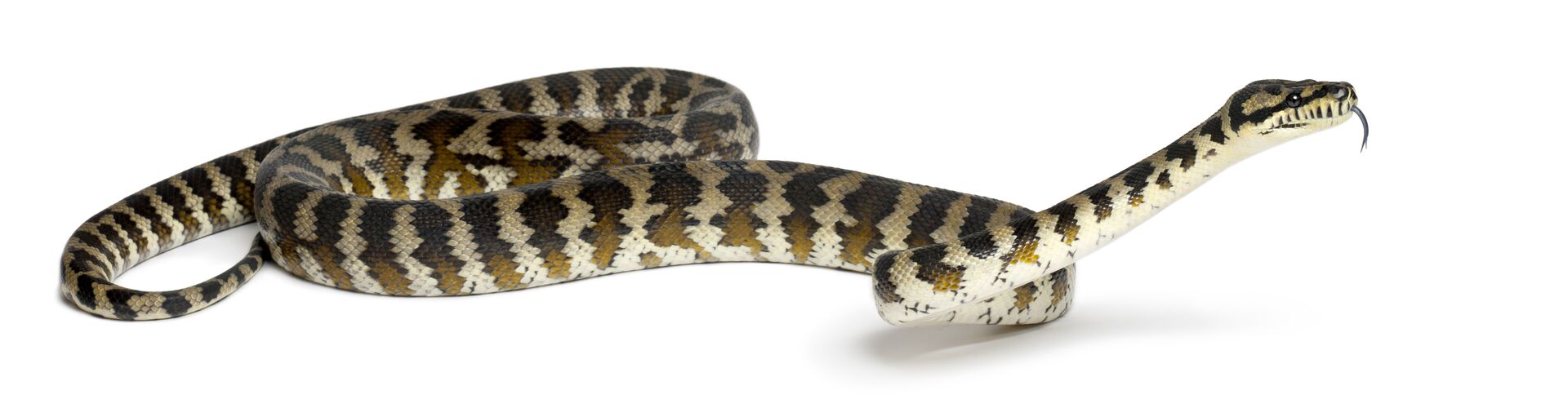
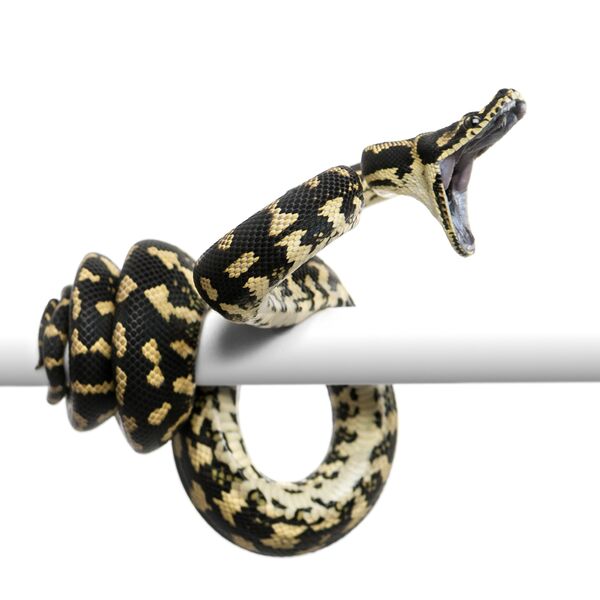
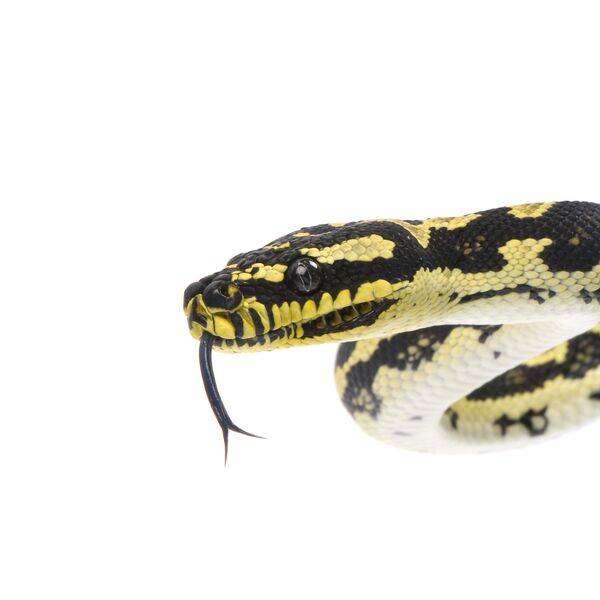
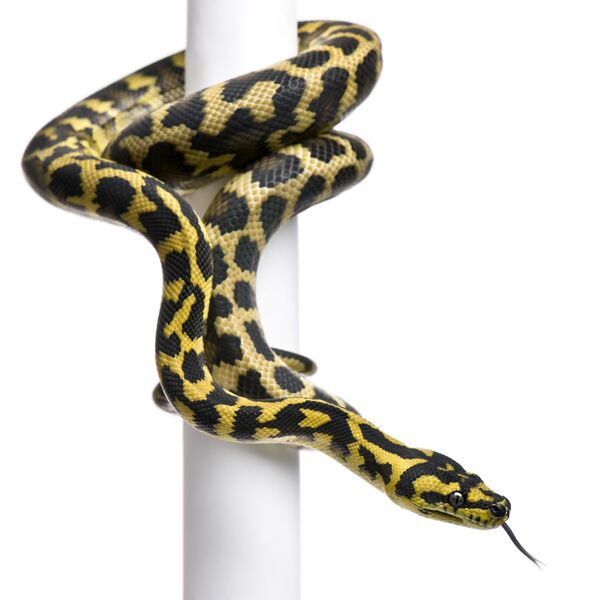
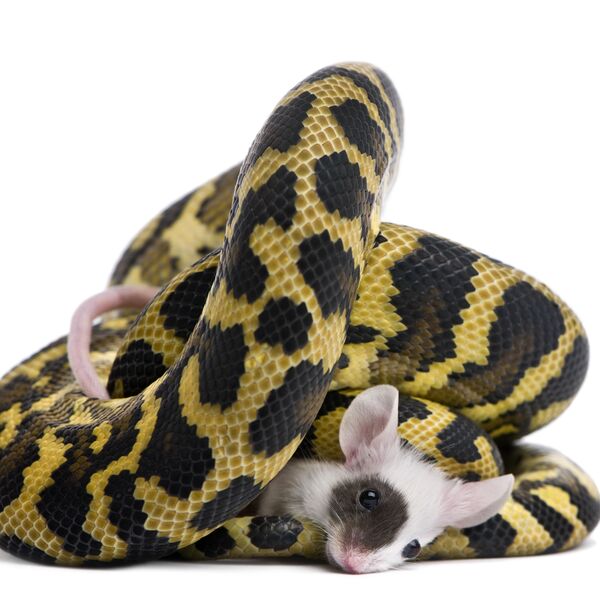
Carpet pythons (Morelia spilota) are hardy, food-motivated, and extremely rewarding—if you give them what they actually need: space, a real temperature gradient, secure hides, and stable routines. This guide is a practical overview of our husbandry approach and what we recommend before you buy your first carpet python.
If you want the "short version", start with the Quick Start below—then use the table of contents to go deeper.
Quick Start (Carpet Pythons in 60 seconds)
This section covers the essentials at a glance. Each point is explained in detail further down the page.
Enclosure
Start small and scale up as your carpet python grows. Oversized enclosures stress hatchlings; undersized ones limit adults.
- Hatchlings / Babies: 20 × 20 × 20 cm (8 × 8 × 8 in)
- Intermediate / Grow-out: 40 × 40 × 40 cm (16 × 16 × 16 in)
- Adults (recommended): 120 × 70 × 80 cm (3′11″ × 2′4″ × 2′8″, L × W × H)
Temperature
Temperature is the single most important husbandry parameter. Provide a gradient, not a single number.
- Warm hide / hotspot: ~31 – 34 °C (88 – 93 °F)
- Cool side: ~24 – 27 °C (75 – 81 °F)
- Night drop: slightly cooler is fine; avoid big swings.
Safety
Thermal burns are the most common preventable injury in captive carpet pythons.
- Every heat source must be controlled by a thermostat.
- Measure surface temps where the snake actually sits, not air temps on the wall.
Humidity
- Keep it moderate, raise slightly during shed, and ensure good ventilation.
Feeding
- Feed appropriately sized prey on a consistent schedule.
- Avoid power-feeding — long-term health beats fast growth.
Enclosure & Setup
A carpet python's enclosure must allow three fundamental behaviors:
- Thermoregulate (choose warm vs. cool),
- Hide securely (at least two hides), and
- Climb and perch (stability matters).
Core Setup
Before your carpet python arrives, make sure the enclosure includes the following — the terrarium should be fully operational at least one week before the animal moves in:
- Enclosure with secure ventilation and escape-proof locks
- Two hides (warm + cool)
- Branches / perches that don't move
- Water bowl large enough for drinking (and occasional soaking)
- Substrate that supports hygiene and stable humidity
- Digital thermometers + probes (and ideally an IR temp gun)
Why secure hides matter: most "aggression" in carpets is defensive stress. A snake that feels exposed is harder to handle, more likely to refuse food, and more prone to restless pacing.
Full guide: Keeping Carpet Pythons
Temperature & Heating
Carpet pythons thrive when they can choose their own body temperature. Your job is to create a gradient — not to hit a single magic number.
Target Temperatures
- Warm hide / hotspot surface: ~31 – 34 °C (88 – 93 °F)
- Cool side: ~24 – 27 °C (75 – 81 °F)
- Night: a small drop is fine; avoid extremes.
How to Measure Correctly
A probe taped to a wall reads air temperature — but your snake experiences surface temperatures. Always measure at snake level.
- Measure at snake level: inside the warm hide, on the perch, and on the cool side floor / perch.
- Use an IR temp gun to verify surface temps at actual contact points.
Thermostats Are Non-Negotiable
Unregulated heat sources are the number-one cause of thermal burns in captive snakes.
- Any heat mat / heat panel / radiant heat source must be thermostat-controlled.
- Place the thermostat probe where it reflects real risk (warm hide surface / hottest contact point).
Full guide: Keeping Carpet Pythons
Humidity & Shedding
Carpet pythons don't need tropical swamp conditions, but they do need clean air and stable moisture. Stagnant, overly humid air causes more problems than air that is slightly too dry.
General Approach
- Keep humidity moderate with good ventilation.
- During shed, increase humidity slightly and ensure access to a humid hide if needed.
Signs You Are Off Target
- Stuck shed / retained eye caps → often too dry, insufficient rough surfaces, or inconsistent humidity.
- Constant condensation / wet substrate → too humid + poor ventilation (risk of respiratory issues).
Full guide: Keeping Carpet Pythons
Feeding Schedule
Feeding is simple when you keep it boring: consistent prey size, steady intervals, and minimal stress. Always feed frozen/thawed whenever possible.
General Guidelines
- Start hatchlings on mice — they deliver more energy per gram than similarly sized pinky rats (Schwenk & Starcky, 2020). Switch to rats once the snake is large enough for a 35 – 45 g (1.2 – 1.6 oz) rat.
- Prey size: aim for a meal that leaves a visible but not extreme bulge.
- After feeding: minimize handling for 48 hours.
If Your Carpet Python Refuses Food
Occasional fasting is normal — especially after a move, during seasonal cooling, or in breeding season. Work through the most common causes in order:
- Check temps first (too cool is the #1 reason).
- Reduce handling and visual stress.
- Offer at the right time of day (many are more confident in the evening).
- Don't panic after a move — some pause feeding while settling in.
Full guide: Feeding Carpet Pythons
Handling & Temperament
Carpet pythons are intelligent and highly pattern-driven — they learn routines fast, for better or worse.
Handling Basics
- Start with short sessions; end on a calm note.
- Avoid handling when the snake is in blue (pre-shed) or right after feeding.
- Use a hook if needed — especially for enthusiastic feeders.
Food Response vs. "Aggression"
Most "aggressive" carpets are simply under-housed, kept at wrong temperatures, handled inconsistently, or conditioned to expect food when the enclosure opens. Fix the husbandry and the behavior almost always follows.
Related: Carpet Python Myths Debunked
Differences by Locality / Subspecies
"Carpet python" is a group, not a single species. Care is broadly similar, but tolerances and typical adult size can vary enough to matter.
Practical Differences Between Subspecies
- Larger forms (often Coastals): can reach 2.5 – 3.0 m (8 – 10 ft) — plan bigger enclosures earlier.
- Diamonds: need a cooler baseline and strong seasonality.
- Humidity-sensitive setups: prioritize ventilation + stable moisture rather than chasing high numbers.
What to Ask Before You Buy
If you're buying a specific locality or morph, ask the breeder for:
- expected adult size,
- feeding history,
- temperament notes,
- and the baseline temps / humidity the animal was raised in.
Buying guidance: Buying a Carpet Python
Troubleshooting
Stuck Shed
Usually indicates insufficient humidity or a lack of rough surfaces. Avoid peeling retained skin manually unless you have experience.
- Increase humidity modestly, provide a humid hide, add rough surfaces.
Regurgitation
The most common causes are oversized prey, insufficient temperatures, or stress from handling after feeding.
- Pause feeding for 10 – 14 days, stabilize temps, resume with smaller meals.
Respiratory Infection Warning Signs
Watch for wheezing, mucus bubbles, persistent open-mouth breathing, and unusual lethargy. These can indicate bacterial or viral infections including nidovirus and paramyxovirus.
- Consult a reptile-experienced vet promptly; early treatment improves outcomes significantly.
Mites
Snake mites (Ophionyssus natricis) spread quickly and cause significant stress.
- Quarantine new animals for a minimum of 30 days.
- Treat promptly; half-measures allow populations to rebound within weeks.