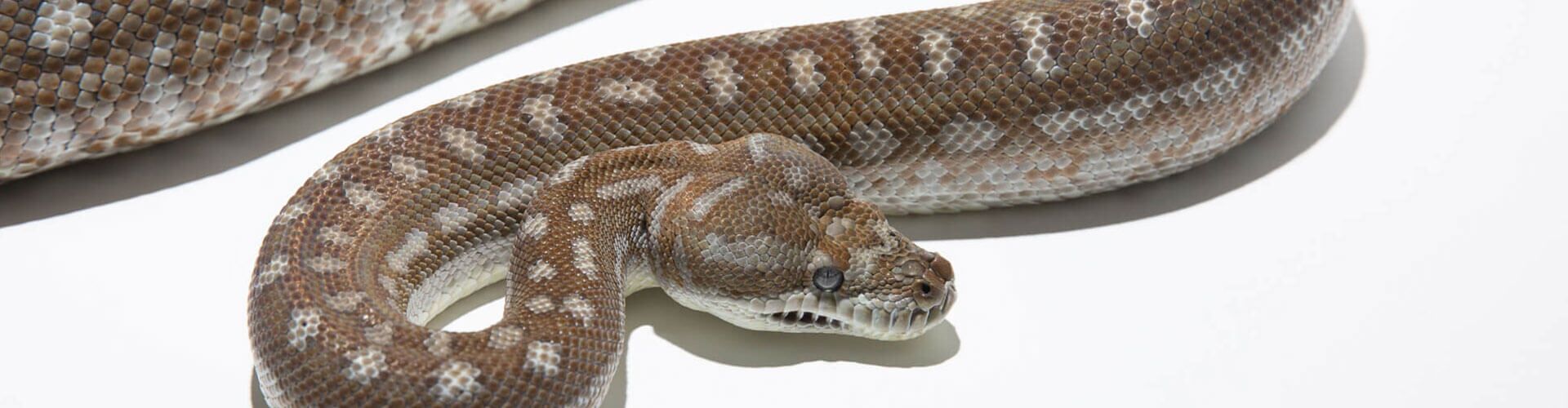
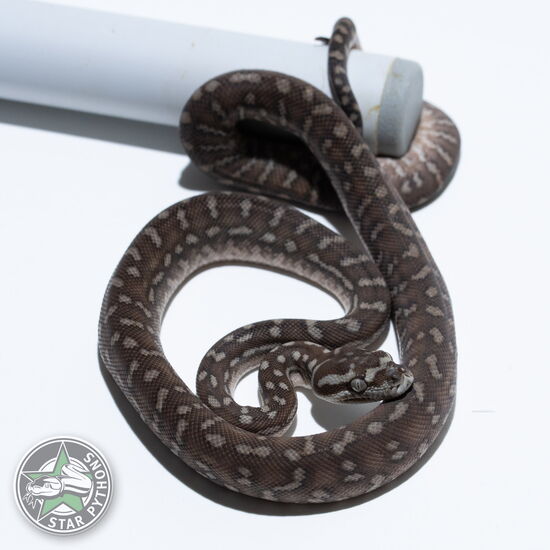
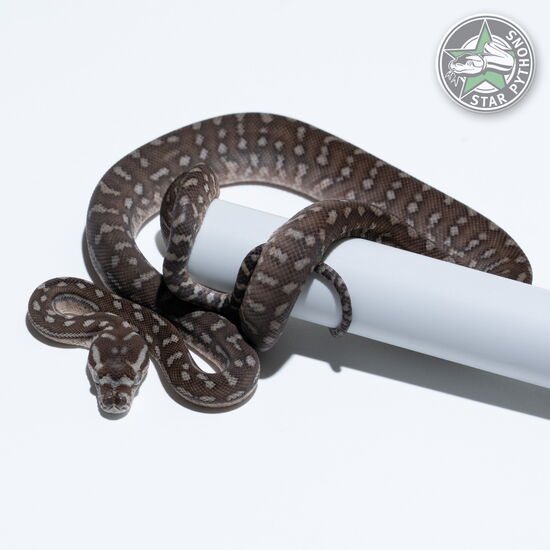
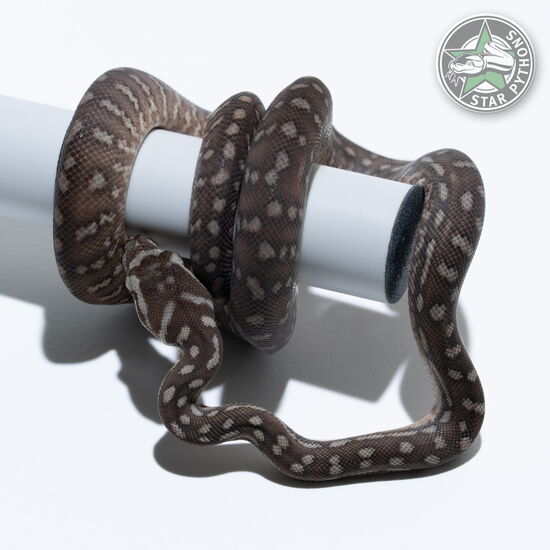
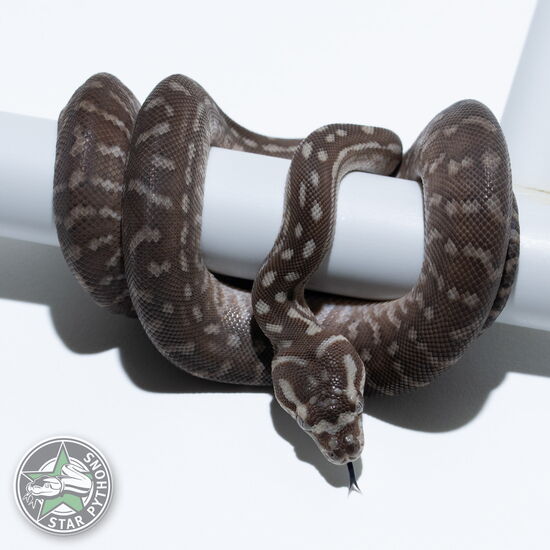
Range and Core Habitat
Morelia bredli is endemic to Australia's Northern Territory, where it is restricted to the southern portion of the territory. The town of Alice Springs sits near both the geographic centre of the continent and the centre of the species' known range. The MacDonnell Ranges – a 644 km (400 miles) chain of parallel ridges extending east and west of Alice Springs, composed primarily of ancient quartzite and sandstone shaped by the Alice Springs Orogeny approximately 310–340 million years ago – form the backbone of the species' distribution (Mutton & Julander, 2022). The ranges' deep gorges, rocky escarpments, and cave systems provide the thermally stable refugia that are central to the species' survival strategy.
The range extends somewhat beyond the MacDonnell system. Populations are known as far south as the Palmer River, approximately 150 km (93 miles) south of Alice Springs, and as far northeast as the Hart Range. Gow (1981) noted a paratype specimen collected near The Granites in the Tanami Desert, roughly 500 km (311 miles) northwest of Alice Springs, which represents the northernmost confirmed locality for the species (Mutton & Julander, 2022).
A Desert Built on Extremes
The arid interior climate that M. bredli inhabits is characterised by temperature swings that would be physiologically challenging for most other pythons. In summer, open ground temperatures can exceed 40 °C, while sheltered rocky gorges remain considerably cooler. In winter, night-time temperatures across the MacDonnell Ranges can drop to 5 °C (41 °F) or below, with frost occurring at higher elevations. The diurnal range – the difference between daytime highs and overnight lows – can reach 18 °C (32 °F) on a single day, and the annual range across the year vastly exceeds anything experienced by coastal carpet pythons (Mutton & Julander, 2022).
Radio-telemetric field work documented that M. bredli maintains an average body temperature of approximately 33 °C in summer and around 19 °C in winter – body temperatures that remain considerably more stable than the ambient air temperatures at those times of year (Bedford, 2003). This stability is achieved through a combination of large body mass (which buffers thermal changes) and precise microhabitat selection.
Arboreal by Preference
The idea that a desert python is primarily terrestrial is contradicted by the field data. One study tracking 56 free-ranging specimens found that animals were located in trees 88% of the time (Bedford, 2003). River red gums (Eucalyptus camaldulensis), which line the seasonal watercourses threading through the gorges, are particularly important habitat features – these large trees offer hollow limbs that serve as thermally insulated retreat sites that are cooler than the surrounding air in summer and warmer in winter. Rocky gorge walls, boulder crevices, and caves serve the same function on the harder substrate of the ranges.
This arboreal tendency has a direct consequence for enclosure design: M. bredli in captivity requires robust elevated perches and the opportunity to spend time off the ground – not as optional enrichment, but as a core behavioural need.
Movement and Activity
M. bredli moves considerably greater distances between retreat sites than similarly sized carpet pythons from tropical habitats. The same field study recorded an average movement of approximately 461 m (1,512 ft) between secure sites – more than twice the distance recorded for comparable M. s. variegata individuals (Bedford, 2003). This greater mobility reflects the reduced density of suitable refuge trees in the desert environment compared with the tropics.
Niche Partitioning with Antaresia stimsoni
M. bredli shares its range with the much smaller Stimson's python (Antaresia stimsoni), and the two species coexist through biological niche partitioning (Julander, Mutton & Birch, 2013, as cited in Mutton & Julander, 2022). The smaller A. stimsoni is primarily terrestrial and feeds on lizards and frogs, while M. bredli is predominantly arboreal and takes larger mammalian and avian prey. Road surveys in the MacDonnell Ranges reflect this difference in habitat use: over a two-year period, 102 A. stimsoni were recorded on a road transect through Ormiston Gorge, compared with only two M. bredli – a result that likely reflects the arboreal, sedentary lifestyle of the larger species rather than a genuine difference in abundance (McDonald, 2012, as cited in Mutton & Julander, 2022).
Activity is primarily crepuscular to nocturnal during the warmer months, with movement typically beginning in the early evening. During hot summer days, animals shelter in cool gorge crevices or high in the tree canopy to escape surface temperatures. In winter, the pattern reverses: M. bredli may be observed basking in exposed positions on rock ledges or tree branches during the warmest part of the day, capitalising on absorbed solar radiation (Mutton & Julander, 2022). Males in particular have been recorded utilising the residual heat of paved roads on winter nights, basking at the roadside even when the surrounding ground is frosted (Mutton & Julander, 2022).
Diet in the Wild
As an adult, M. bredli is a generalist predator of medium to large prey. Wild individuals take feral rabbits, black-footed rock wallabies (Petrogale lateralis), introduced rodents, and a range of bird species – particularly hollow-nesting parrots such as Australian ringnecks (Barnardius zonarius), galahs (Eolophus roseicapilla), and cockatiels (Nymphicus hollandicus), which exploit the same tree hollow sites used by the pythons (Mutton & Julander, 2022; Fyfe, 1990). Camera trap footage has documented a water-based ambush strategy, with at least one individual recorded hunting from a submerged position at a permanent waterhole in Watarrka National Park, taking a collared sparrowhawk (Accipiter cirrocephalus) as it came to drink (Mutton & Julander, 2022). A ranger at the same park also observed what appeared to be a grey teal (Anas gracilis) killed by a Centralian python in a pond, suggesting that this aquatic ambush behaviour may be a regular hunting strategy at permanent waterholes within the gorge systems (Mutton & Julander, 2022). Fyfe (1990) recorded birds actively mobbing M. bredli perched high in riverside trees, only for the python to snatch individuals that ventured too close.
Hatchlings and juveniles feed primarily on skinks and other small lizards before shifting progressively toward mammalian prey as body size increases. The dietary flexibility of the adult – including the capacity to exploit invasive species such as rabbits and domestic cats – makes M. bredli a well-adapted opportunist in an unpredictable landscape.
The population density of M. bredli within suitable habitat can be relatively high. One study recorded 56 individuals at a single site, equating to approximately 0.15 animals per hectare; notably, around 90% of those animals were juveniles, suggesting a high reproductive rate and a survival bottleneck in the early years of life (Bedford, 2003). Hatchlings and small juveniles face predation from large monitors including the perentie (Varanus giganteus), raptors, and introduced predators – particularly feral cats (Felis catus) and red foxes (Vulpes vulpes), which established themselves in central Australia between roughly 1910 and 1930 (Mutton & Julander, 2022). By adulthood, M. bredli has few natural enemies within its range, with the wedge-tailed eagle (Aquila audax) representing perhaps the only predator capable of threatening a healthy adult.