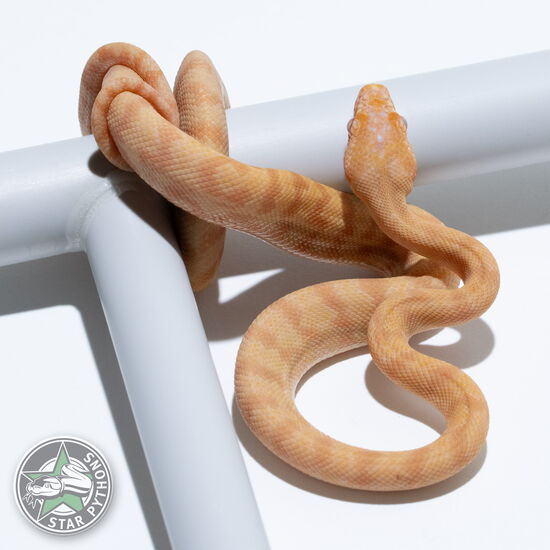
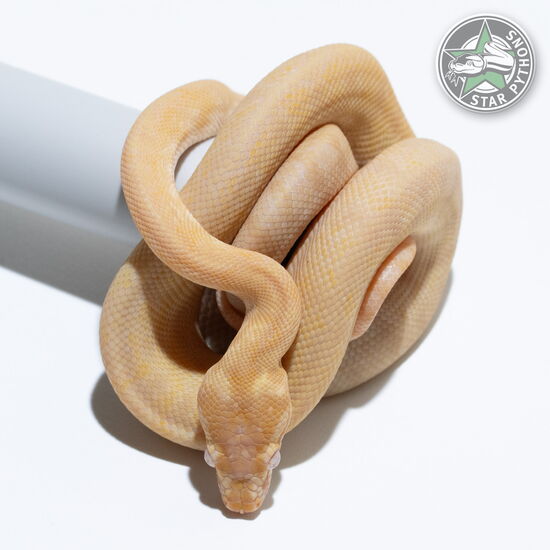
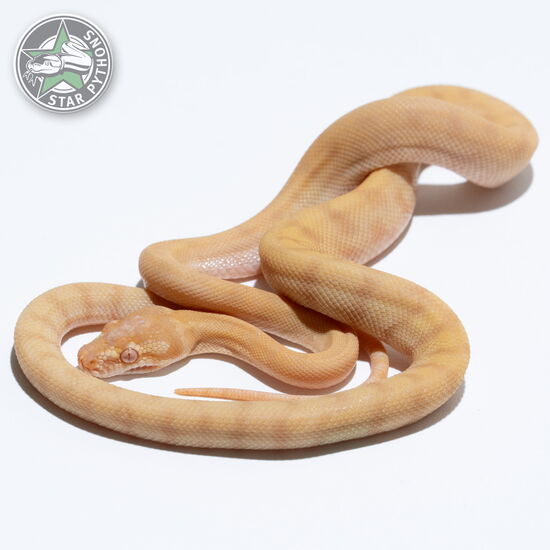
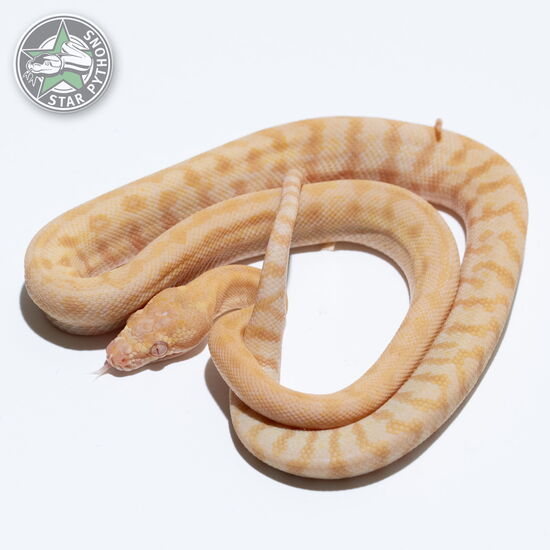
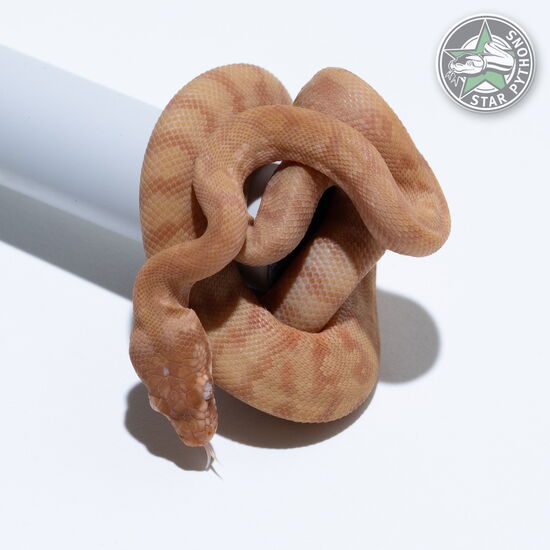
Darwin carpet python (Morelia spilota variegata) in typical warm orange-brown coloration | StarPythons

Buying a Darwin Carpet Python: Everything You Need to Know

The Darwin carpet python is the iconic carpet python of Australia's tropical north – a compact, strikingly coloured snake that has adapted equally well to the sandstone escarpments of Kakadu and the rafters of suburban Darwin. At StarPythons, we have been working with Darwin carpet pythons for years, including outstanding lineages such as pure Darwin Albinos. On this page, you will find everything you need to know before buying one: from species biology and natural history to terrarium setup, feeding, breeding, and what to look for when choosing your animal. Our guide draws on firsthand breeding experience as well as the extensive field research of Gavin Bedford, Richard Shine, and other researchers who have studied wild Darwin carpet python populations across northern Australia.

Looking for a Darwin carpet python? Browse our Darwin carpet pythons for sale below.

Quick Facts: Darwin Carpet Pythons at a Glance

Feature Details
Scientific Name Morelia spilota variegata
Size 1.5–2.0 m (4.9–6.6 ft) average
Life Expectancy 20-30 Years
Cage Size 120 × 70 × 80 cm / 4 × 2.3 × 2.6 ft (L × W × H)
Temperature Summer (Daytime) 27–28 °C (80–82 °F), Hotspot 35–38 °C (95–100 °F)
Temperature Winter (Daytime) 25–27 °C (77–80 °F), Hotspot 31–34 °C (88–93 °F)
Feeding Interval Every 14-21 days
Winter Rest Moderate cooling recommended
Suitable for Beginners Yes – manageable size and generally robust
Distribution Tropical northern Australia (NT, Kimberley, WA)

Introduction

The Darwin carpet python (Morelia spilota variegata) is one of the smaller yet most charismatic members of the Morelia spilota complex. Originally described by Gray in 1842 – the species epithet translates to "variegated spotted Morelia" – this subspecies is the classic carpet python of tropical northern Australia. Its range spans the monsoon belt from the Kimberley in Western Australia across the Top End of the Northern Territory, and under some taxonomic arrangements extends to the Cape York Peninsula and New Guinea.

What defines the Darwin carpet python in captivity is a compelling combination of manageable size, striking colouration, and a personality that experienced keepers describe as alert and characterful. Neonates emerge clad in shades of rust-red – a colour that makes them among the most distinctive hatchlings in the complex – before gradually transitioning to the warm orange-and-brown banding of adults. This dramatic ontogenetic colour change is one of the hallmarks of the subspecies.

In the wild, Darwin carpet pythons are highly arboreal, spending around 70 % of their time in trees (Bedford, 2003). They are also remarkably successful in urban environments: in the greater Darwin area, they are among the most frequently encountered snakes, routinely found in roof spaces and garden sheds. This adaptability to human-modified landscapes mirrors the ecological flexibility seen in the coastal carpet python further south – but in a distinctly tropical context, shaped by the rhythms of wet and dry seasons rather than the temperature-driven seasonality of subtropical eastern Australia.

Taxonomy and the variegata Complex

The name Morelia spilota variegata has had a long and somewhat convoluted history. Gray's original designation in 1842 was applied broadly to all carpet pythons. Over the following century and a half, this arrangement was progressively refined as successive authors separated distinct forms: Gow (1981) elevated the Centralian python, Smith (1981) the southwestern carpet python, and Wells and Wellington (1984, 1985) described three additional taxa. What remains under variegata today describes the populations occurring along the tropical northern coast of Australia, from the Kimberley through the Northern Territory to Cape York, as well as the closely related populations across the Torres Strait in New Guinea.

On this page, we treat the Darwin carpet python as M. s. variegata in the traditional sense used throughout herpetoculture – the population of the Northern Territory and Kimberley region of Western Australia. It is worth noting, however, that the phylogenetic boundaries within the M. spilota complex are subject to ongoing scientific debate. Genetic analyses by Ciavaglia et al. (2015) have demonstrated that the Darwin carpet python is closely related to populations in New Guinea and on the Cape York Peninsula, and Mutton and Julander (2022) have elected to synonymise all three populations under variegata as regional forms of a single clade. The reasoning is biogeographic: during the last glacial maximum approximately 20,000 years ago, sea levels were around 120 metres lower than today, exposing the Sahul Shelf and creating land connections between all three regions. As sea levels rose during the terminal Pleistocene, the populations were progressively isolated – first the Top End animals, when rising waters consumed Lake Carpentaria around 9,000 BP, and finally the Cape York and New Guinea populations, separated by the formation of the Torres Strait just 5,800 years ago. This very recent separation explains why the genetic divergence between the three groups remains shallow.

Though all three populations are distinguishable through both phenotypic characters and molecular analysis, we follow the traditional designations here for clarity and practical consistency – the same standard used in CITES documentation and established breeding records worldwide. We will revise our designations as scientific consensus develops.

Distribution, Habitat and Lifestyle

Range

The range of the Darwin carpet python covers much of tropical northern Australia. The species is centred on the Top End of the Northern Territory, where the highest encounter rates occur in and around the city of Darwin itself. From there, the range fans out south to the Daly River, east through Kakadu National Park and Arnhem Land as far as Groote Eylandt, and north to the Tiwi Islands (Bathurst and Melville Islands). The most southerly verified record in the Northern Territory comes from the Roper River area near Ngukurr (Mutton & Julander, 2022).

A second population exists in the Kimberley region of Western Australia, separated from the nearest Northern Territory animals by roughly 650 km of unsuitable habitat. In the Kimberley, records span from the East Kimberley west of Wyndham along the coast south to Prince Regent National Park; the westernmost report places the species on the Dampier Peninsula north of Broome (Mutton & Julander, 2022). Whether this represents a truly disjunct population or merely reflects sparse sampling in the intervening country remains an open question.

Habitat

Across the monsoon belt, Darwin carpet pythons occupy a broad spectrum of wooded environments. In the Kimberley, they favour the gorges and vine thickets associated with sandstone country (Kend, 1997); in the Northern Territory, they range through savannah woodland, gallery forest along watercourses, and the seasonally flooded plains of Kakadu (Barker & Barker, 1994). The common thread is tree cover – like all members of the complex, this subspecies is rarely encountered far from canopy.

An Urban Python

Much like the coastal carpet python in suburban Brisbane, the Darwin carpet python has proven remarkably successful in human-modified landscapes. Within the greater Darwin area, they are one of the two most frequently relocated snake species, with around 150 callouts per year – matched only by the Australian tree snake (Dendrelaphis punctulatus) (Parkin et al., 2021). The snakes are typically found sheltering in attics and rafters, often in ambush position, drawn by the abundance of invasive rodents associated with human habitation.

This urban success story appears to reflect genuine ecological flexibility rather than mere tolerance. Larger individuals tend to be found in more rural areas, while their conspecifics in densely populated suburbs average smaller – suggesting that urban and rural populations may experience different selective pressures (Mutton & Julander, 2022). Outside developed areas, however, Darwin carpet pythons appear much less common. A survey of the Fogg Dam Conservation Reserve recorded just 25 individuals across nearly 4,000 nights of road cruising between 2005 and 2020 (Brown, Hemphill & Shine, 2021), underscoring either low natural densities or a more secretive existence in undisturbed habitat.

Arboreal Lifestyle

Darwin carpet pythons are committed tree-dwellers. Bedford's (2003) radio-tracking study in the Darwin area revealed that individuals spend roughly 70 % of their time off the ground, favouring a small number of familiar tree hollows and rooftop spaces to which they return again and again. Some animals remained faithful to a single refuge for more than two months – one individual stayed put for over 300 days. Ground time is minimal: when relocating between refuges, snakes covered an average of just 190 m before ascending again, amounting to only about 7 % of total activity time on the ground. Crowding is avoided not by territorial defence but by temporal partitioning – several individuals may share the same tree hollow across a season, but they rotate occupancy rather than cohabiting (Bedford, 2003).

Despite living in the tropics, the preferred body temperature for these snakes is a moderate 29.1–29.5 °C (Bedford & Christian, 1998) – lower than that recorded for some temperate python species. The relatively warm ambient temperatures across their range make achieving this thermal preference straightforward, and their behavioural cycle is driven primarily by the annual wet and dry seasons rather than the temperature-based seasonality that shapes the activity of their southern relatives.

Size, Appearance and Variation

Size

Hatchlings weigh in at a modest 22–23 g – on par with other carpet python subspecies. Growth is rapid in the tropical climate, and most adults settle between 1.5 and 2.0 m (4.9–6.6 ft). The largest verified individual – a male from Humpty Doo, NT, captured in 2008 – stretched to 3.1 m (10.2 ft) and tipped the scales at 4.5 kg (9.9 lbs) (Mutton & Julander, 2022). Animals of this calibre remain exceptional, though anecdotal reports suggest that outsized specimens may be turning up more often, perhaps fuelled by the abundance of introduced rodents and possums in urban areas.

There is a modest degree of sexual size dimorphism: females tend to average slightly longer than males in everyday encounters, yet the absolute size record belongs to a male – a pattern consistent with male–male combat driving selection for large body size in that sex (Mutton & Julander, 2022).

Appearance

The overall impression of an adult Darwin carpet python is that of a warm-toned, banded snake. Irregular crossbands in shades of orange to tan alternate with paler interspaces, and thin black edging along the dorsal midline lends contrast to the pattern. A faint vertebral stripe is visible in some individuals. With age, head markings tend to simplify – some older animals carry almost no pattern on the crown, though most retain at least traces. One of the more reliable visual characters for field identification is a dark postocular stripe that runs from the parietal region through the eye: in Darwin carpet pythons this stripe typically fades out before reaching the nostril, whereas in Papuan animals it usually continues through the nasal scale (Mutton & Julander, 2022).

Ontogenetic Colour Change

Few carpet pythons change as dramatically with age as the Darwin form. Hatchlings are strikingly rust-red – among the most vividly coloured neonates in the entire complex – and the deepest pigment sits in the rear third of the body. Over the first year or so, this intensity fades unevenly: the head and forebody often look washed-out well before the posterior catches up, a pattern that helps distinguish young Darwin carpets from their more evenly coloured Papuan relatives. As the animal matures, contrast sharpens rather than diminishes. Adult ground colour settles into various shades of brown, darkest along the spine and warming to orange or even rich red-orange on the flanks, while the lighter crossband elements shift from cream through buff to pale grey, bordered by black scales (Mutton & Julander, 2022).

Interestingly, wild-born neonates appear to carry more saturated pigment than those produced in captivity, and animals taken from the wild reportedly fade once placed in captive conditions (Mutton & Julander, 2022) – a phenomenon likely linked to diet, UV exposure, or substrate colour, though the mechanism has not been studied in detail.

Morphological Identification

There is no single scale count or body proportion that will reliably separate a Darwin carpet python from other members of the complex – scalation overlaps broadly across all subspecies. In practice, identification rests on a combination of colour, pattern, and known geographic provenance rather than on any hard morphological key (Mutton & Julander, 2022).

Enclosure, Temperatures and Feeding

Cage Size

For an adult Darwin carpet python, we recommend a minimum enclosure size of 120 × 70 × 80 cm (4 × 2.3 × 2.6 ft, L × W × H). The smaller average adult size compared to coastal carpet pythons allows for a somewhat more compact enclosure, but vertical space should not be neglected given the strongly arboreal nature of this subspecies. Juveniles can be started in smaller setups and graduated to larger enclosures as they grow.

Climbing Opportunities

This is a highly arboreal species that spends the vast majority of its time elevated – around 70 % according to field studies (Bedford, 2003). Your enclosure should reflect this with multiple sturdy climbing branches at various heights, ideally with some visual cover to mimic the tree hollows and dense vegetation these snakes prefer as refuge sites in the wild. Provide at least one hiding place in the warm zone and one in the cool zone. As with all carpet pythons, hides should be snug – the snake should feel its body in contact with the walls of the hide.

Temperatures

Darwin carpet pythons come from a tropical monsoon climate characterised by a pronounced wet and dry season rather than the temperature-driven winter experienced by their southern relatives. In the wild, their preferred body temperature is a moderate 29.1–29.5 °C (Bedford & Christian, 1998). The seasonal cycle in captivity should reflect a modest dry-season cooling rather than the more dramatic temperature drops required by diamond or even coastal carpet pythons.

Summer (Wet Season)

Daytime 27–28 °C (80–82 °F)
Spot / Heating Mat 35–38 °C (95–100 °F)
Nighttime 23–25 °C (73–77 °F)
Humidity 65 % rH

Winter (Dry Season)

Daytime 25–27 °C (77–80 °F)
Spot / Heating Mat 31–34 °C (88–93 °F)
Nighttime 20–23 °C (68–73 °F)
Humidity 65 % rH

Important: As with all members of the Morelia spilota complex, a basking hotspot is critical. After feeding, carpet pythons seek out temperatures significantly warmer than their normal preferred range to initiate digestion – a well-documented thermophilic response. A hotspot that is always available allows the animal to self-regulate this process. Without it, digestion slows, and the risk of regurgitation increases.

Feeding

For adult Darwin carpet pythons, offer an appropriately sized rodent every 10 to 14 days. Juveniles should be fed more frequently, approximately every 7 days. As with all carpet pythons, feed according to body condition rather than a rigid calendar. Given the smaller average size of this subspecies compared to coastal carpet pythons, prey items should be scaled accordingly – avoid the temptation to offer oversized meals.

In the wild, Darwin carpet pythons feed on a varied diet of amphibians, reptiles, birds, and mammals. Young animals feed primarily on birds – particularly rainbow lorikeets (Trichoglossus moluccanus) – before switching to mammalian prey as they mature (Mutton & Julander, 2022). Adult prey species include northern brushtail possums (Trichosurus arnhemensis), invasive rodents including black rats (Rattus rattus) and house mice (Mus musculus), and occasionally flying foxes and feral cats. They will also occasionally take cane toads (Rhinella marina), generally with fatal results (Brown, Hemphill & Shine, 2021).

Breeding and Reproduction

Seasonality and Combat

Breeding season for Darwin carpet pythons generally takes place in late June and July (Kortlang, 1991) – during the cool dry season, which contrasts with the spring breeding of the coastal carpet python further south. Males engage in combat during this period, wrestling and occasionally biting in ritualised contests for access to females. As in some other members of the complex, there is a slight degree of sexual size dimorphism, and the large maximum sizes recorded for males may reflect positive selection through combat (Mutton & Julander, 2022).

Clutch Size and Incubation

Hard data on wild reproductive output are scarce. The only published sample of free-ranging females – five individuals examined by Shine and Slip (1990) – yielded follicle and egg counts ranging from 6 to 38, averaging around 16. Captive clutches tend to be larger: breeders report a mean of about 23 eggs per clutch (range 17–33) with fertility rates around 86 % (Mutton & Julander, 2022), though Kortlang (1991) recorded more modest clutches of 11 and 12 eggs from two females in the earliest documented captive breeding of this form. In the wild, eggs are deposited between September and November, with hatchlings appearing in the wet-season months of January and February.

Unlike some temperate python species, brooding female Darwin carpet pythons do not appear to shiver to generate heat – Bedford (2003) recorded no muscular thermogenesis in laboratory trials, which makes sense given that ambient temperatures across the Top End rarely drop low enough to threaten embryonic development. Incubation temperature is therefore dictated largely by the thermal properties of the nest site, which in the wild is most likely a tree hollow.

Captive Breeding Notes

The first published account of captive breeding of the Northern Territory/Kimberley form was provided by Kortlang (1991). In that report, mating was observed in late June after males were introduced to females, with egg deposition occurring in late October and mid-November. Incubation at 29.5–32 °C produced healthy hatchlings after 65–70 days. Hatchlings averaged 45–48 cm in total length and 21–24 g in weight. The neonates were uniformly brick-red in colouration, which persisted through the first slough and only gradually altered with growth.

As with other carpet pythons, a cooling period during the dry season months is recommended to trigger reproductive behaviour. At StarPythons, we allow our breeding females adequate recovery time between clutches – reproduction is energetically costly, and females bred annually without sufficient recovery produce smaller clutches and weaker offspring over time.

Conservation

As a species, the Darwin carpet python is not considered threatened – overall numbers appear healthy, though pockets of local decline have been reported. The Northern Territory retains more of its native woodland cover than most Australian states, which gives the subspecies a relatively intact habitat base. Where clearing has occurred, the snake's willingness to colonise rooftops, sheds, and regrowth vegetation has provided an additional buffer against population loss.

The Cane Toad Effect

The arrival of the invasive cane toad (Rhinella marina) in the Northern Territory in 1995 initially raised fears of a devastating impact on carpet python populations. While individual snakes that attempt to consume toads do die, the net effect on populations has been the opposite of what was expected: Darwin carpet python numbers have actually increased (Brown, Hemphill & Shine, 2021). The reason is indirect. Large yellow-spotted monitors (Varanus panoptes), which are important predators of carpet pythons, have declined by as much as 90 % following cane toad invasion (Ujvari & Madsen, 2009). The resulting release from predation pressure has more than compensated for the small number of pythons lost to toad ingestion – a striking example of how invasive species can reshape native ecosystems in unexpected ways.

Buying a Darwin Carpet Python: What You Should Look Out For

Looking for a Darwin carpet python? At StarPythons, we breed Darwin carpet pythons with a clear focus on health, genetics, and animal welfare. Here is what you should always insist on when purchasing.

Only Captive-Bred Animals from Responsible Breeders. Only buy captive-bred animals from reputable breeders. Captive-bred animals are healthier, calmer, and do not impact wild populations. Wild-caught carpet pythons from Australia are practically unavailable, as the country has maintained strict wildlife export regulations for decades.

Health Check Before Purchase. A reputable breeder will be happy to show you their animals and provide full information about feeding history, shedding record, and health status. Watch out for noisy breathing, excessive mucus in the mouth, mites or skin changes, an unclean cloaca, or a lethargic, unresponsive animal.

Documentation and Legal Aspects. Like all carpet pythons (Morelia spilota), Darwin carpet pythons are listed under CITES Appendix II, which regulates international trade. Within the EU, no additional CITES permits are required for captive-bred animals – we provide all necessary documentation as standard. Reporting requirements vary by country and region. The seller is legally obliged to provide you with a certificate of origin. Never buy an animal without one.

Know What You Are Getting – Subspecies and Lineage Matter. Given the ongoing taxonomic discussion surrounding the Morelia spilota complex, it is more important than ever to know the subspecific identity and geographic lineage of your animals. Darwin carpet pythons are closely related to Papuan carpet pythons (M. s. harrisoni), and mixed animals are not uncommon in the hobby. At StarPythons, all our breeding animals are documented with full lineage records.

Morphs and Genetic Varieties

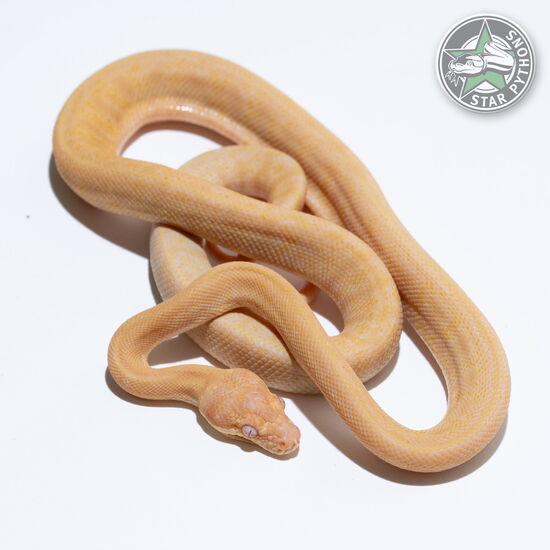
Compared to the coastal carpet python, the Darwin carpet python currently has a limited morph palette – but the one proven morph that exists is spectacular. The Darwin Albino is a T-negative (tyrosinase-negative) albino, meaning it produces no melanin whatsoever. The result is an animal displaying vivid yellow, orange, and white colouration on a pattern-free or lightly patterned background. All Darwin Albinos trace back to a single wild-caught animal from the Northern Territory, and the line first appeared in European collections around 2006–2007.

At StarPythons, we work with outstanding Darwin Albino lineages. For detailed information on genetics, inheritance, and available animals, visit our dedicated Albino Carpet Pythons page.

Common Mistakes (and How to Avoid Them)

1. Neglecting Vertical Space

Darwin carpet pythons spend roughly 70 % of their time above ground. An enclosure that is long and wide but low forces an arboreal animal into an unnatural terrestrial existence, leading to stress, reduced activity, and poor muscle tone. Prioritise height and provide sturdy branches at multiple levels – your snake should be able to climb to a perch that is well above your eye line.

2. Overfeeding

Because Darwin carpet pythons are smaller than their coastal relatives, the temptation to offer "just one more" prey item is real – but their metabolism is no different. In the wild, these ambush predators may wait weeks between meals. An overweight carpet python faces fatty liver disease, reduced fertility, and a shortened lifespan. Feed according to body condition, not appetite: a lean, active snake is a healthy snake.

3. Treating Them Like Coastals

Darwin carpet pythons come from the monsoon tropics, not the subtropics. Their seasonal cycle is driven by wet and dry periods rather than large temperature swings. A winter cooling that mirrors coastal or diamond python protocols – deep drops over many weeks – is unnecessary and can stress the animal. A modest dry-season reduction in temperature and photoperiod is all that is needed.

4. Skipping Humidity Management

The Top End wet season brings sustained humidity above 80 %. While you do not need to replicate monsoon conditions, consistently dry air – especially during shedding – may lead to incomplete sheds. Aim for around 65 % relative humidity year-round, with a brief spike during shedding. Good ventilation is equally critical: stagnant, humid air is the fast track to problems.

5. Ignoring Lineage

With the ongoing taxonomic discussion around the variegata complex and the close relationship between Darwin, Cape York, and Papuan carpet pythons, mixed-lineage animals are more common in the hobby than many keepers realise. If you intend to breed, or simply want to know what you have, insist on documented lineage from the start. Once mixed, the genetic integrity of a line cannot be recovered.

FAQ - Darwin Carpet Python

How big does a Darwin carpet python get?

Most adults reach 1.5–2.0 m (4.9–6.6 ft) in total length, making them one of the smaller subspecies in the complex.

Is the Darwin carpet python suitable for beginners?

Yes – with appropriate preparation. Darwin carpet pythons are among the more manageable members of the carpet python complex thanks to their moderate adult size. They feed readily and are generally robust. However, like all carpet pythons, they can be defensive as juveniles, and new keepers should be prepared for an alert, characterful snake that requires confident handling.

What is the difference between a Darwin carpet python and a Papuan (IJ) carpet python?

In the traditional classification used throughout the hobby, the Darwin carpet python (M. s. variegata) is the Australian form from the Northern Territory and Kimberley, while the Papuan carpet python (M. s. harrisoni) is the New Guinea form. Genetically, the two are closely related – recent research suggests they were only separated by rising sea levels a few thousand years ago. Phenotypically, two useful distinguishing traits are the parietal stripe (which typically stops before the nasal scale in Darwin carpets but passes through it in Papuan animals) and the juvenile pattern (Darwin hatchlings tend to show a washed-out anterior pattern, while Papuan hatchlings are more evenly marked). In captivity, care requirements are broadly similar.

Are Darwin carpet pythons aggressive?

No. While individual temperament varies and hatchlings can be nippy, Darwin carpet pythons are not inherently aggressive. With regular, gentle handling, most settle down within the first few months. Adults from well-managed captive-bred lines are usually calm and manageable. Their defensive musk – released when they feel threatened – is perhaps more memorable than their bite.

How much does a Darwin carpet python cost?

Prices vary depending on age, lineage, and morph. Wild-type captive-bred hatchlings are generally available in the mid-range for carpet pythons, while Darwin Albinos and proven breeding pairs command significantly higher prices. Rather than focusing on the lowest price, pay attention to lineage documentation, health status, and the breeder's reputation. Browse our current availability below to see pricing for your region.

Where can I buy a Darwin carpet python?

We recommend buying directly from an experienced, reputable breeder – like StarPythons. A good breeder will take the time to answer your questions, show you their animals and breeding facility, and provide full documentation including proof of origin and subspecific lineage. Avoid anonymous sellers on reptile exchanges or dubious online listings where health history, lineage, and subspecific identity of the animal are unknown.
References

Barker, D. G., & Barker, T. M. (1994). Pythons of the World. Advanced Vivarium Systems Inc.

Bedford, G. S. (2003). Ecology and Physiology of Pythons from the Northern Territory of Australia. PhD thesis, Northern Territory University, Darwin, Australia.

Bedford, G. S., & Christian, K. A. (1998). Standard metabolic rate and preferred body temperatures in some Australian pythons. Australian Journal of Zoology, 46(4), 317–328.

Brown, G., Hemphill, J., & Shine, R. (2021). The uneasy coexistence between carpet pythons and cane toads. Australian Zoologist, 41(2), 214–219. https://doi.org/10.7882/az.2020.042

Ciavaglia, S. A., Tobe, S. S., Donnellan, S. C., Henry, J. M., & Linacre, A. M. T. (2015). Molecular identification of python species: Development and validation of a novel assay for forensic investigations. Forensic Science International: Genetics, 16, 64–70. https://doi.org/10.1016/j.fsigen.2014.12.002

Kend, B. A. (1997). Pythons of Australia. Canyonlands Publishing Group.

Kortlang, S. (1991). Husbandry and reproduction of the Northern Territory/Kimberley form carpet python Morelia spilota variegata (Gray, 1842). Monitor: Bulletin of the Victorian Herpetological Society, 3(2), 51–60.

Mutton, N., & Julander, J. (2022). The More Complete Carpet Python: A Comprehensive Guide to the Natural History, Care, and Breeding of the "Morelia spilota" Complex. ECO Publishing. ISBN 978-1938850424.

Parkin, T., Jolly, C. J., De Laive, A., & Von Takach, B. (2021). Snakes on an urban plain: Temporal patterns of snake activity and human–snake conflict in Darwin, Australia. Austral Ecology, 46, 449–462. https://doi.org/10.1111/aec.12990

Shine, R., & Slip, D. J. (1990). Biological aspects of the adaptive radiation of Australasian pythons (Serpentes: Boidae). Herpetologica, 46(3), 283–290.

Ujvari, B., & Madsen, T. (2009). Increased mortality of naive varanid lizards after the invasion of non-native cane toads (Bufo marinus). Herpetological Conservation and Biology, 4(2), 248–251.

Available Pure Darwin Carpet Pythons (Morelia spilota variegata) Including Morphs

Sex
Category
Morph
This beautiful female Albino (pure Darwin) carpet python with id 25-439 is for sale.
Animal ID: 25-439

Albino (pure Darwin)

600 € US$ 600 ₩ 749,000

Details

This beautiful female Albino (pure Darwin) carpet python with id 25-437 is for sale.
Animal ID: 25-437

Albino (pure Darwin)

600 € US$ 600 ₩ 749,000

Details

This beautiful female Albino (pure Darwin) carpet python with id 25-431 is for sale.
Animal ID: 25-431

Albino (pure Darwin)

600 € US$ 600 ₩ 749,000

Details

This beautiful male Albino (pure Darwin) carpet python with id 25-306 is for sale.
Animal ID: 25-306

Albino (pure Darwin)

500 € US$ 500 ₩ 749,000

Details

This beautiful male Albino (pure Darwin) carpet python with id 25-305 is for sale.
Animal ID: 25-305

Albino (pure Darwin)

500 € US$ 500 ₩ 749,000

Details

This beautiful male Albino (pure Darwin) carpet python with id 25-300 is for sale.
Animal ID: 25-300

Albino (pure Darwin)

500 € US$ 500 ₩ 749,000

Details