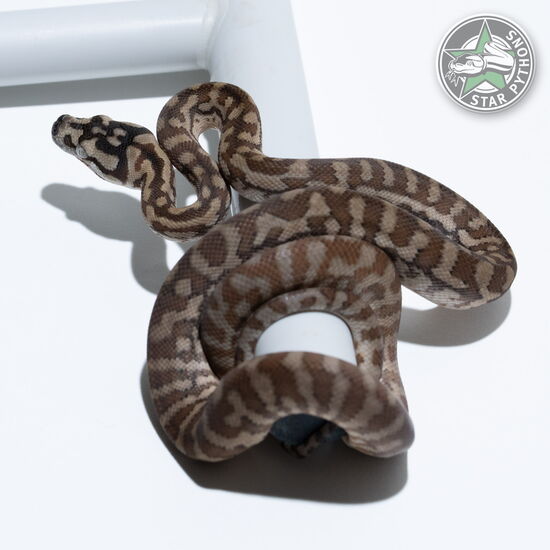
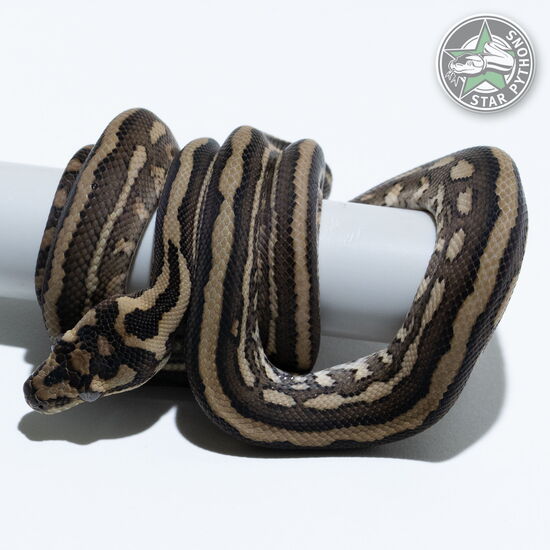
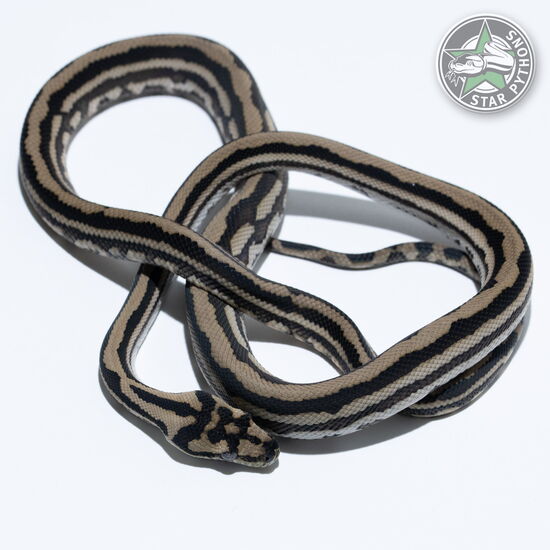
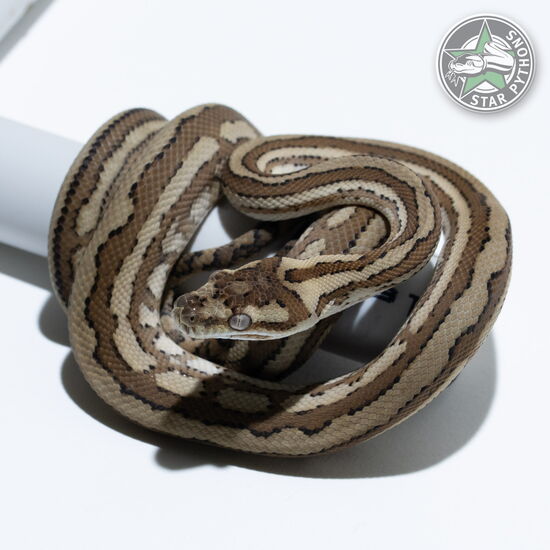
FAQ - Carpet Python Myths Debunked
Are carpet pythons suitable for beginners?
Carpet pythons can be an excellent choice for motivated beginners. Their reliable feeding response, general hardiness, manageable adult size, and engaging behavior make them rewarding to keep. The one area where new keepers may face a learning curve is the defensive behavior of some hatchlings, which is easily managed with a snake hook, gloves, and patience. Choosing a captive-bred animal from a reputable breeder and selecting a subspecies known for calm temperament (e.g. M. s. variegata, M. s. mcdowelli, or M. bredli) further simplifies the experience.
Are carpet pythons aggressive?
No. Carpet pythons are not aggressive. What keepers sometimes perceive as aggression is defensive behavior — a normal biological response to a perceived threat. A proportion of hatchlings will strike defensively during their first weeks, but the vast majority calm down as they grow and gain confidence. Nearly all adult carpet pythons can be handled without problems. Most bites from adults result from feeding errors, not from defensive or aggressive behavior.
How big do carpet pythons get?
Most carpet pythons average around 150–200 cm (5–6.5 ft) in total length. As indeterminate growers, their eventual size depends largely on feeding protocols and longevity rather than on rigid genetic limits. Coastal carpet pythons (M. s. mcdowelli) are the largest within the complex and may occasionally exceed 300 cm (10 ft) in exceptional cases, while Darwin carpet pythons (M. s. variegata) and jungle carpet pythons (M. s. cheynei) typically remain within the 150–200 cm (5–6.5 ft) range. Carpet pythons are slender snakes and weigh considerably less than other python species of comparable length.
Do carpet pythons need high humidity?
Carpet pythons are remarkably tolerant of a wide range of humidity levels — a reflection of the ecological diversity across the Morelia spilota complex, which spans habitats from semi-arid mountain ranges to tropical rainforests. Most subspecies do well at typical indoor humidity levels of 40–60 %, and a clean water bowl combined with an optional humid hide is sufficient for most situations. However, the common claim that humidity is entirely irrelevant oversimplifies the biology: tolerance of suboptimal conditions is not the same as those conditions being optimal, and subspecies-specific differences should be respected. Slightly elevated humidity during the shedding cycle can help ensure a clean shed.
Are carpet pythons nocturnal?
Carpet pythons are cathemeral, meaning they are active during both day and night. In captivity, they frequently bask during the day, explore their enclosure, and show interest in their surroundings. With a well-designed enclosure that includes elevated perches and a proper thermal gradient, carpet pythons are among the more visibly active python species.
Do all carpet python subspecies need the same care?
No. The Morelia spilota complex includes subspecies from tropical, temperate, and arid environments, each with distinct requirements for temperature, humidity, and seasonal cycling. A care protocol suitable for a jungle carpet python (M. s. cheynei) from tropical Queensland would be inappropriate for a Centralian python (M. bredli) from the arid interior or a diamond python (M. s. spilota) from temperate southeastern Australia. Always research the specific requirements of the subspecies you are keeping.
Do carpet pythons need branches and climbing opportunities?
Yes. All carpet pythons are semi-arboreal and possess morphological adaptations — a laterally compressed body, prehensile tail, and strong musculature — for climbing. Providing sturdy branches, perches, or shelf-like platforms is a fundamental component of species-appropriate husbandry. Carpet pythons that have access to vertical space consistently use it.