Carpet Pythons by StarPythons

Common Myths About Carpet Pythons – And What the Evidence Actually Shows

Carpet pythons (Morelia spilota complex) are among the most widely kept pythons in the world, yet few species are surrounded by as much misinformation. Many of these myths originate from outdated care sheets, anecdotal forum posts, or the generalization of experiences with a single animal to an entire species complex comprising at least six recognized subspecies across vastly different climatic zones.

Part of the problem is structural. Although large numbers of carpet pythons are kept in captivity worldwide, and a great deal of practical experience has been accumulated as a result, the conditions under which these animals are maintained vary enormously — in enclosure design, temperature regimes, feeding protocols, substrate, and countless other parameters. This makes it difficult to draw meaningful comparisons between collections, let alone to derive universally valid conclusions. In practice, many widely repeated claims about carpet pythons are based on individual observations from a single collection or even a single animal, which are then presented online as general truths. This is particularly problematic when it leads to sweeping claims about the temperament of specific subspecies or even color morphs — for instance, the assertion that a particular form is inherently more aggressive than another, when in reality the observation may reflect nothing more than the husbandry conditions, handling history, or individual disposition of a handful of animals. A scientifically rigorous approach would require controlled studies with sufficiently large sample sizes of animals kept under standardized conditions — and for most of the topics discussed below, such studies simply do not exist. What we can offer instead is the accumulated experience of working with a large, diverse collection over many years, combined with the available published literature. We present this transparently and note where the evidence is strong and where it remains anecdotal.

At StarPythons, we maintain one of the largest carpet python collections in Europe — approximately 260 adult animals representing more than 150 genetic variants. That sample size, combined with nearly two decades of professional breeding experience since 2007, provides a solid empirical basis for addressing the most persistent misconceptions. Below, we examine seven common myths, explain where they come from, and present what our experience and the available evidence actually support.


Myth 1: "All Carpet Pythons Are Aggressive"

This is arguably the most widespread misconception about carpet pythons — and the one most likely to discourage potential keepers from choosing this species. It deserves a careful, differentiated response.

Defensive behavior is not aggression

The first and most important distinction is a biological one. True aggression — the proactive pursuit of a target with the intent to cause harm — is exceptionally rare in carpet pythons. What keepers typically encounter is defensive behavior: a startled animal responding to a perceived threat with a strike, a hiss, or an S-shaped posture. This is a survival strategy, not a character flaw. Virtually all colubrid and pythonid species exhibit defensive behavior under certain conditions, and carpet pythons are no exception.

Hatchlings vs. adults

Yes, a proportion of carpet python hatchlings will strike when handled. In our collection, roughly one in three neonates shows a noticeable defensive response during the first weeks of life. This is entirely expected. A 40 cm (16 in) hatchling has no venom, no size advantage, and no alternative defense other than bluff and a quick bite. Compared to many other python species — including reticulated pythons and scrub pythons — the defensive response of a carpet python neonate is harmless and short-lived.

Most hatchlings begin to calm down once they have gained some body mass and confidence, typically within the first few months. By the time they reach subadult size (roughly 100–120 cm / 3–4 ft), the vast majority of carpet pythons tolerate routine handling without any defensive reaction. This ontogenetic shift from defensive neonate to calm adult is well documented across the Morelia spilota complex.

The feeding-response factor

Perhaps 99 % of all bites from adult carpet pythons are not defensive — they are feeding errors. Carpet pythons possess an exceptionally strong feeding response, which is one of the reasons they are so easy to feed (see our feeding guide). However, this also means that a keeper who opens the enclosure around feeding time, or who handles the animal with hands that carry the scent of rodents, may receive a misdirected strike. Using a snake hook to gently signal your presence before reaching in — a simple "I am not food" cue — eliminates this risk almost entirely.

Subspecies variation

Temperament varies across the Morelia spilota complex. Darwin carpet pythons (M. s. variegata), Centralian pythons (M. bredli), and inland carpet pythons (M. s. metcalfei) are widely regarded as among the most docile forms, while jungle carpet pythons (M. s. cheynei) and some coastal carpet python (M. s. mcdowelli) lineages may retain a stronger defensive response into adulthood. Even within a given subspecies, individual variation is significant — genetics, early socialization, and husbandry conditions all play a role.

Practical advice

If you are concerned about defensive behavior in a new carpet python, use leather gloves and a snake hook during the first few weeks. There is no need to prove anything — the animal will settle in its own time. If you are purchasing from a breeder, ask about the temperament of the specific animal. At StarPythons, we are always transparent about the character of every individual we sell. For more information, see our purchasing guide.


Myth 2: "Carpet Pythons Get Very Large"

The perception that carpet pythons are "large snakes" is a classic case of conflating maximum recorded lengths with typical adult size — and of ignoring the considerable size variation across subspecies.

Average vs. maximum size

Most carpet pythons average around 150–200 cm (5–6.5 ft) in total length, with the majority of individuals remaining well below the 2 m (6.5 ft) mark. This places them firmly in the "medium-sized python" category — substantially smaller than Burmese pythons (Python bivittatus), reticulated pythons (Malayopython reticulatus), or African rock pythons (Python sebae), and comparable in length to many commonly kept rat snake and king snake species.

Indeterminate growth and the role of husbandry

A key biological fact that is often overlooked: pythons are indeterminate growers. They do not have a genetically fixed maximum size. Growth slows significantly with age but never fully ceases, meaning that an animal's eventual size is largely determined by prey availability and longevity rather than by a hard-coded species limit. In captivity, this means that feeding protocols and husbandry practices are the dominant factors in determining adult size — not subspecies identity alone. The perceived size hierarchy that places jungle carpets at the small end and coastal carpets at the large end is not as rigid as many care sheets suggest. Responsible feeding on an appropriate schedule produces healthy, moderately sized adults across all subspecies.

Subspecies differences

That said, size does vary between subspecies. Coastal carpet pythons (M. s. mcdowelli) are the largest within the complex and may occasionally exceed 300 cm (10 ft) in exceptional cases, particularly from southern Queensland populations (Shine & Fitzgerald, 1996), though even there specimens above 3 m (10 ft) are rare. At the other end of the spectrum, Darwin carpet pythons (M. s. variegata), diamond pythons (M. s. spilota), and jungle carpet pythons (M. s. cheynei) typically remain within the 150–200 cm (5–6.5 ft) range.

Build and body mass

An important but often overlooked factor is body build. Carpet pythons are slender, laterally compressed snakes adapted to an arboreal or semi-arboreal lifestyle. A 200 cm (6.5 ft) carpet python weighs far less and occupies far less space than a 200 cm (6.5 ft) boa constrictor or ball python of similar length. Their build makes them easy to handle and comparatively undemanding in terms of enclosure volume relative to their total length.

Enclosure requirements

For most subspecies, an enclosure measuring approximately 120 × 70 × 80 cm (4 × 2.3 × 2.6 ft) is sufficient for an average-sized adult — these are the dimensions we use for the majority of our adult carpet pythons at StarPythons. Larger subspecies or particularly large individuals may benefit from somewhat more space. These are practical, manageable dimensions that fit comfortably into most living rooms. For detailed enclosure recommendations, consult our keeping guide.


Myth 3: "Carpet Pythons Need High Humidity"

The humidity question is one of the most frequently — and most controversially — debated topics in carpet python husbandry. Opinions range from "you need a fogger running constantly" to "humidity is completely irrelevant as long as there is a water bowl." Neither extreme reflects the biology of these animals accurately.

Where the myth comes from

The claim that carpet pythons require high humidity likely originates from the generalization of conditions suitable for one or two tropical subspecies to the entire Morelia spilota complex. At the opposite extreme, the dismissive "humidity doesn't matter at all" position is typically based on the observation that carpet pythons kept at low ambient humidity show no obvious health problems.

Tolerance is not the same as optimality

This is where the discussion benefits from a more careful biological perspective. The climatic conditions across the natural range of carpet pythons are well documented. Ambient humidity in these habitats ranges from below 20 % in the dry season of central Australia (M. bredli) to above 80 % in the tropical wet forests of northeastern Queensland (M. s. cheynei). These are real ecological parameters to which each population has adapted over evolutionary time. It would be scientifically imprecise to claim that humidity is irrelevant simply because captive animals tolerate a wide range without developing acute symptoms.

A useful analogy from reptile keeping: for decades, many species — including bearded dragons (Pogona vitticeps) — were kept without UVB lighting, and keepers reported "no problems." It was only when veterinary research on vitamin D₃ metabolism and bone density improved that widespread subclinical metabolic bone disease was identified in animals that had appeared outwardly healthy. The absence of visible pathology was mistaken for evidence that the parameter was unimportant.

The same principle applies here. Carpet pythons are remarkably tolerant animals — this is a reflection of their broad ecological niche and one of the reasons they are so successful both in the wild and in captivity. But tolerance of suboptimal conditions is not the same as those conditions being irrelevant. A carpet python kept at 25 % relative humidity may shed cleanly, feed reliably, and live for many years — but we cannot conclude from this that humidity has no influence on long-term immune function, respiratory mucosa integrity, or overall physiological fitness. The data to make that claim simply do not exist.

What we observe in practice

At StarPythons, we use high-quality commercial humidifiers in all of our breeding rooms with the explicit goal of maintaining ambient humidity between 50 and 60 % — a deliberate investment in equipment and running costs that reflects our conviction that replicating reasonable habitat parameters is part of responsible husbandry. That said, not all rooms hold humidity equally well, and some operate at levels as low as 35 % relative humidity for extended periods. We observe no obvious difference in shedding quality, respiratory health, or overall condition between animals housed in rooms at the lower and higher ends of this range. Our animals are healthy, breed reliably, and show no signs of humidity-related pathology. This confirms that carpet pythons cope well across a broad range of conditions — but rather than concluding from this that humidity is irrelevant, we choose to provide the best conditions we reasonably can. The fact that an animal tolerates 35 % does not mean we should aim for it.

When humidity clearly matters

The one context in which humidity has a direct and easily observable effect is during the shedding cycle. If an animal is approaching ecdysis, a brief increase in humidity — through misting, a damp hide, or a larger water bowl — can support a clean, one-piece shed. Outside of this specific window, most carpet python subspecies do well at typical indoor humidity levels of 40–60 %.

Subspecies-specific differences are real and should be respected. The diamond python (M. s. spilota) comes from a relatively humid temperate coastal environment and may benefit from slightly higher ambient humidity than, say, M. bredli from the arid interior of Australia. This, again, reflects the ecological diversity within the complex discussed under Myth 5.

Practical recommendation

Provide a clean water bowl at all times and offer a humid microclimate (e.g. a hide with damp sphagnum moss) that the animal can use voluntarily. There is no need for a constant fog machine or daily misting unless you are keeping a subspecies with specific requirements. Over-humidifying an enclosure can, in fact, promote bacterial and fungal growth — creating more health risks than it prevents. But dismissing humidity as entirely irrelevant is, in our view, an oversimplification that conflates the impressive adaptability of these animals with the absence of biological relevance. See our keeping guide for detailed environmental parameters.


Myth 4: "Carpet Pythons Are Strictly Nocturnal — You Never See Them"

Prospective keepers are sometimes told that carpet pythons are purely nocturnal and that they will spend the entire day hidden away, making them poor "display animals." This is a significant oversimplification.

Cathemeral activity patterns

Carpet pythons are best described as cathemeral — they are active during both day and night, with activity periods influenced by temperature, season, and individual preference rather than a strict light–dark cycle. Field studies on wild carpet pythons consistently show daytime basking behavior, particularly during cooler months, as well as diurnal movement between resting sites.

In captivity, carpet pythons frequently bask openly during the day, reposition within their enclosure, and show interest in their surroundings when keepers enter the room. Many keepers report that their carpet pythons are more visibly active and "alert" than other commonly kept python species such as ball pythons or boa constrictors.

The role of husbandry

An important factor in how often you see your carpet python is enclosure design. Animals kept in well-structured enclosures with elevated perches, a proper thermal gradient, and front-opening access tend to display more natural behavior and are visible more frequently. An animal housed in an opaque tub with minimal enrichment will naturally retreat and remain hidden — but this is a response to suboptimal housing, not a reflection of the species' biology. Providing climbing opportunities (see Myth 6) and appropriate lighting further encourages daytime activity.

Seasonal variation

Activity patterns also shift with the seasons. During warmer months or following a meal, carpet pythons tend to be less visible as they digest in a concealed spot. During cooler periods — especially if a winter temperature drop is provided — they may bask prominently during the warmest hours of the day. This seasonal rhythm adds interest to the keeping experience and reflects the natural biology of the species.


Myth 5: "All Carpet Python Subspecies Have the Same Care Requirements"

One of the most consequential myths in carpet python husbandry is the assumption that a single care sheet applies equally to all members of the Morelia spilota complex. In reality, the ecological diversity across subspecies is enormous, and husbandry should be adapted accordingly.

A complex that spans climatic extremes

The Morelia spilota complex includes subspecies from tropical rainforests, temperate coastal zones, monsoonal savannas, and semi-arid mountain ranges. Treating all of these animals identically is comparable to housing a Mediterranean tortoise and a tropical forest tortoise under the same conditions simply because they belong to the same family.

Consider just a few examples:

Morelia bredli — the Centralian python inhabits the MacDonnell Ranges around Alice Springs, where summer temperatures routinely exceed 40 °C (104 °F) and winter nights can drop below freezing. This subspecies thrives with a pronounced temperature gradient, relatively low humidity, and a significant seasonal cooling period. For detailed information, see our Morelia bredli page.

Morelia spilota spilota — the diamond python occupies the temperate coastal strip of southeastern Australia and is the southernmost python in the world. It requires notably cooler average temperatures than its tropical relatives and benefits from a prolonged winter cooling period. Keeping a diamond python at the same temperatures as a jungle carpet python is a common and potentially harmful mistake. Learn more on our diamond python page.

Morelia spilota cheynei — the jungle carpet python comes from the wet tropical rainforests of northeastern Queensland and thrives at warmer temperatures with somewhat higher humidity. Its requirements differ substantially from those of M. bredli or M. s. spilota. See our jungle carpet python page for details.

Why this matters

Applying tropical parameters to an arid-adapted species (or vice versa) can lead to chronic stress, respiratory infections, poor shedding, reduced feeding response, and breeding failure. Each subspecies has evolved in a specific ecological niche, and responsible husbandry means understanding and replicating the key environmental parameters of that niche. Our subspecies-specific pages within the carpet python subspecies section provide tailored guidance for each form we work with.


Myth 6: "Carpet Pythons Do Not Need Climbing Opportunities"

This myth likely stems from the widespread use of rack systems in large-scale python breeding, where space constraints and operational efficiency take precedence over behavioral enrichment. While carpet pythons will survive in a rack, the claim that they do not need or benefit from climbing opportunities is inconsistent with both their morphology and their natural history.

Semi-arboreal by nature

All members of the Morelia spilota complex are semi-arboreal. Their laterally compressed body shape, prehensile tail, and muscular build are morphological adaptations for life in three dimensions. In the wild, carpet pythons are routinely found in trees, on rock ledges, in roof spaces, and on elevated structures — often several meters above the ground. Telemetry studies on wild diamond pythons (M. s. spilota), for example, have documented extensive use of tree hollows and elevated resting sites throughout the year (Slip & Shine, 1988).

Behavioral enrichment in captivity

Providing elevated perches, sturdy branches, or shelf-like platforms in the enclosure is not a luxury — it is a fundamental component of species-appropriate husbandry. Carpet pythons that have access to vertical space consistently use it: they bask on elevated perches, rest in elevated hides, and patrol their enclosure in three dimensions. This behavior is particularly pronounced in jungle carpet pythons (M. s. cheynei), but all subspecies show a clear preference for elevated resting sites when given the choice.

The rack system discussion

We acknowledge that rack systems have a role in the management of hatchlings and in large-scale breeding operations — at StarPythons, we house neonates in rack systems during their first months. However, we firmly believe that adult carpet pythons benefit substantially from enclosures that allow climbing and vertical movement. An adult carpet python in a standard rack tub has no opportunity to express a core element of its behavioral repertoire. Investing in a proper cage with climbing furniture is one of the most impactful improvements any keeper can make to their animal's quality of life. For enclosure design recommendations, see our keeping guide.


Myth 7: "Carpet Pythons Are Not Suitable for Beginners"

This is a nuanced topic. The blanket statement that carpet pythons are unsuitable for beginners is misleading — but so is the claim that every subspecies and every individual is ideal for a first-time snake keeper.

Why carpet pythons can be excellent for beginners

Several characteristics make carpet pythons genuinely well-suited for keepers with limited experience:

Feeding reliability: Carpet pythons have one of the strongest and most consistent feeding responses of any commonly kept python species. Unlike ball pythons (Python regius), which are notorious for prolonged feeding strikes, carpet pythons rarely refuse a meal. At StarPythons, fewer than 1 % of our adult animals present persistent feeding difficulties. This alone removes one of the most common sources of stress and uncertainty for new keepers.

Hardiness: Carpet pythons are robust, tolerant of a range of environmental conditions, and not prone to the stress-related health issues that plague more sensitive species. A minor husbandry error that might trigger a respiratory infection in a more delicate species is far less likely to cause problems in a healthy carpet python.

Manageable size: As discussed under Myth 2, the average adult carpet python is a medium-sized, slender snake that can be comfortably handled by a single person and housed in a reasonably sized enclosure.

Engaging personality: Unlike many python species that spend the majority of their time hidden, carpet pythons are alert, curious, and often visibly active — making them more interactive and rewarding for keepers who want to observe natural behavior.

Where caution is warranted

The one area where beginners may face a learning curve is the defensive behavior of hatchlings (see Myth 1). A first-time keeper who has never been bitten by a snake may find the experience unsettling, even though a hatchling bite is harmless. Choosing a captive-bred animal from a reputable breeder, selecting a subspecies or lineage known for calm temperament, and using a hook and gloves during the initial settling-in period are simple steps that make the transition smooth.

Our recommendation

If you are a motivated beginner who has done your research, carpet pythons are an outstanding choice. Start with a subspecies known for a calm disposition — Darwin carpet pythons (M. s. variegata), coastal carpet pythons (M. s. mcdowelli), and M. bredli are popular choices — and purchase a well-started, feeding juvenile from a breeder who can advise you on the animal's individual temperament. For guidance on what to look for when purchasing your first carpet python, see our buying guide.


Summary

Myth Reality
"All carpet pythons are aggressive" Defensive behavior in hatchlings is normal and temporary. Nearly all adults tolerate handling well. Most bites result from feeding errors, not aggression.
"They get very large" Most carpet pythons average 150–200 cm (5–6.5 ft). They are slender, indeterminate growers whose adult size depends largely on feeding protocols. Size varies by subspecies.
"They need high humidity" Carpet pythons tolerate a wide range of humidity levels, but tolerance is not the same as irrelevance. Humidity varies naturally across the range of the complex and should be considered as part of species-appropriate husbandry.
"They are nocturnal" Carpet pythons are cathemeral — active during day and night. With proper enclosure design, they are frequently visible.
"All subspecies need the same care" The M. spilota complex spans tropical, temperate, and arid environments. Husbandry must be subspecies-specific.
"They don't need climbing opportunities" All carpet pythons are semi-arboreal. Elevated perches and vertical space are essential for species-appropriate keeping.
"They are not suitable for beginners" Their strong feeding response, hardiness, and manageable size make them excellent for prepared beginners. A small learning curve with hatchling temperament is easily managed.

FAQ - Carpet Python Myths Debunked

Are carpet pythons suitable for beginners?

Carpet pythons can be an excellent choice for motivated beginners. Their reliable feeding response, general hardiness, manageable adult size, and engaging behavior make them rewarding to keep. The one area where new keepers may face a learning curve is the defensive behavior of some hatchlings, which is easily managed with a snake hook, gloves, and patience. Choosing a captive-bred animal from a reputable breeder and selecting a subspecies known for calm temperament (e.g. M. s. variegata, M. s. mcdowelli, or M. bredli) further simplifies the experience.

Are carpet pythons aggressive?

No. Carpet pythons are not aggressive. What keepers sometimes perceive as aggression is defensive behavior — a normal biological response to a perceived threat. A proportion of hatchlings will strike defensively during their first weeks, but the vast majority calm down as they grow and gain confidence. Nearly all adult carpet pythons can be handled without problems. Most bites from adults result from feeding errors, not from defensive or aggressive behavior.

How big do carpet pythons get?

Most carpet pythons average around 150–200 cm (5–6.5 ft) in total length. As indeterminate growers, their eventual size depends largely on feeding protocols and longevity rather than on rigid genetic limits. Coastal carpet pythons (M. s. mcdowelli) are the largest within the complex and may occasionally exceed 300 cm (10 ft) in exceptional cases, while Darwin carpet pythons (M. s. variegata) and jungle carpet pythons (M. s. cheynei) typically remain within the 150–200 cm (5–6.5 ft) range. Carpet pythons are slender snakes and weigh considerably less than other python species of comparable length.

Do carpet pythons need high humidity?

Carpet pythons are remarkably tolerant of a wide range of humidity levels — a reflection of the ecological diversity across the Morelia spilota complex, which spans habitats from semi-arid mountain ranges to tropical rainforests. Most subspecies do well at typical indoor humidity levels of 40–60 %, and a clean water bowl combined with an optional humid hide is sufficient for most situations. However, the common claim that humidity is entirely irrelevant oversimplifies the biology: tolerance of suboptimal conditions is not the same as those conditions being optimal, and subspecies-specific differences should be respected. Slightly elevated humidity during the shedding cycle can help ensure a clean shed.

Are carpet pythons nocturnal?

Carpet pythons are cathemeral, meaning they are active during both day and night. In captivity, they frequently bask during the day, explore their enclosure, and show interest in their surroundings. With a well-designed enclosure that includes elevated perches and a proper thermal gradient, carpet pythons are among the more visibly active python species.

Do all carpet python subspecies need the same care?

No. The Morelia spilota complex includes subspecies from tropical, temperate, and arid environments, each with distinct requirements for temperature, humidity, and seasonal cycling. A care protocol suitable for a jungle carpet python (M. s. cheynei) from tropical Queensland would be inappropriate for a Centralian python (M. bredli) from the arid interior or a diamond python (M. s. spilota) from temperate southeastern Australia. Always research the specific requirements of the subspecies you are keeping.

Do carpet pythons need branches and climbing opportunities?

Yes. All carpet pythons are semi-arboreal and possess morphological adaptations — a laterally compressed body, prehensile tail, and strong musculature — for climbing. Providing sturdy branches, perches, or shelf-like platforms is a fundamental component of species-appropriate husbandry. Carpet pythons that have access to vertical space consistently use it.
References

Shine, R. & Fitzgerald, M. (1996). Large snakes in a mosaic rural landscape: the ecology of carpet pythons (Morelia spilota) in coastal eastern Australia. Biological Conservation, 76(2), 113–122.

Slip, D.J. & Shine, R. (1988). Habitat use, movements and activity patterns of free-ranging diamond pythons, Morelia spilota spilota (Serpentes: Boidae): a radiotelemetric study. Australian Wildlife Research, 15(5), 515–531.


Ready to Find Your Carpet Python?

Now that you know what to expect, browse our available carpet pythons below. We always have a selection of captive-bred Darwin carpet pythons (M. s. variegata), coastal carpet pythons (M. s. mcdowelli), and Centralian pythons (M. bredli) — three subspecies that combine manageable temperament, reliable feeding, and stunning appearance. All animals ship worldwide with live arrival guarantee.

Sex
Category
Morph
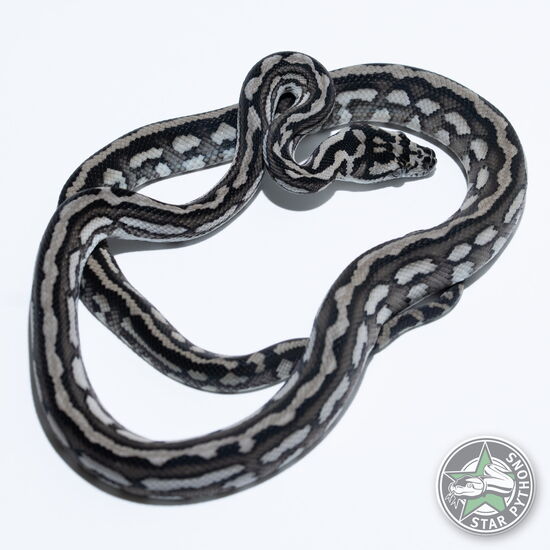
This beautiful female Tiger (pure Coastal) carpet python with id 25-417 is for sale.
Animal ID: 25-417

Tiger (pure Coastal)

500 € US$ 500 ₩ 549,000

Details

This beautiful male Axanthic Tiger (pure Coastal) carpet python with id 25-322 is for sale.
Animal ID: 25-322

Axanthic Tiger (pure Coastal)

700 € US$ 750 ₩ 999,000

Details

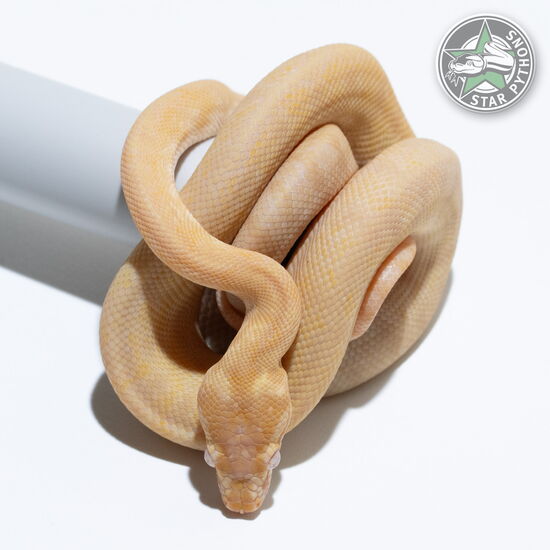
This beautiful male Albino (pure Darwin) carpet python with id 25-306 is for sale.
Animal ID: 25-306

Albino (pure Darwin)

500 € US$ 500 ₩ 749,000

Details

This beautiful male Albino (pure Darwin) carpet python with id 25-305 is for sale.
Animal ID: 25-305

Albino (pure Darwin)

500 € US$ 500 ₩ 749,000

Details

This beautiful male Albino (pure Darwin) carpet python with id 25-300 is for sale.
Animal ID: 25-300

Albino (pure Darwin)

500 € US$ 500 ₩ 749,000

Details