FAQ - Albino Carpet Pythons
Is "albino" the same as "amelanistic"?
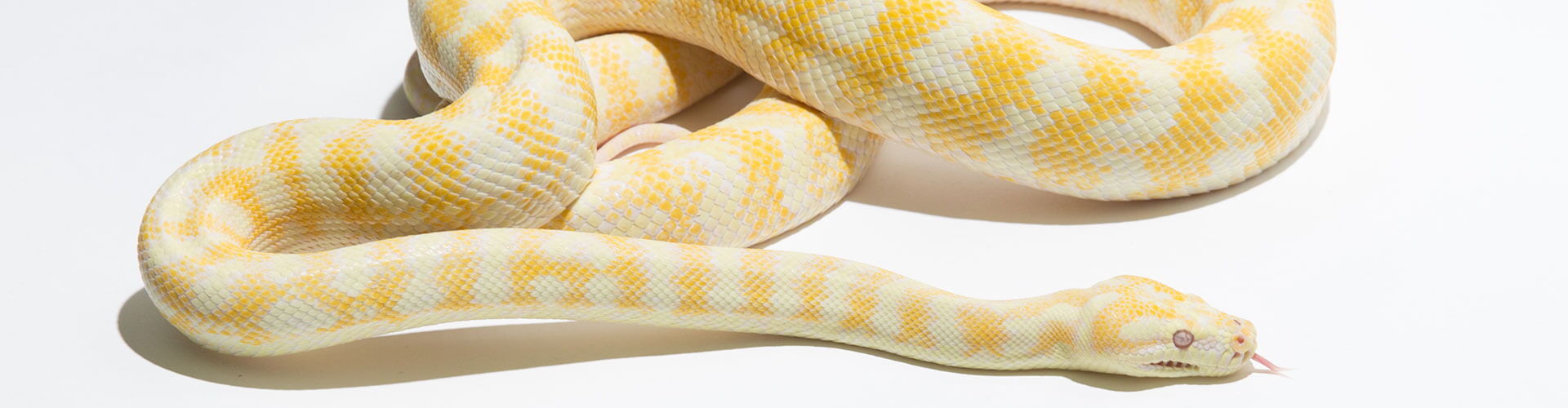
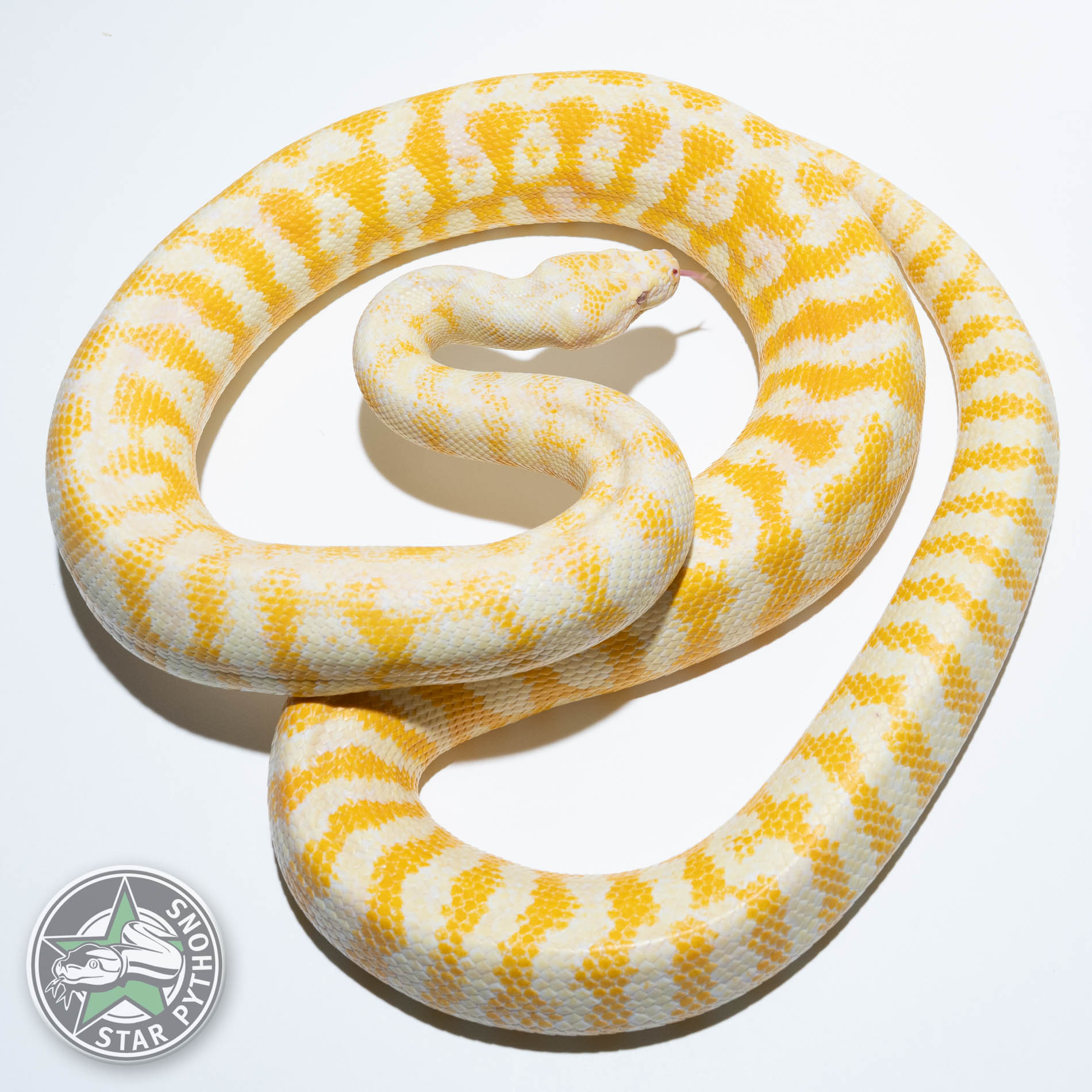
Not quite – though the terms are often used interchangeably in the hobby. Strictly speaking, "albino" is a broad term covering any animal with significantly reduced or absent pigmentation. "Amelanistic" is more precise: it refers specifically to the loss of melanin, while other pigment systems – xanthophores producing yellow, erythrophores producing red – remain functional. In carpet pythons, what the hobby calls "albino" is amelanism: the melanophore system is non-functional, but the animal is far from colourless. Using "amelanistic" is technically more accurate; "albino" is the established hobby shorthand that everyone understands.
Are albino carpet pythons red-eyed?
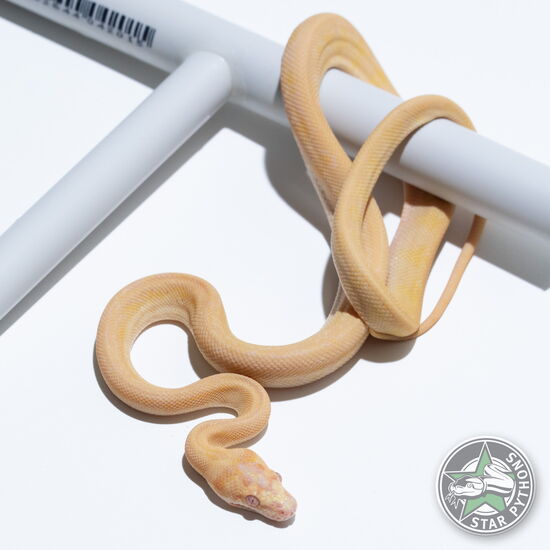
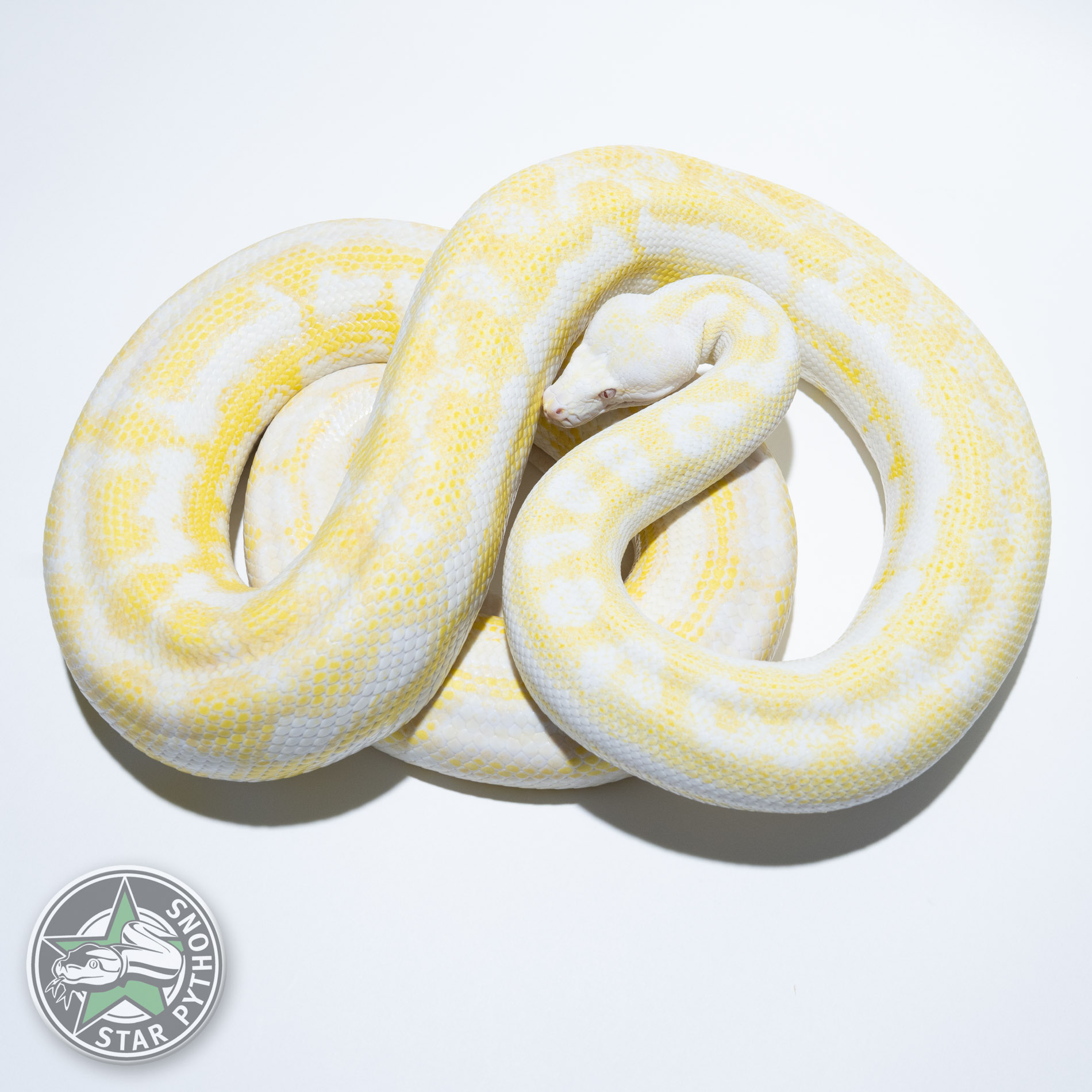
The eyes of albino carpet pythons typically appear pink to red, but the exact tone varies between individuals, lines, and lighting conditions. The colour is not produced by a pigment in the eye itself – it is the result of light passing through the unpigmented iris and reflecting off the underlying blood vessels. The same mechanism explains why albino animals are more sensitive to bright light than normally pigmented individuals: without melanin in the iris to filter incoming light, the eye cannot regulate exposure as effectively.
Are albinos harder to keep than normally pigmented carpet pythons?
No – the fundamental husbandry requirements are identical. Albino carpet pythons eat, thermoregulate, and behave like any other Darwin carpet python. The one practical consideration worth noting is light sensitivity: providing at least one deep, secure hide and avoiding prolonged exposure to very bright or direct lighting is good practice. This is not unique to albinos – but they may seek cover more readily under harsh lighting conditions.
What do T− and T+ mean?
T− (tyrosinase-negative) and T+ (tyrosinase-positive) describe the functional status of tyrosinase, the enzyme that catalyses the rate-limiting step in melanin synthesis. In T− animals, tyrosinase activity is effectively eliminated, resulting in a complete or near-complete block of melanin production. In T+ animals, tyrosinase retains residual activity, meaning some melanin can still be produced – typically resulting in a slightly softer, more diluted appearance compared to T− animals. Darwin albino carpet pythons are currently regarded as T-negative. It is worth noting that T+/T− status in carpet pythons has not been confirmed through molecular testing to the same degree as in some other species; the designations are based on phenotypic observation and hobbyist consensus.
Why do some albinos look more orange than others?
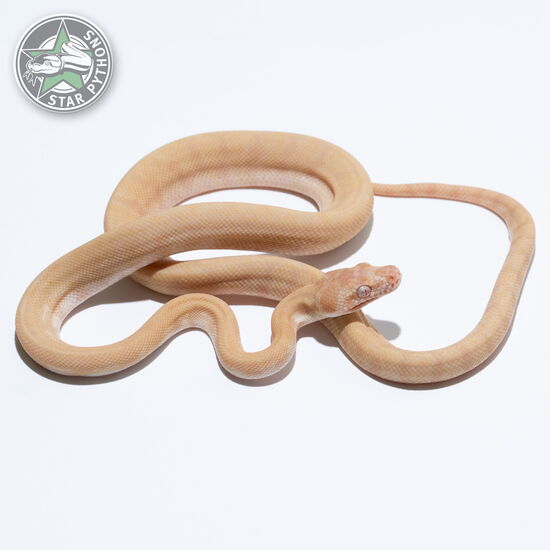
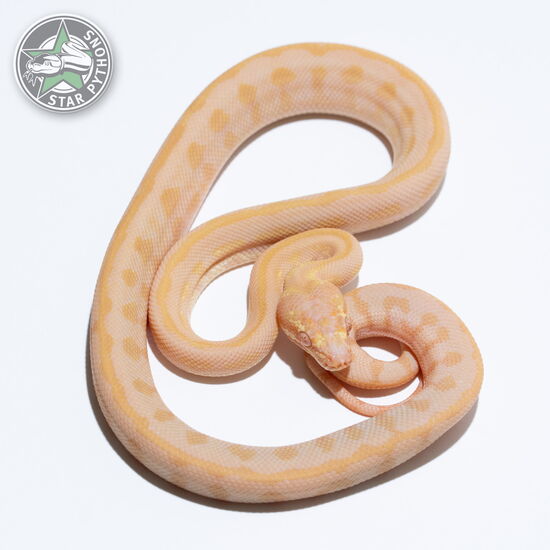
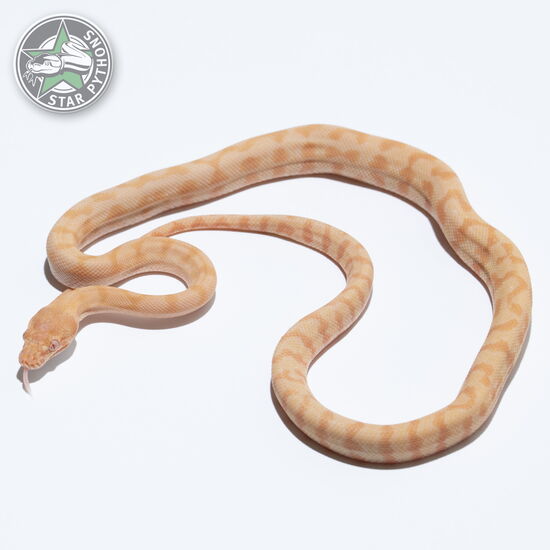
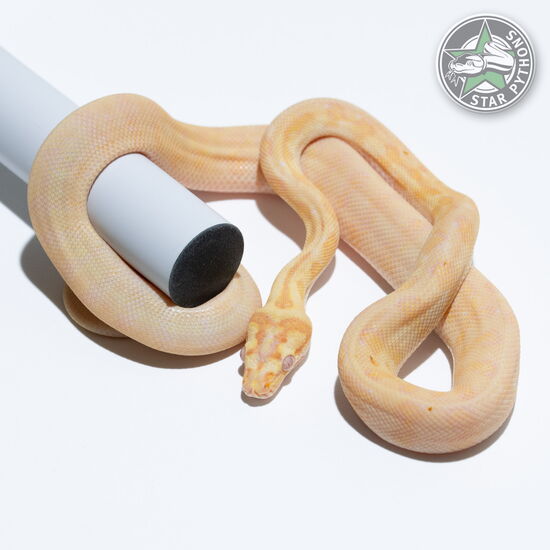
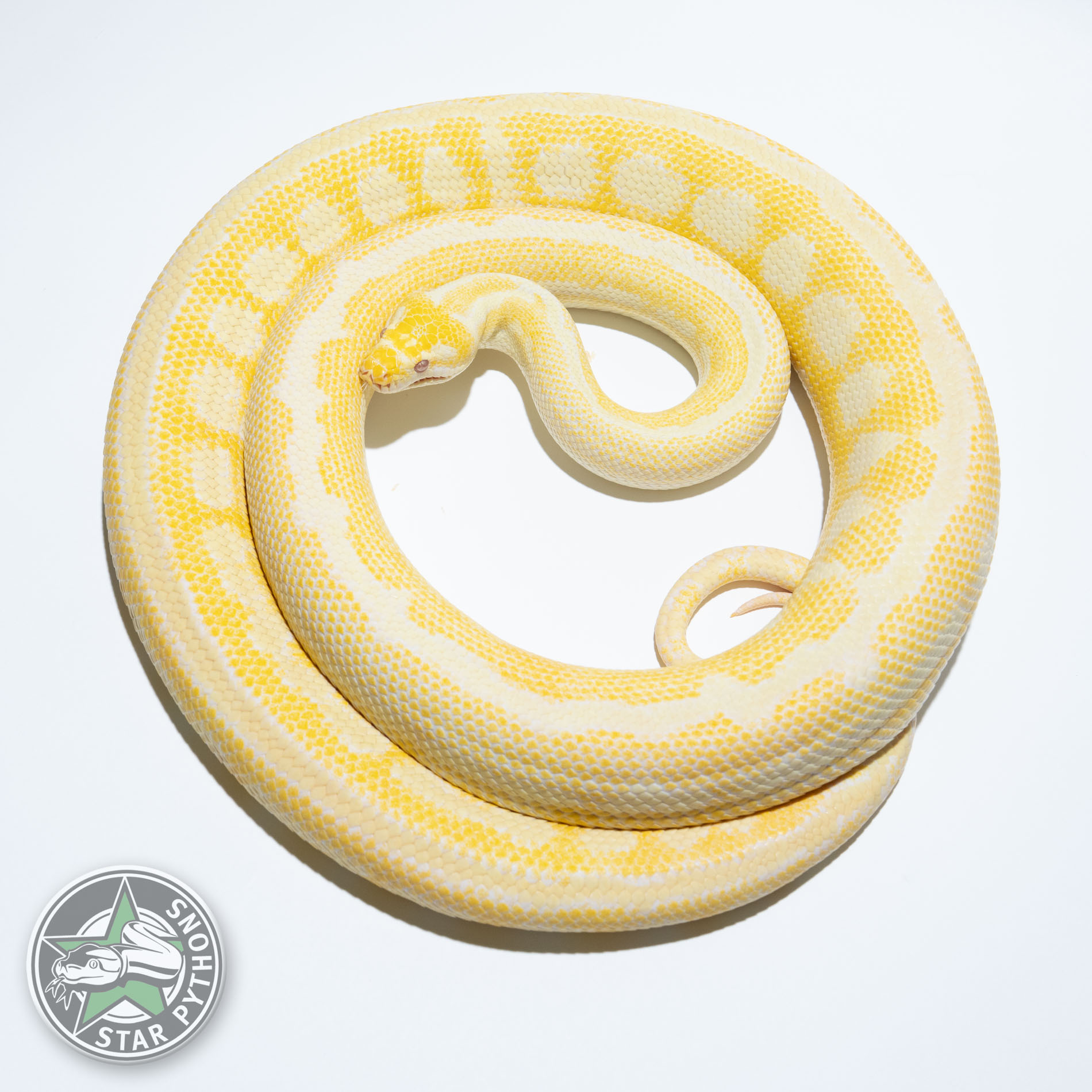
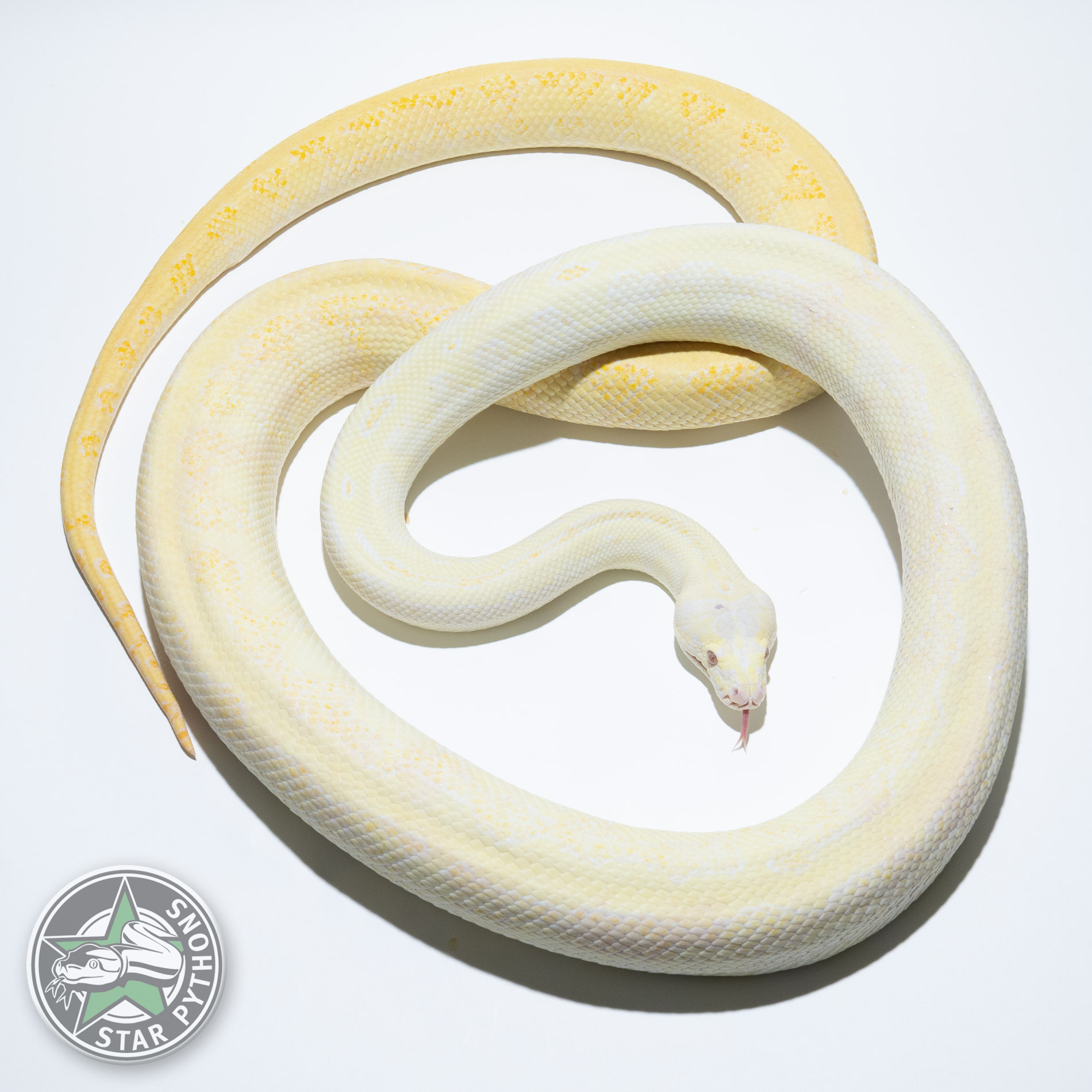
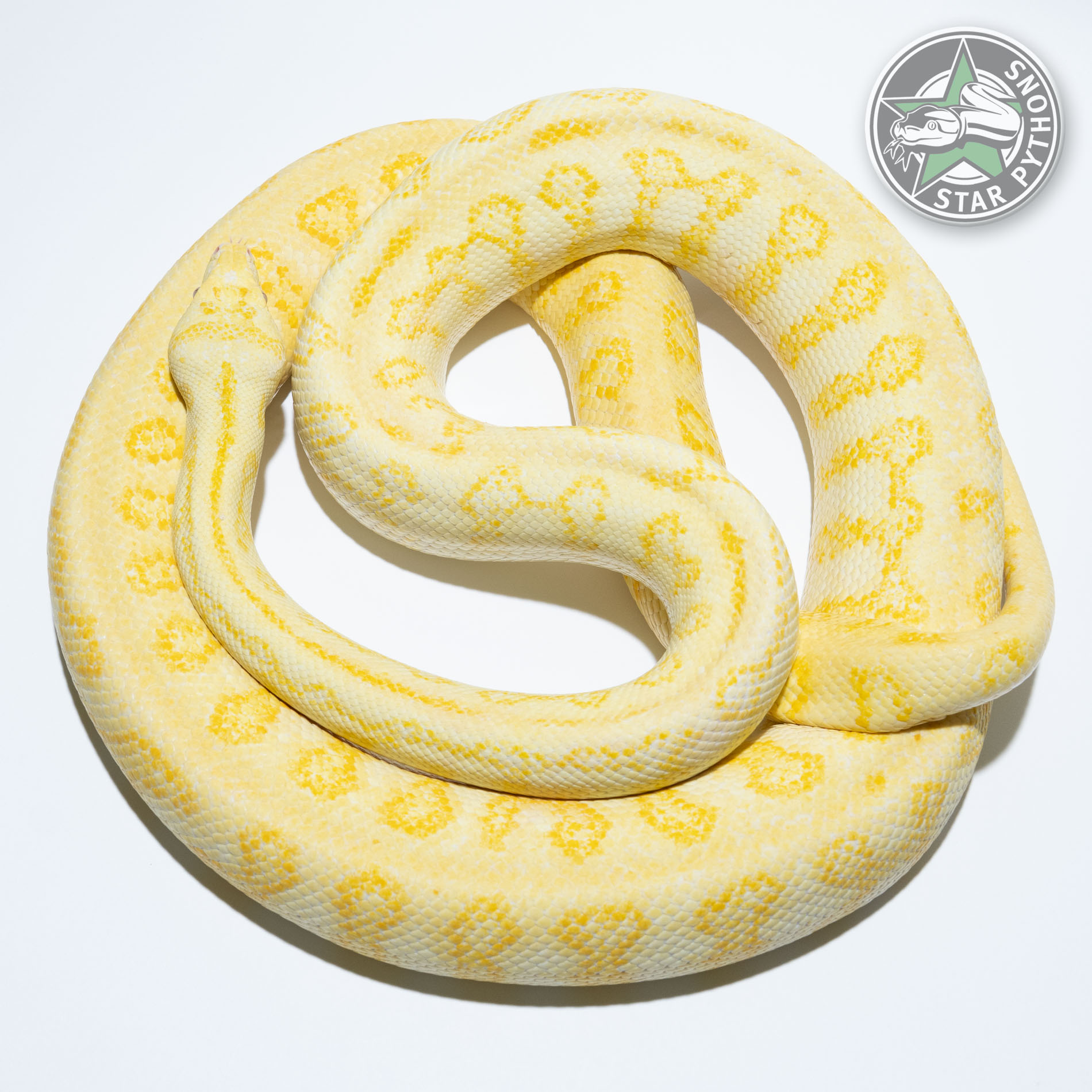
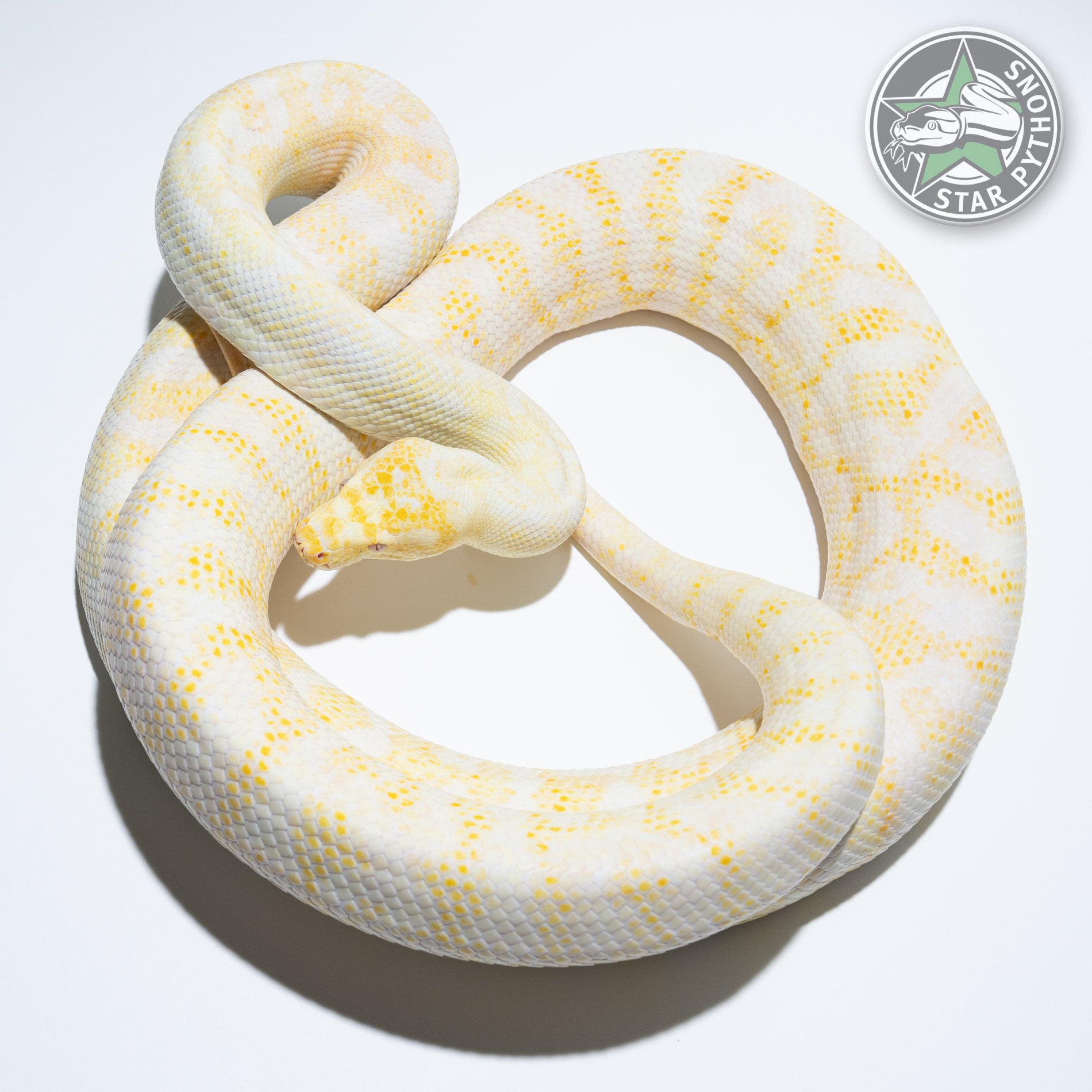
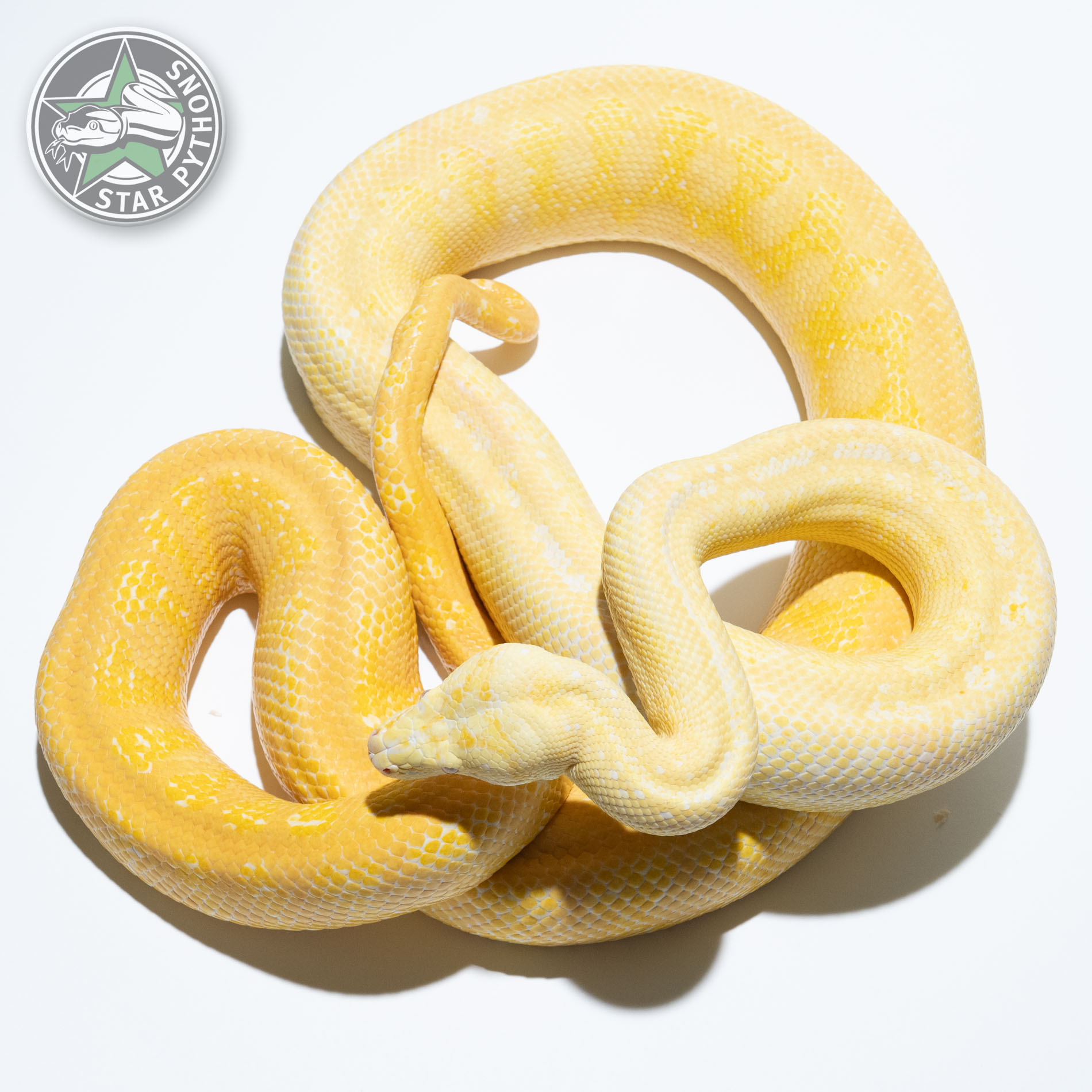
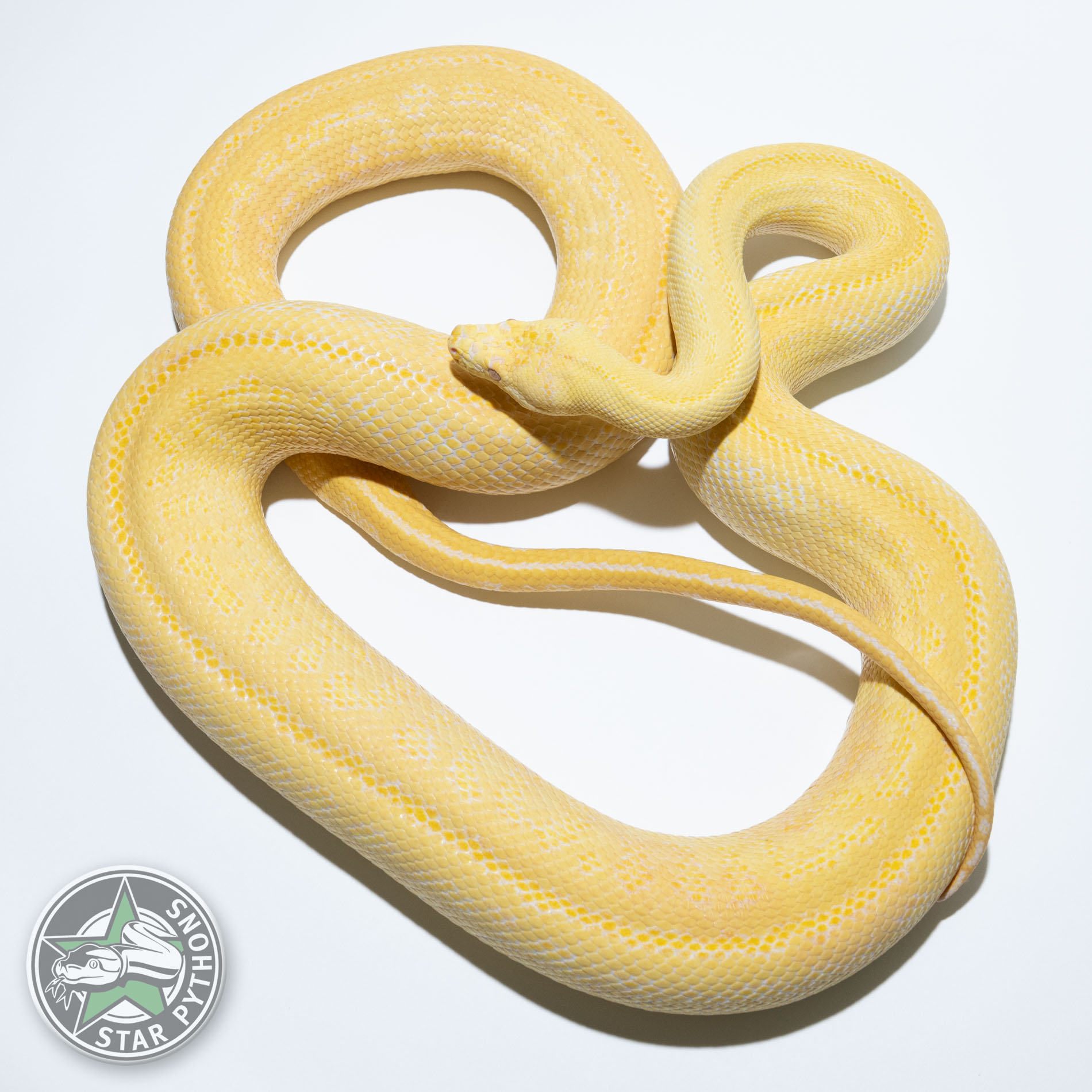
Several factors influence whether an albino carpet python leans toward vivid orange or pale yellow-cream. Line selection plays the largest role: decades of selective breeding have produced lines with distinctly different colour intensities, and some breeders have specifically selected for warmer, more saturated animals – the so-called "Redline" animals being a well-known example. Age is also a significant factor: hatchlings often display the most intense orange, which gradually shifts toward brighter yellows as the animal matures, likely reflecting age-related changes in carotenoid deposition in the xanthophores. Lighting and photography conditions can further influence how colour is perceived, which is worth keeping in mind when comparing animals from different sources (Mutton & Julander, 2022).
What is a Snow – and how does it relate to Albino?
Snow is the combination of two separate recessive mutations: Albino and Axanthic. Where Albino eliminates melanin (dark pigment) and Axanthic eliminates yellow pigment, the combination of both results in an animal that lacks both pigment systems simultaneously. The warm yellows and oranges of a standard albino are replaced by a clean, near-white appearance with subtle pattern contrast – the visual effect of two independent colour-reducing pathways working together. Producing a Snow requires that both parents carry at least one copy of each recessive allele, which makes multi-generation planning with fully documented het backgrounds on both sides essential. The Snow is widely regarded as one of the most elegant double recessive combinations in the carpet python complex.
Why does lineage documentation matter so much for albinos specifically?
Because albino is a recessive mutation that originated in a single wild-caught animal, and all captive Darwin albinos ultimately trace back to that one founding lineage. What the label "albino carpet python" does not tell you is whether the animal behind it is a pure Morelia spilota variegata or the product of crosses with Irian Jaya, coastal, or other subspecies that accumulated unnoticed over generations. Hybrid lineage is invisible by appearance alone – a mixed-background albino looks identical to a pure Darwin animal. Without traceable documentation going back to verified pure Darwin stock, subspecies integrity cannot be confirmed. At StarPythons, we have maintained and documented our Darwin albino lineage since the mutation first appeared in Europe in 2006/2007 – making subspecies-pure animals with verifiable ancestry one of the things we are genuinely proud to offer.