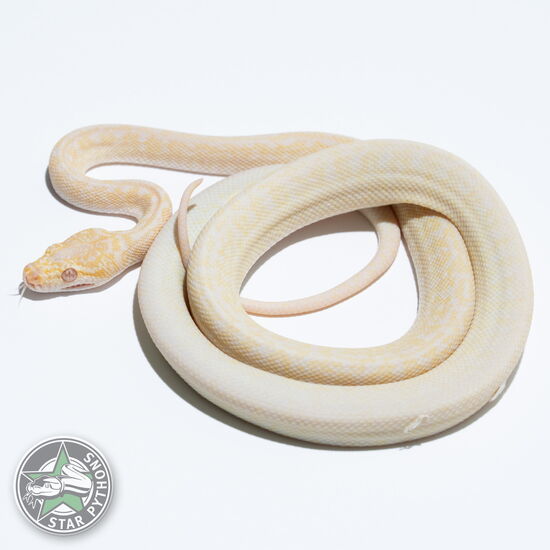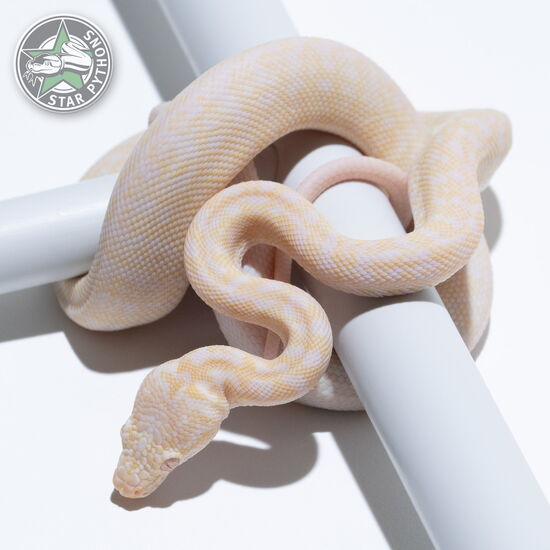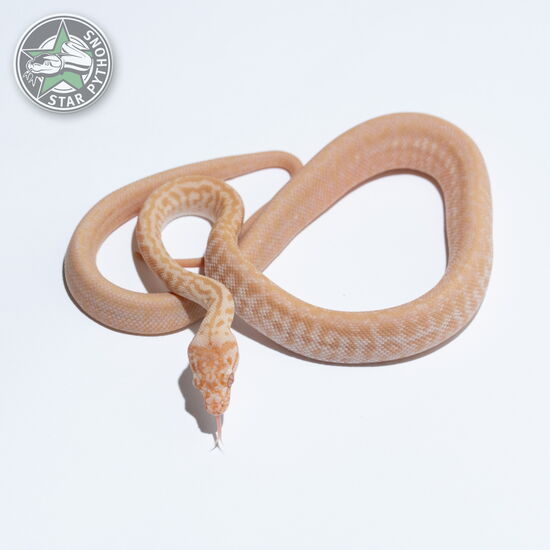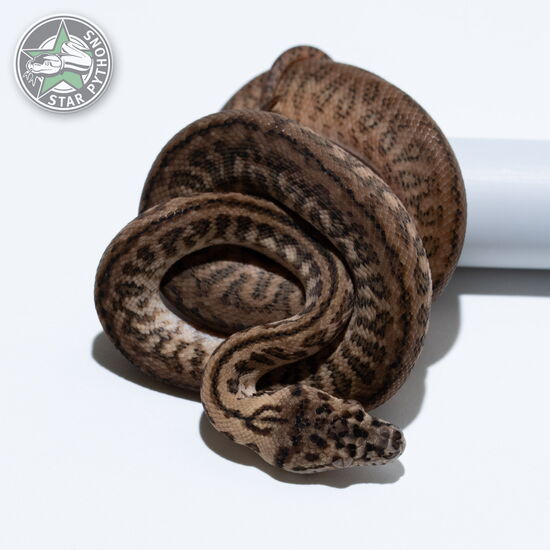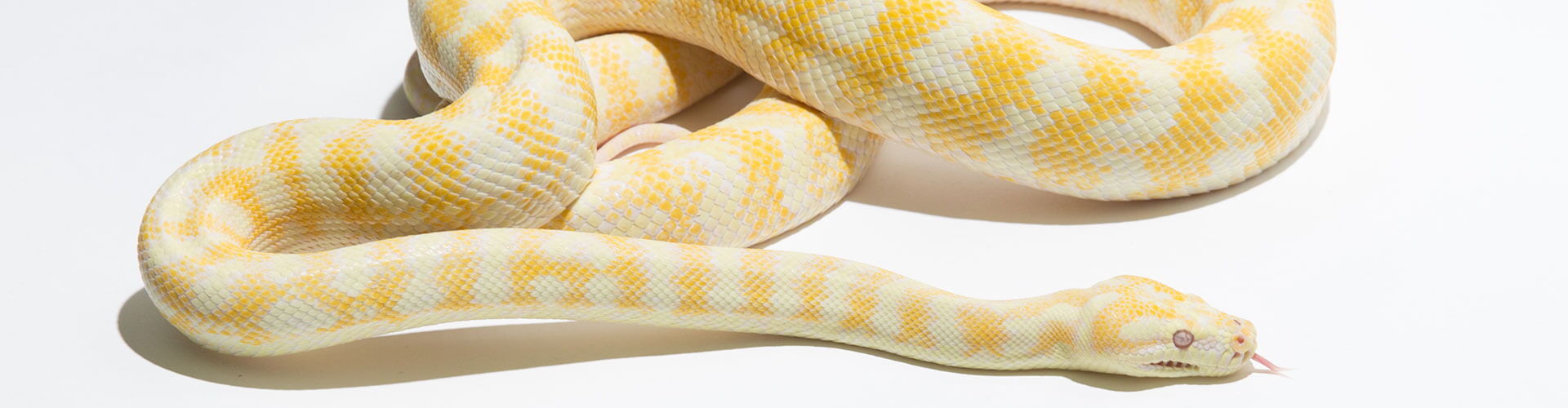
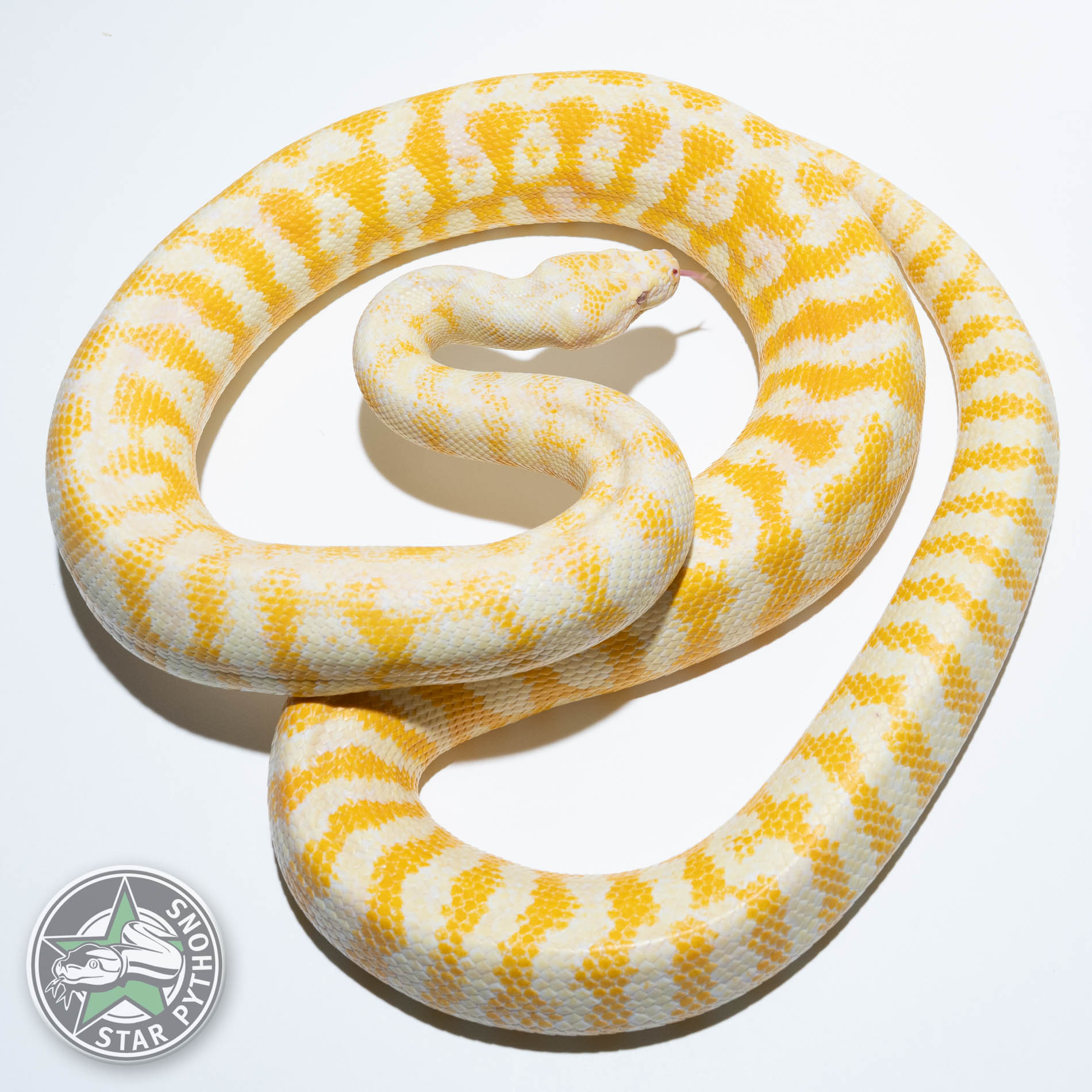
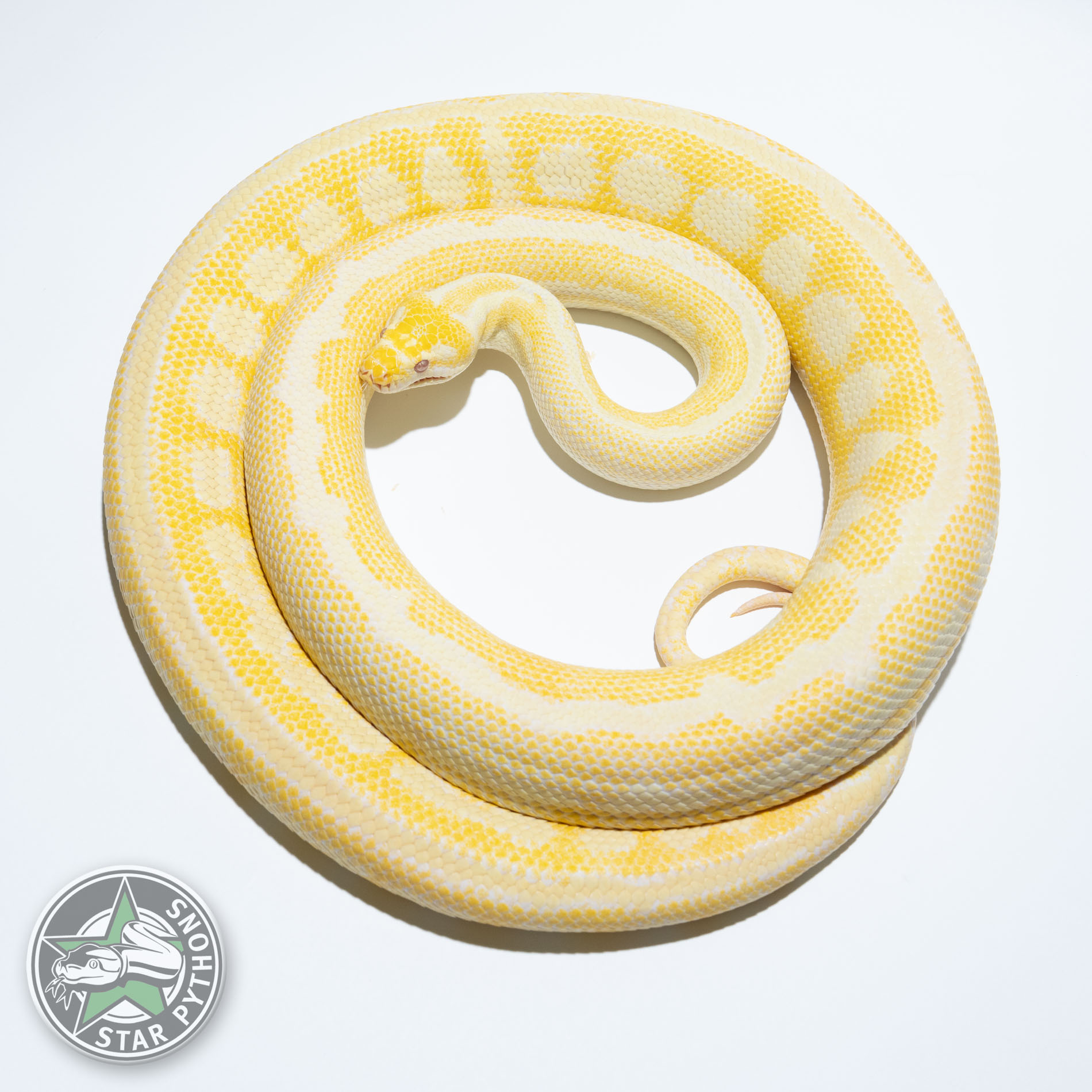
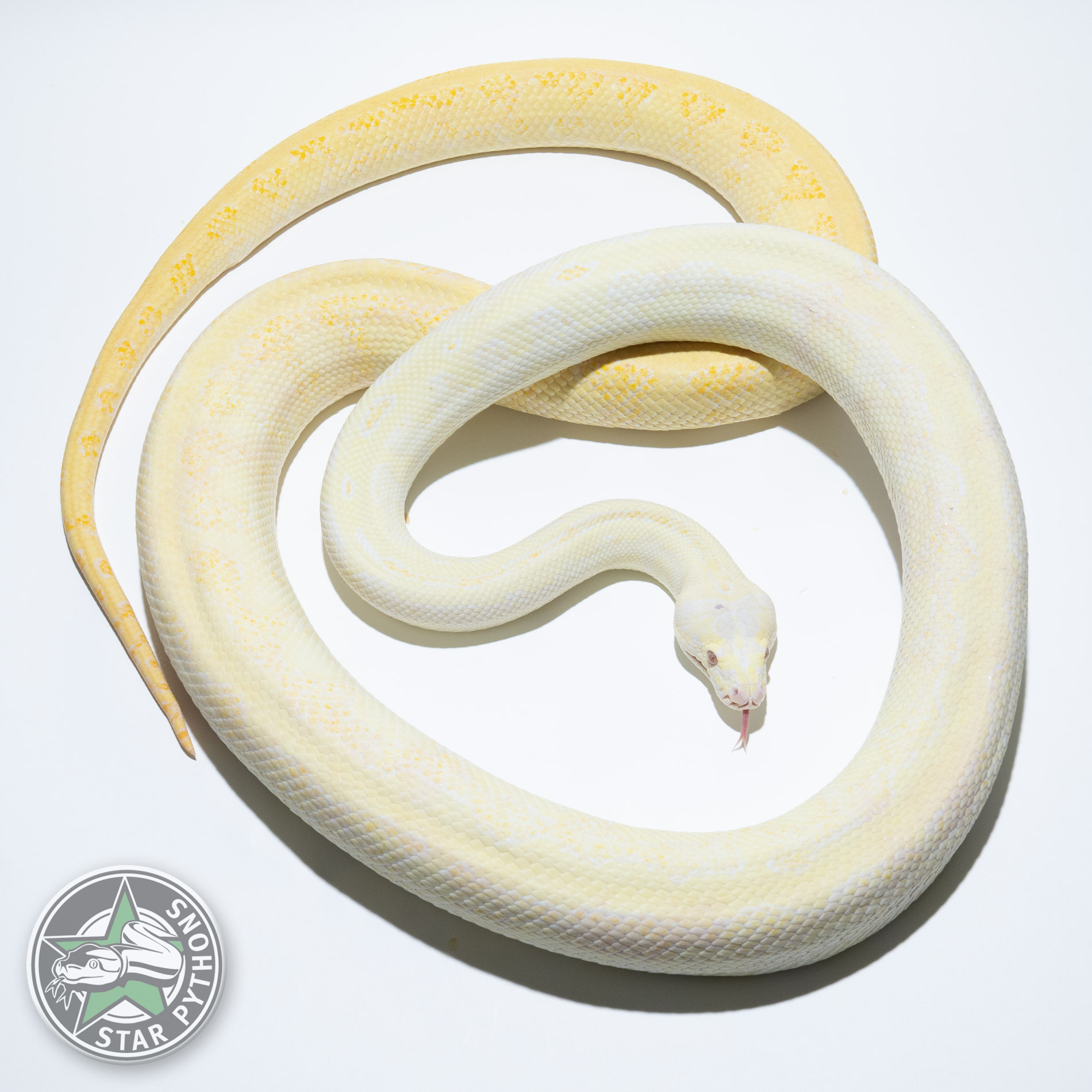
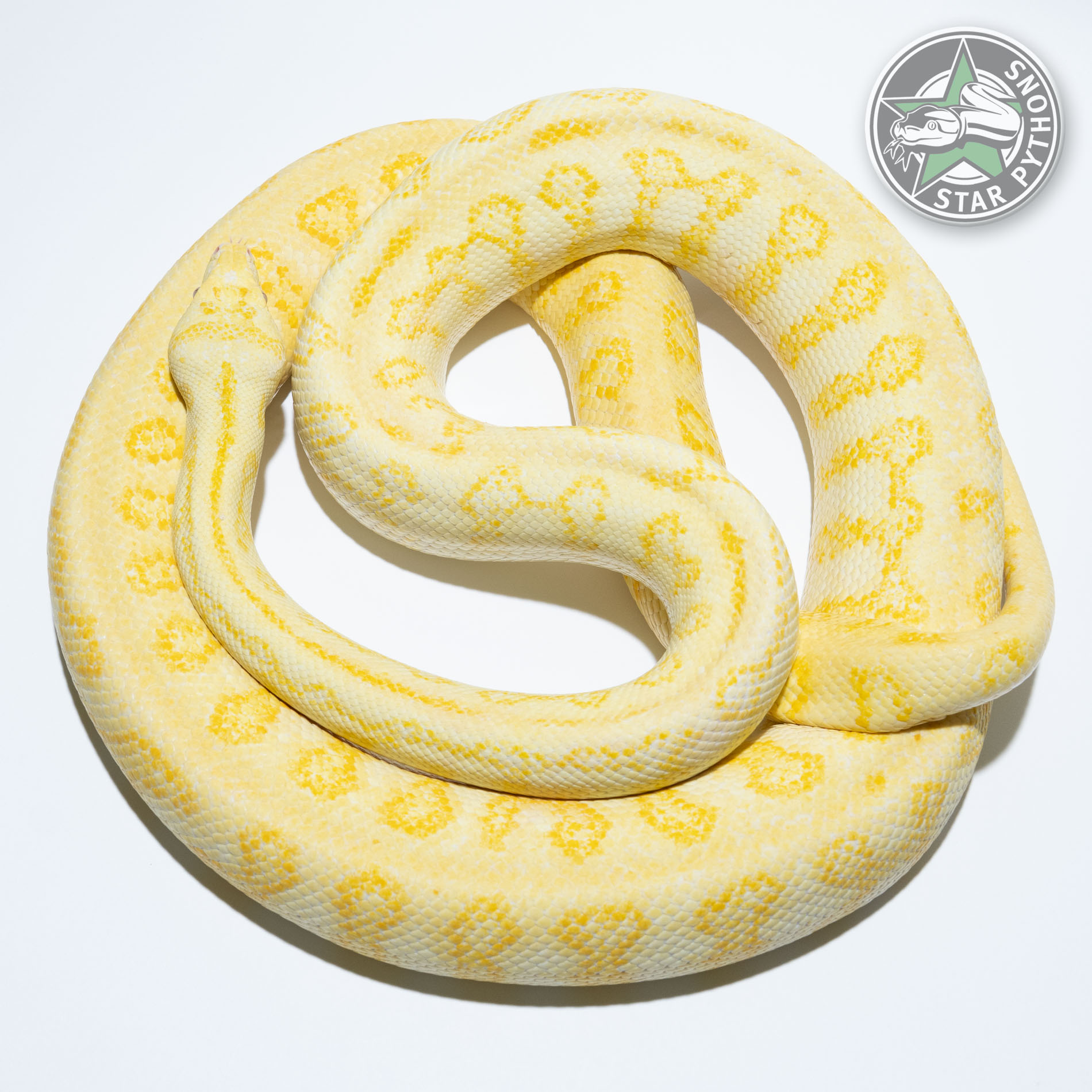
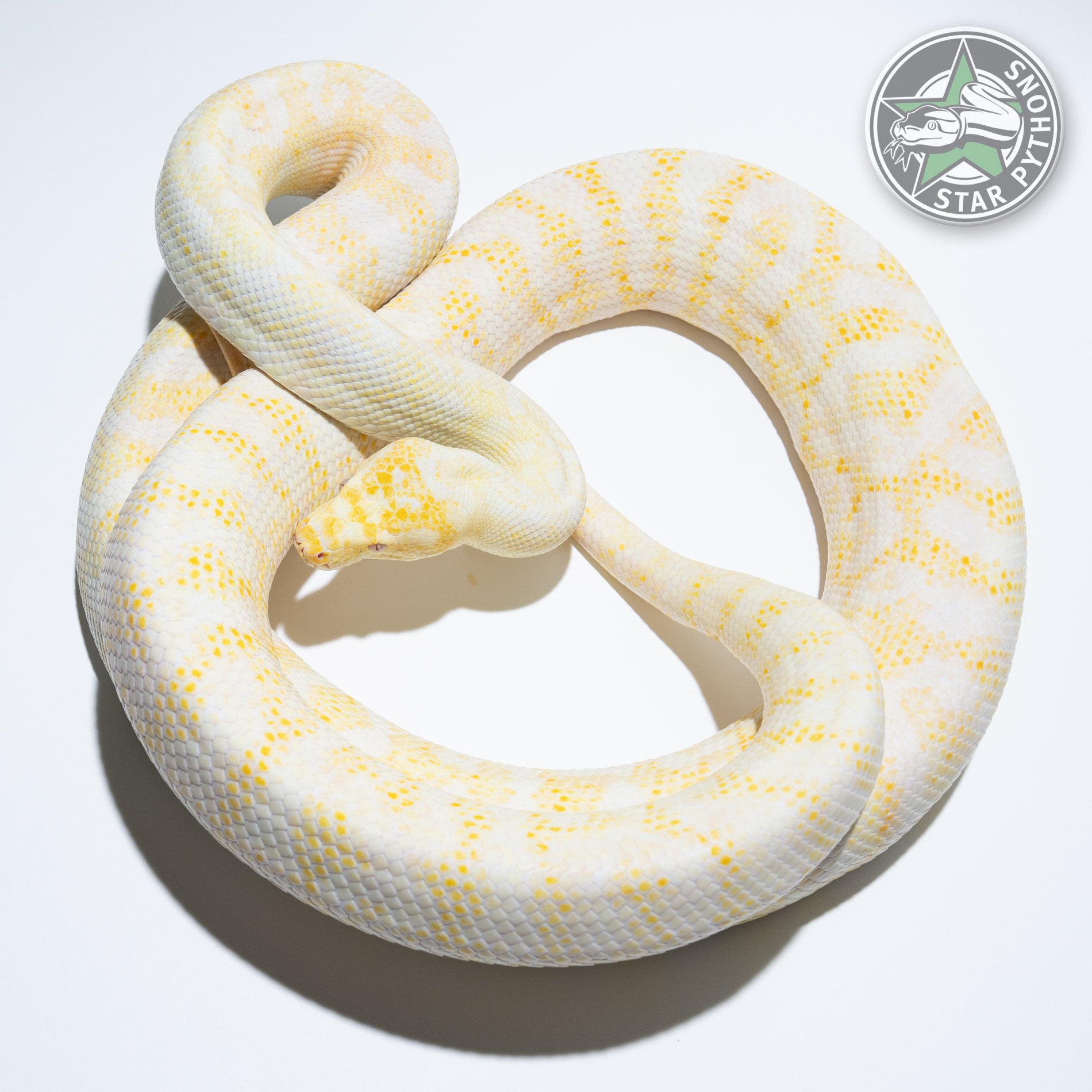
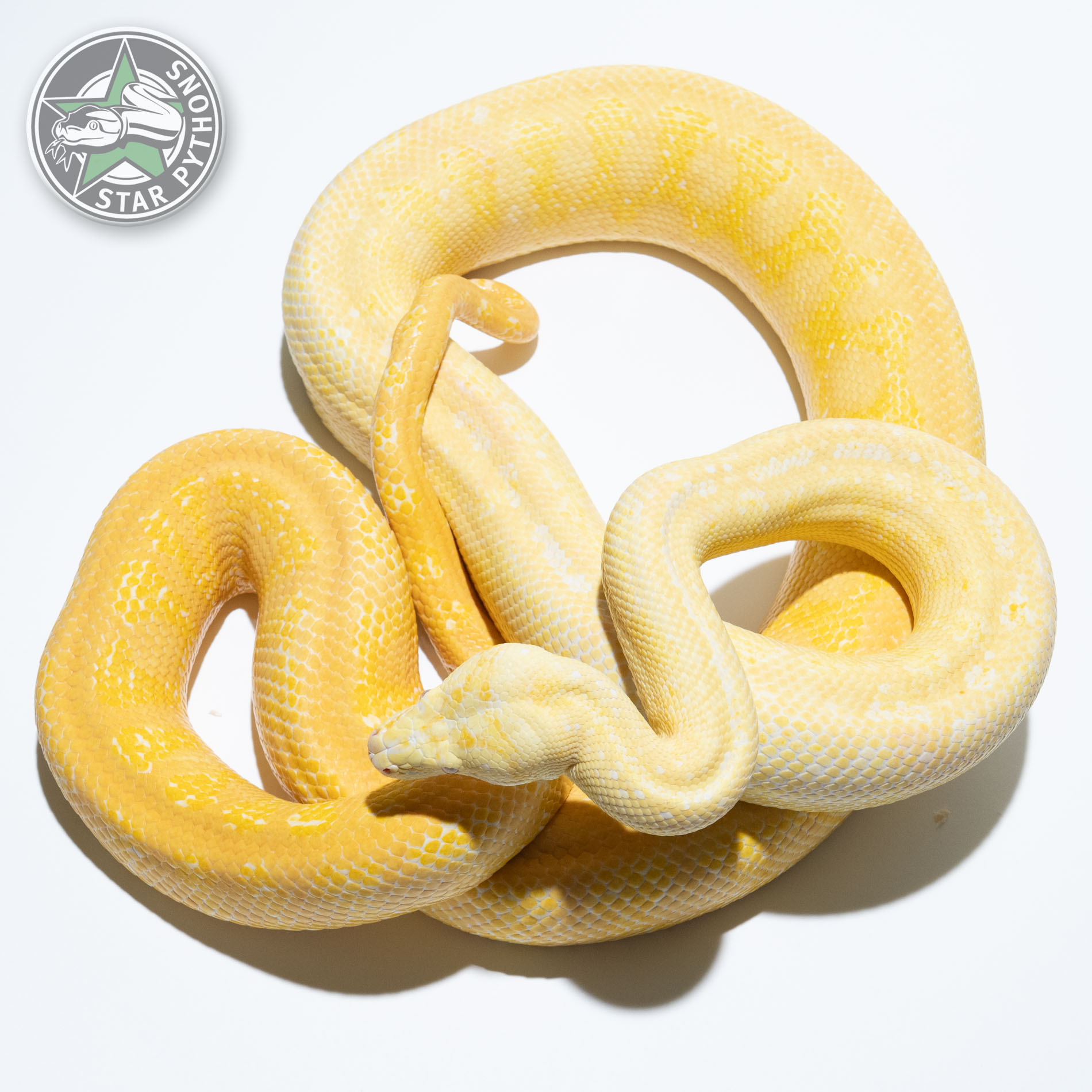
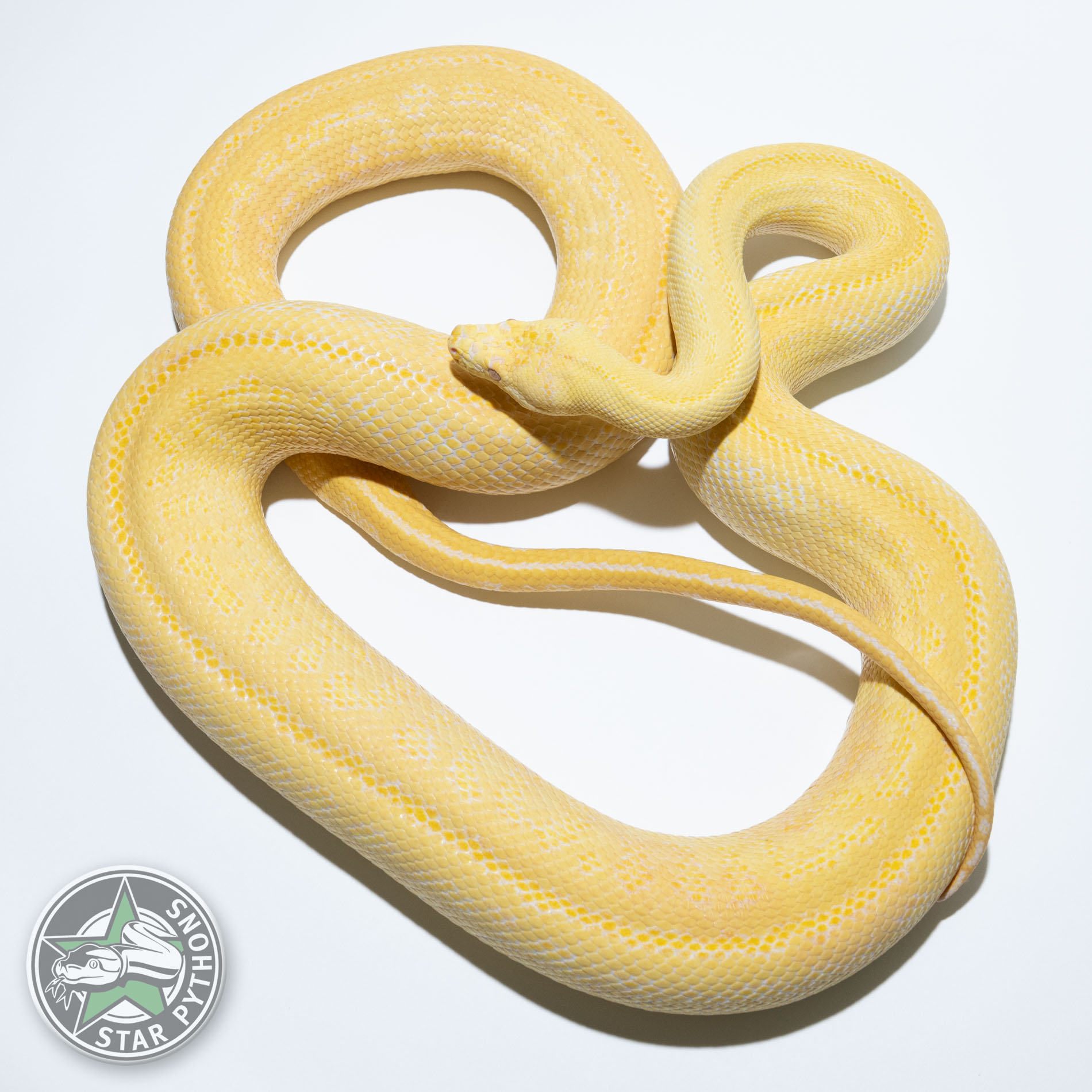
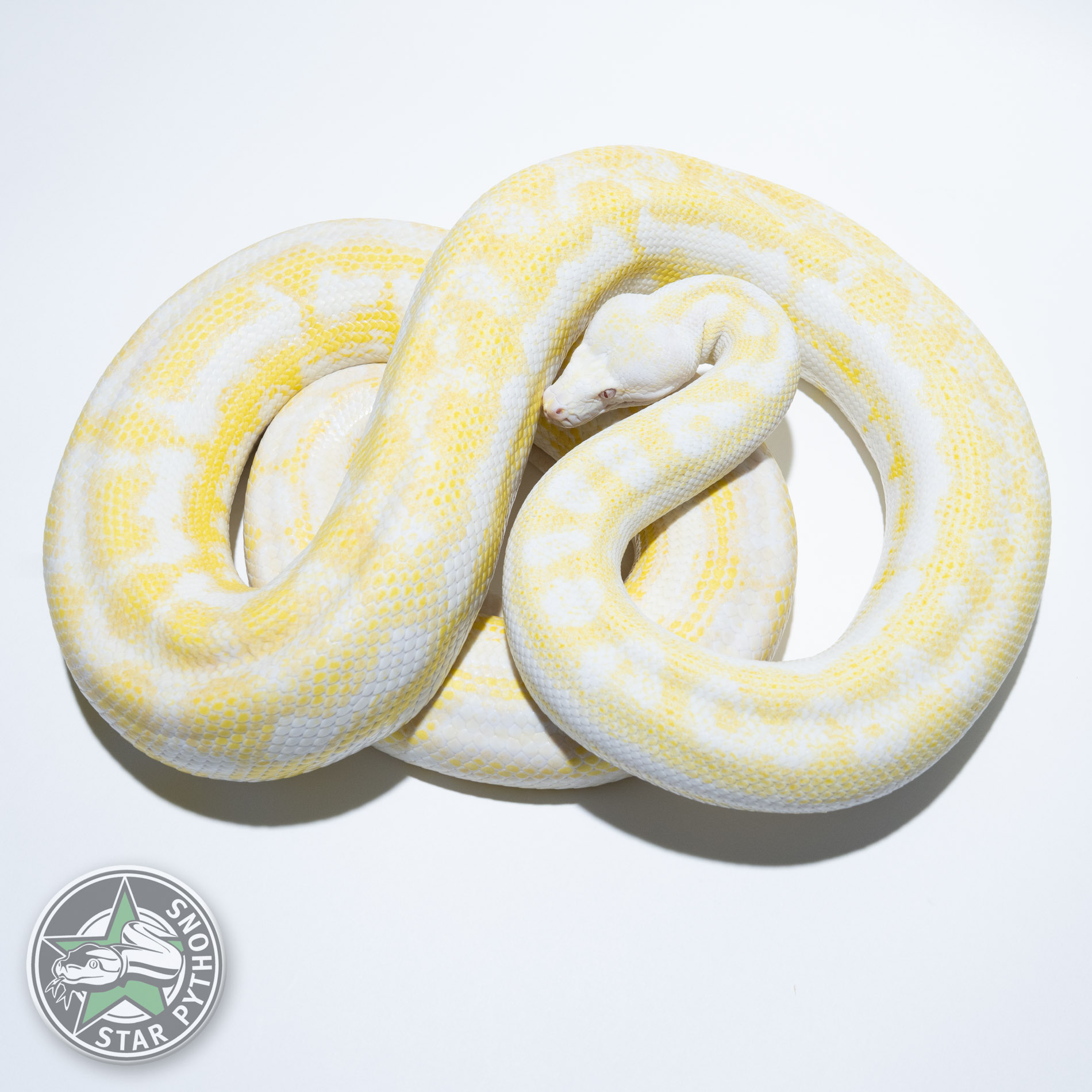
Albino Carpet Python (Morelia spilota variegata) – amelanistic Darwin Carpet Python

Albino Carpet Pythons: Biology, Genetics & Lines

Albino Carpet Pythons are Morelia spilota characterised by a strong reduction or complete absence of dark melanin pigment. The result is vivid yellow–orange–white colouration with a remarkably clean appearance. In Darwin lines, adults typically display especially warm, saturated tones, while neonates often emerge with a distinct early-life coloration – oranges that gradually give way to the classic bright yellow-and-white appearance of mature animals.

This page gives you a practical, breeder-oriented overview: what "albino/amelanistic" means biologically, how inheritance is typically modeled, why line documentation matters, and how albino combines with other traits to create well-known morph combinations.

Quick link: Scroll down to albino carpet pythons for sale to see currently available animals.

Albino Combinations & Gallery

Albino (pure Darwin)

Pure Darwin Albino Carpet Python (Morelia spilota variegata) – vivid orange and yellow adult coloration

The pure Darwin Albino is the original source of the albino mutation in carpet pythons – first documented in Morelia spilota variegata from the Northern Territory of Australia. Darwin albinos are widely known for their exceptionally vibrant orange and yellow adult coloration, often more saturated than albinos bred on mixed or Coastal lineages. Pure variegata animals frequently show the strongest contrast of all albino lines – bold orange banding against a clean white base. Neonates can emerge with a slightly different initial tone that gradually intensifies as they mature. As the foundation of all albino projects in the complex, pure Darwin animals remain among the most sought-after carpet pythons in the hobby.

Albino

Albino Carpet Python (Morelia spilota) – amelanistic morph with warm yellow and white pattern

The Albino morph removes dark melanin pigmentation, leaving an animal dominated by pale lemon-yellow to warm orange tones and white. The pattern blueprint remains fully intact – contrast is expressed through warm tones and negative space rather than dark pigment. The intensity of coloration, ranging from pale lemon to deeper orange, is strongly influenced by background genetics and selective breeding over generations. Albino is inherited as a simple autosomal recessive trait, meaning both parents must carry the allele to produce visual offspring.

Caramel Albino Jaguar

Caramel Albino Jaguar Carpet Python (Morelia spilota) – triple combination morph with reduced pattern contrast

The Caramel Albino Jaguar combines three separate genetic influences: the intermediately inherited Caramel colour mutation, the recessive Albino, and the intermediately inherited Jaguar pattern mutation. The combination of all three results in a strikingly pale, creamy-white animal with heavily reduced pattern contrast – the Jaguar component disrupts and fragments the dorsal pattern, while Caramel and Albino together wash out much of the remaining pigmentation. An important note: despite superficial similarities, Caramel Albino is genetically distinct from Sunglow (Hypo Albino) – the two are not interchangeable in breeding projects.

Albino Jaguar (Redline)

Redline Albino Jaguar Carpet Python (Morelia spilota variegata) – selectively bred for high orange saturation

The Redline Albino Jaguar combines the intermediately inherited Jaguar pattern mutation with the recessive albino on a selectively bred "Redline" lineage. Where standard Albino Jaguars show warm yellows and oranges, Redline animals are selectively bred for significantly stronger warm tone saturation – deeper oranges, more vivid contrast between pattern and base colour. "Redline" is best understood as a line selection on top of the albino phenotype rather than a separate genetic mutation: evaluate by parent history, consistency across clutches, and adult photos rather than by the label alone.

Sunglow

Sunglow Carpet Python (Morelia spilota) – Hypo Albino combination morph with reduced pattern and warm tones

The Sunglow is the combination of the intermediately inherited Hypo mutation and the recessive Albino – two separate colour-reducing mechanisms working together. Hypo reduces melanin expression, brightening the overall animal and softening contrast; Albino removes dark pigment entirely. The result is a strikingly pale, bright snake with minimal pattern contrast and a clean, almost luminous appearance. An important distinction: true Sunglows are Hypo-based. Caramel Albino animals can look superficially similar but are genetically different and should not be labelled as Sunglow.

Sunglow Jaguar

Sunglow Jaguar Carpet Python (Morelia spilota) – Hypo Albino Jaguar triple combination morph

The Sunglow Jaguar adds the intermediately inherited Jaguar pattern mutation to the Sunglow (Hypo Albino) base. The Jaguar component disrupts and reduces the dorsal pattern, creating irregular banding and spotting on an already bright, warm background. The combination produces one of the most visually striking triple-influence animals in the complex – reduced pattern, reduced dark pigment, and the characteristic Jaguar fragmentation, all on a glowing orange-yellow base. As with all Sunglow combinations, the Hypo component is essential: Caramel Albino Jaguar animals are related in appearance but genetically distinct.

Albino Zebra

Albino Zebra Carpet Python (Morelia spilota) – amelanistic Carpet Python with bold striping

The Albino Zebra combines the recessive Albino with the intermediately inherited Zebra mutation from Morelia spilota cheynei lineages. The Zebra contributes bold, high-contrast banding with reduced interstitial colour; Albino removes dark melanin, replacing the typical black and white contrast with vivid yellow and white. The result is a striking animal where the strong Zebra banding is expressed entirely in warm tones. Because Zebra is intermediately inherited, homozygous Super Zebra Albinos also exist – uniform patternless animals with a clean, almost white-yellow appearance.

Snow (Albino Axanthic)

Snow Carpet Python female (Morelia spilota) – double recessive Albino Axanthic combination morph

The Snow takes the albino phenotype one step further: by adding the recessive axanthic, which strongly reduces the remaining yellow pigmentation, the warm tones of a standard albino are replaced by a creamy, near-white appearance with subtle pattern contrast. Both traits must be present in visual form, meaning production requires careful multi-generation planning with documented (heterozygous) lineage on both sides. The Snow is one of the most elegant double recessive combinations in the complex – and a natural endpoint of any serious albino breeding program.

What is Albinism?

In reptiles, "albino" in the hobby commonly refers to amelanism: a strong reduction or complete loss of melanin, the dark pigment responsible for contrast and banding. Technically, the correct term is amelanistic – the animal lacks functional melanin production, not all pigment entirely. When melanin is missing, the remaining pigment cells and light-reflecting structures dominate, which is why albino carpet pythons appear yellow, orange, and white rather than brown and black.

You may also encounter the terms T− and T+ in morph discussions. These refer to tyrosinase status – the activity of the key enzyme in the melanin synthesis pathway:

  • T− (tyrosinase-negative): Tyrosinase function is effectively eliminated. Melanin production is blocked, typically producing high-contrast, vivid colouration with clean whites and saturated yellows. Darwin albino carpet pythons are currently regarded as T-negative.
  • T+ (tyrosinase-positive): Residual tyrosinase activity remains. Some minimal melanin is still produced, which typically results in a slightly softer, more muted appearance compared to T− animals.

Biology and Genetics

Reptile skin colour is layered biology, not "paint." In normally pigmented carpet pythons, four distinct types of specialised pigment cells – collectively called chromatophores – work in combination. Melanophores produce melanin, supplying dark brown to black contrast. Erythrophores produce red pigments. Xanthophores produce yellow pigments through a combination of pteridines (synthesised within the cell) and carotenoids (obtained through diet). Iridophores contain tiny crystals that reflect and scatter light, contributing optical brightness and iridescence (Prüst, 1984).

In albino carpet pythons, the melanophore system is non-functional. The pattern blueprint remains fully intact – it is expressed through warm tones and negative space rather than dark pigment. The yellows and oranges so characteristic of albinos reflect the unopposed activity of xanthophores. The gradual colour shift from vivid orange in hatchlings to brighter yellow in adults is thought to reflect age-related changes in carotenoid deposition, not a change in the underlying cell populations.

The pink to red eye colouration is a direct consequence of the absence of melanin in the iris. Without pigment to absorb and filter incoming light, the underlying vascular structures of the eye become visible through the translucent tissue. This also explains why albino animals tend to be noticeably sensitive to bright light: the unpigmented iris cannot regulate light entry the way a normally pigmented iris can.

The molecular basis of albinism in pythons has been most thoroughly studied in the ball python (Python regius). Brown et al. (2022) identified the TYR gene – encoding tyrosinase, the rate-limiting enzyme of the melanin synthesis pathway – as the causative gene for the albino phenotype, with three distinct loss-of-function alleles documented. Given the high sequence conservation of melanogenesis genes across pythonid species (>98% nucleotide identity between ball python and Burmese python for TYR; Brown et al., 2022), it is well-founded to expect the same core pathway to underlie albinism in Morelia spilota. This does not prove the identical variant – but it provides a clear, peer-reviewed mechanistic framework.

History of Albino Carpet Pythons

The albino morph has been established in Darwin carpet pythons (Morelia spilota variegata). The founding animal was a wild-caught female discovered at a caravan park in Darwin, Australia, in the 1990s. Initially misidentified as an escaped corn snake, she was confiscated by the Parks and Wildlife Commission and brought to the Territory Wildlife Park, where she was correctly identified as an albino Darwin carpet python and named "Blondie." She was subsequently placed on breeding loan with Dr. Simon Stone in Adelaide, and the descendants of this single founding animal form the basis of virtually all albino Darwin carpet pythons in captivity worldwide today. Adults in established Darwin albino lines are commonly described as extremely warm and saturated – bright orange and yellow – while neonates can emerge with a distinct initial colouration that gradually shifts toward the classic yellow/white appearance of mature animals (Mutton & Julander, 2022).

Today, truly pure Darwin albinos – animals with fully documented, unbroken lineage tracing back to the original Australian line, without admixture from other subspecies – are considerably harder to find than the label "albino carpet python" might suggest. Many animals in circulation carry hybrid backgrounds, often the result of crosses with Irian Jaya or coastal subspecies that are no longer distinguishable by appearance alone. At StarPythons, we have worked with Darwin albinos since their first appearance in Europe in 2006/2007, and subspecies purity with traceable line documentation has been a non-negotiable standard throughout. For buyers who care about what they are actually acquiring, this matters.

Inheritance: Practical Expectations

Albinism in carpet pythons is inherited as a simple autosomal recessive trait. This means an animal must carry two copies of the non-functional allele – one from each parent – to express the amelanistic phenotype. A single copy produces no visible effect; the animal appears fully normal but can pass the allele on to its offspring.

This gives rise to three genotypic categories in practice:

  • Visual Albino: homozygous – carries two copies of the albino allele, always expresses the phenotype
  • Het Albino: heterozygous – carries one copy, appears normal, but is a confirmed carrier
  • Non-carrier: carries no copies, visually indistinguishable from a het

From these categories, the standard pairing outcomes follow directly:

  • Het × Het → statistically 25% visual albinos, 50% hets, and 25% non-carriers. Because hets and non-carriers look identical, all normally coloured offspring are sold as "66% possible het Albino" – reflecting the 2:1 ratio of hets to non-carriers within that group.
  • Visual × Het → 50% visual albinos and 50% confirmed hets.
  • Visual × Visual → all offspring visual albinos.

The practical takeaway: a "het albino" designation is a genetic claim, not a visible trait. It should always be backed by documented pairing records and traceable line history – not assumed from appearance alone.

FAQ - Albino Carpet Pythons

Is "albino" the same as "amelanistic"?

Not quite – though the terms are often used interchangeably in the hobby. Strictly speaking, "albino" is a broad term covering any animal with significantly reduced or absent pigmentation. "Amelanistic" is more precise: it refers specifically to the loss of melanin, while other pigment systems – xanthophores producing yellow, erythrophores producing red – remain functional. In carpet pythons, what the hobby calls "albino" is amelanism: the melanophore system is non-functional, but the animal is far from colourless. Using "amelanistic" is technically more accurate; "albino" is the established hobby shorthand that everyone understands.

Are albino carpet pythons red-eyed?

The eyes of albino carpet pythons typically appear pink to red, but the exact tone varies between individuals, lines, and lighting conditions. The colour is not produced by a pigment in the eye itself – it is the result of light passing through the unpigmented iris and reflecting off the underlying blood vessels. The same mechanism explains why albino animals are more sensitive to bright light than normally pigmented individuals: without melanin in the iris to filter incoming light, the eye cannot regulate exposure as effectively.

Are albinos harder to keep than normally pigmented carpet pythons?

No – the fundamental husbandry requirements are identical. Albino carpet pythons eat, thermoregulate, and behave like any other Darwin carpet python. The one practical consideration worth noting is light sensitivity: providing at least one deep, secure hide and avoiding prolonged exposure to very bright or direct lighting is good practice. This is not unique to albinos – but they may seek cover more readily under harsh lighting conditions.

What do T− and T+ mean?

T− (tyrosinase-negative) and T+ (tyrosinase-positive) describe the functional status of tyrosinase, the enzyme that catalyses the rate-limiting step in melanin synthesis. In T− animals, tyrosinase activity is effectively eliminated, resulting in a complete or near-complete block of melanin production. In T+ animals, tyrosinase retains residual activity, meaning some melanin can still be produced – typically resulting in a slightly softer, more diluted appearance compared to T− animals. Darwin albino carpet pythons are currently regarded as T-negative. It is worth noting that T+/T− status in carpet pythons has not been confirmed through molecular testing to the same degree as in some other species; the designations are based on phenotypic observation and hobbyist consensus.

Why do some albinos look more orange than others?

Several factors influence whether an albino carpet python leans toward vivid orange or pale yellow-cream. Line selection plays the largest role: decades of selective breeding have produced lines with distinctly different colour intensities, and some breeders have specifically selected for warmer, more saturated animals – the so-called "Redline" animals being a well-known example. Age is also a significant factor: hatchlings often display the most intense orange, which gradually shifts toward brighter yellows as the animal matures, likely reflecting age-related changes in carotenoid deposition in the xanthophores. Lighting and photography conditions can further influence how colour is perceived, which is worth keeping in mind when comparing animals from different sources (Mutton & Julander, 2022).

What is a Snow – and how does it relate to Albino?

Snow is the combination of two separate recessive mutations: Albino and Axanthic. Where Albino eliminates melanin (dark pigment) and Axanthic eliminates yellow pigment, the combination of both results in an animal that lacks both pigment systems simultaneously. The warm yellows and oranges of a standard albino are replaced by a clean, near-white appearance with subtle pattern contrast – the visual effect of two independent colour-reducing pathways working together. Producing a Snow requires that both parents carry at least one copy of each recessive allele, which makes multi-generation planning with fully documented het backgrounds on both sides essential. The Snow is widely regarded as one of the most elegant double recessive combinations in the carpet python complex.

Why does lineage documentation matter so much for albinos specifically?

Because albino is a recessive mutation that originated in a single wild-caught animal, and all captive Darwin albinos ultimately trace back to that one founding lineage. What the label "albino carpet python" does not tell you is whether the animal behind it is a pure Morelia spilota variegata or the product of crosses with Irian Jaya, coastal, or other subspecies that accumulated unnoticed over generations. Hybrid lineage is invisible by appearance alone – a mixed-background albino looks identical to a pure Darwin animal. Without traceable documentation going back to verified pure Darwin stock, subspecies integrity cannot be confirmed. At StarPythons, we have maintained and documented our Darwin albino lineage since the mutation first appeared in Europe in 2006/2007 – making subspecies-pure animals with verifiable ancestry one of the things we are genuinely proud to offer.
References

Brown et al. (2022). A community-science approach identifies genetic variants associated with three color morphs in ball pythons (Python regius). PLOS ONE, 17(10), e0276376. https://doi.org/10.1371/journal.pone.0276376

Mutton, N., & Julander, J. (2022). The More Complete Carpet Python: A comprehensive guide to the natural history, care, and breeding of the "Morelia spilota" complex (Hardcover). ECO Publishing. (ISBN-13: 978-1938850424).

Prüst, E. (1984). Albinism in snakes. Litteratura Serpentium, 4(1), 6–15.

Available Albino Carpet Pythons for Sale

Sex
Category
Morph
This beautiful male Sunglow Jaguar carpet python with id 25-078 is for sale.
Animal ID: 25-078

Sunglow Jaguar

1.600 € US$ 2,100 ₩ 3,099,000

Details

This beautiful male Zebra het Albino carpet python with id 25-015 is for sale.
Animal ID: 25-015

Zebra het Albino

225 € US$ 450 ₩ 599,000

Details

This beautiful male Albino dblhet Axanthic Granite carpet python with id 23-558 is for sale.
Animal ID: 23-558

Albino dblhet Axanthic Granite

950 € US$ 1,100 ₩ 1,599,000

Details

This beautiful female Albino het Granite carpet python with id 24-135 is for sale.
Animal ID: 24-135

Albino het Granite

700 € US$ 900 ₩ 1,199,000

Details

This beautiful female Albino (pure Darwin) carpet python with id 25-439 is for sale.
Animal ID: 25-439

Albino (pure Darwin)

600 € US$ 600 ₩ 749,000

Details

This beautiful female Albino (pure Darwin) carpet python with id 25-437 is for sale.
Animal ID: 25-437

Albino (pure Darwin)

600 € US$ 600 ₩ 749,000

Details