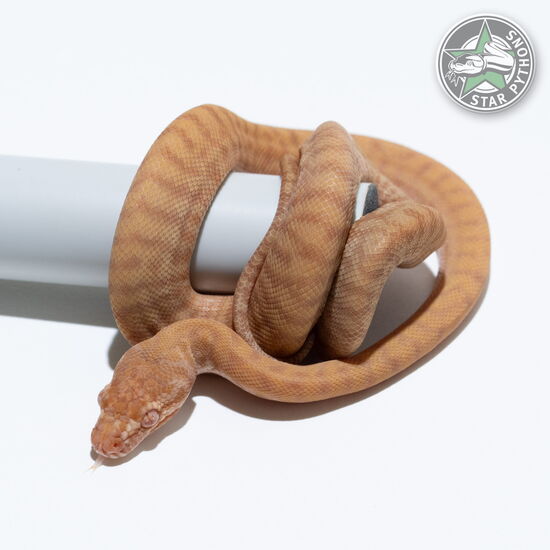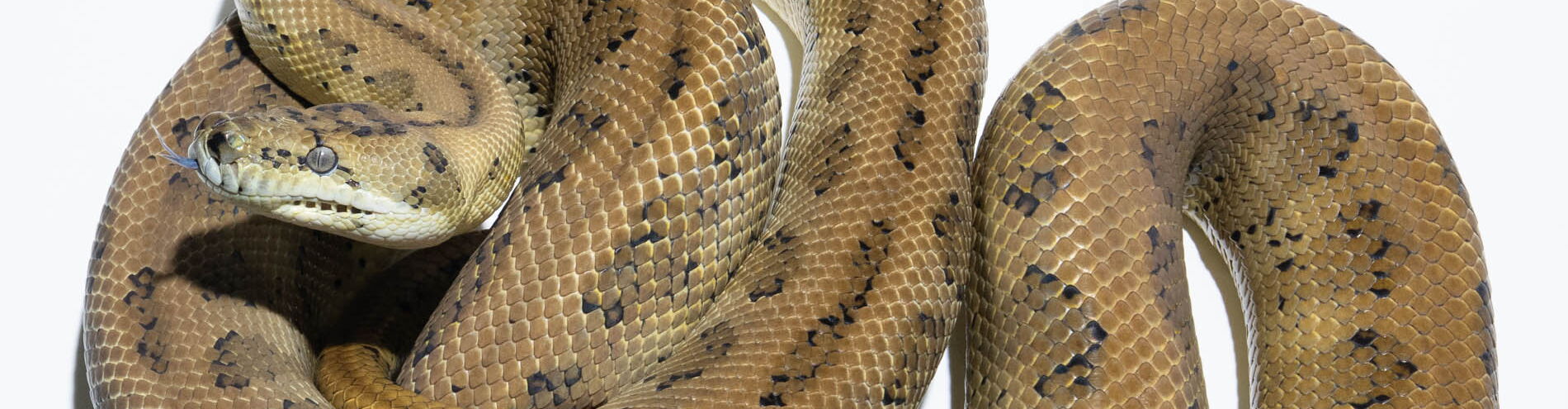
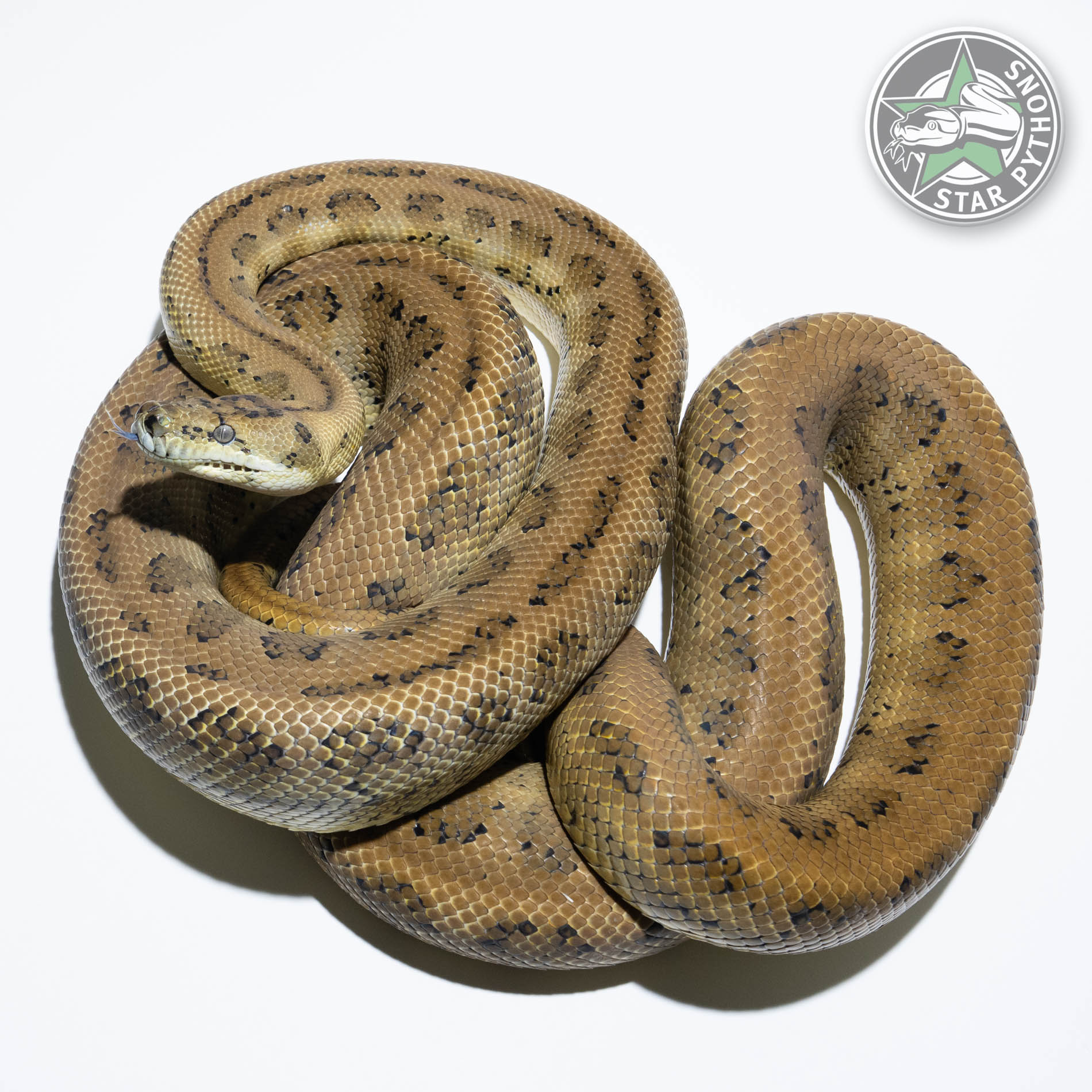
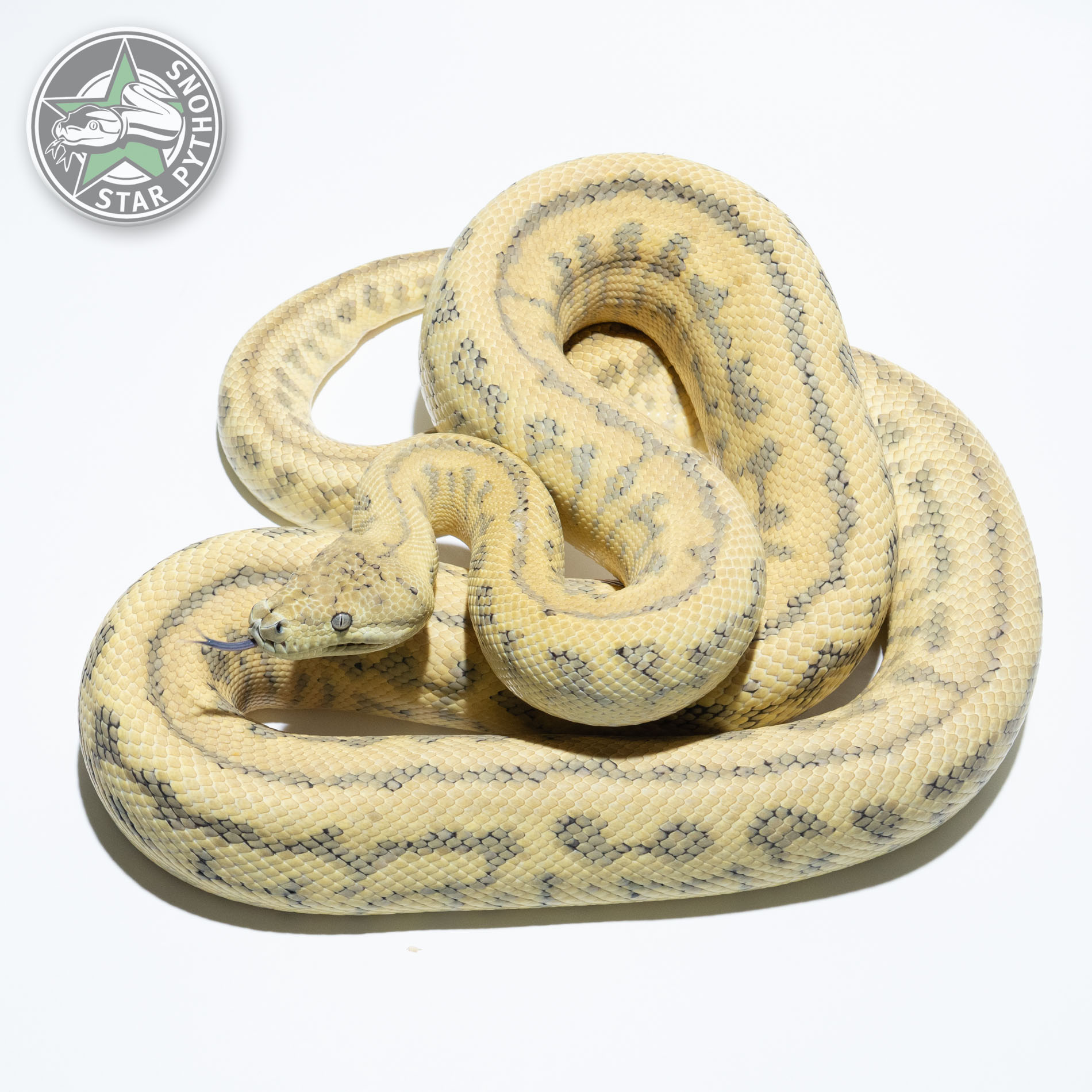
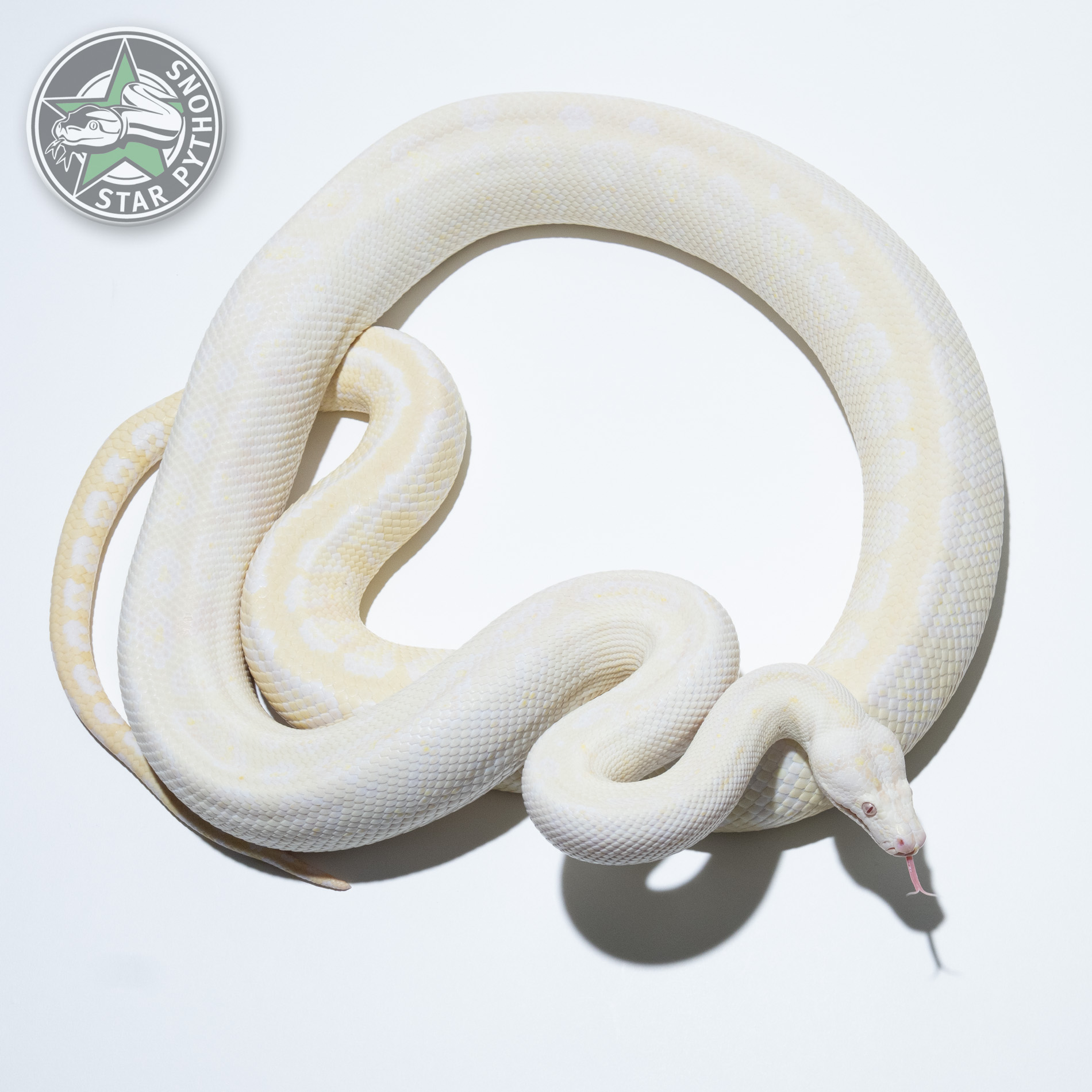
Jaguar Carpet Python (Morelia spilota mcdowelli) – pure Coastal lineage, fragmented dark pattern on warm ochre ground

Jaguar Carpet Pythons: Biology, Genetics & Lines

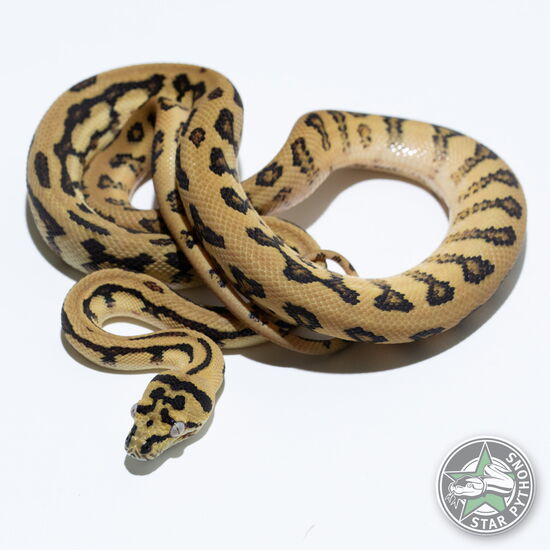
Jaguar Carpet Pythons are Morelia spilota carrying an incomplete dominant mutation that fundamentally disrupts the structured dorsal patterning of wild-type animals. To appreciate what the Jaguar gene does, the wild-type Coastal carpet python (Morelia spilota mcdowelli) provides the essential reference: a strongly contrasted animal in which dark greyish-brown to black tones dominate the dorsal surface, with cream to pale yellow blotches and irregular lighter markings sitting as inclusions within that dark ground. The Jaguar mutation effectively inverts this relationship. In a Jaguar mcdowelli, warm yellow to ochre becomes the dominant ground colour, and the dark pigment – rather than forming a continuous field – collapses into fragmented, isolated islands: irregular dark blotches, rings, and rosette-like structures that float on the pale ground without cohesion or repeating rhythm. The flanks in particular often show large, dark-outlined blotches with a lighter interior – a pattern that evokes the spotted coat of a jaguar (Panthera onca) and gives the morph its name. The dorsal midline retains some linear dark structure in many individuals, but the coherent banding of the wild-type is absent. The head is considerably paler than in wild-type animals. An additional ontogenetic feature is worth noting: Jaguar carpet pythons frequently hatch as grey neonates, with the characteristic yellow ground color developing progressively in the weeks and months following hatching (Mutton & Julander, 2022).

This page gives you a scientifically grounded overview of what the Jaguar mutation is, how it expresses at different gene doses, how it is inherited, what the neurological associations are and how they are best understood, and how the mutation entered captive collections. Below, you can also browse our available Jaguar carpet pythons.

Quick link: Scroll down to jaguar carpet pythons for sale to see currently available animals.

Jaguar Combinations & Gallery

Jaguar (pure Coastal)

Jaguar Carpet Python (Morelia spilota mcdowelli) – pure Coastal lineage, fragmented dark pattern on warm ochre ground

The pure Coastal Jaguar represents the mutation in its original subspecific context – Morelia spilota mcdowelli without additional colour modifiers. The warm ochre-brown ground colour is characteristic of the Coastal lineage, and the dark patterning is reduced to scattered fragments: short irregular streaks and isolated spots distributed across the dorsum without cohesion or repeating rhythm. The coherent banding of wild-type mcdowelli – in which dark tones form the continuous ground and pale elements sit as inclusions within it – is entirely dissolved. What remains of the dark pigment reads as residual texture rather than pattern. The Jaguar mutation originated in this subspecific background, and pure Coastal animals represent the genetic foundation from which all other Jaguar combinations derive. For breeders who prioritise subspecies integrity, a documented pure Coastal Jaguar is the only starting point for projects that remain within a single subspecific lineage.

Hypo Jaguar

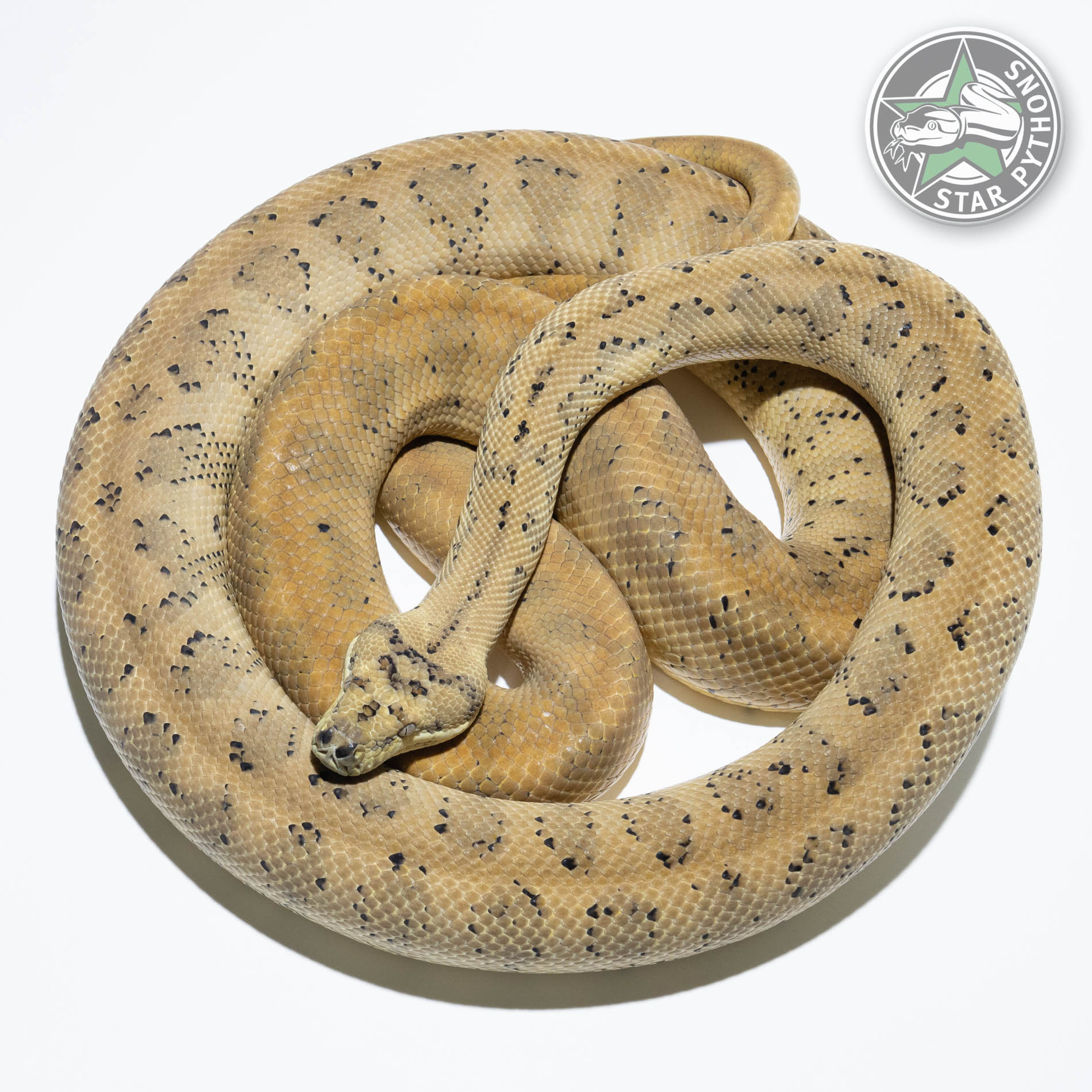
Hypo Jaguar Carpet Python (Morelia spilota mcdowelli) – double incomplete dominant combination with intensified golden ground colour

The Hypo Jaguar pairs two incomplete dominant mutations from the same Coastal lineage (M. s. mcdowelli): Hypo, which reduces melanin expression and shifts the animal toward warmer, more saturated tones, and Jaguar, which disrupts and fragments the dorsal pattern. Together, the effects layer rather than cancel: the already-fragmented dark elements of the Jaguar are additionally softened by the Hypo component, while the ground colour intensifies toward a rich, luminous gold. The result is an animal in which warmth dominates visually – pattern fragments are present but recede against a ground colour that commands attention. Because both mutations are incomplete dominant and from the same subspecific background, the Hypo Jaguar is a subspecies-pure combination – no subspecific crossing is required to produce it. The Jaguar component carries the neurological association in its homozygous form, which is why Jaguar projects are always structured as het × het or visual × non-carrier pairings.

Zebra Jaguar

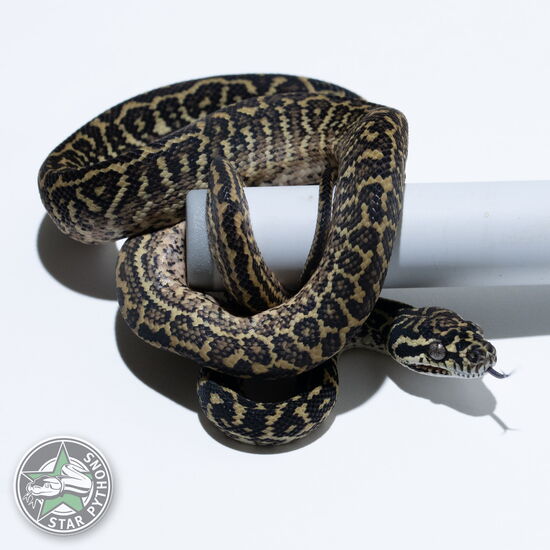
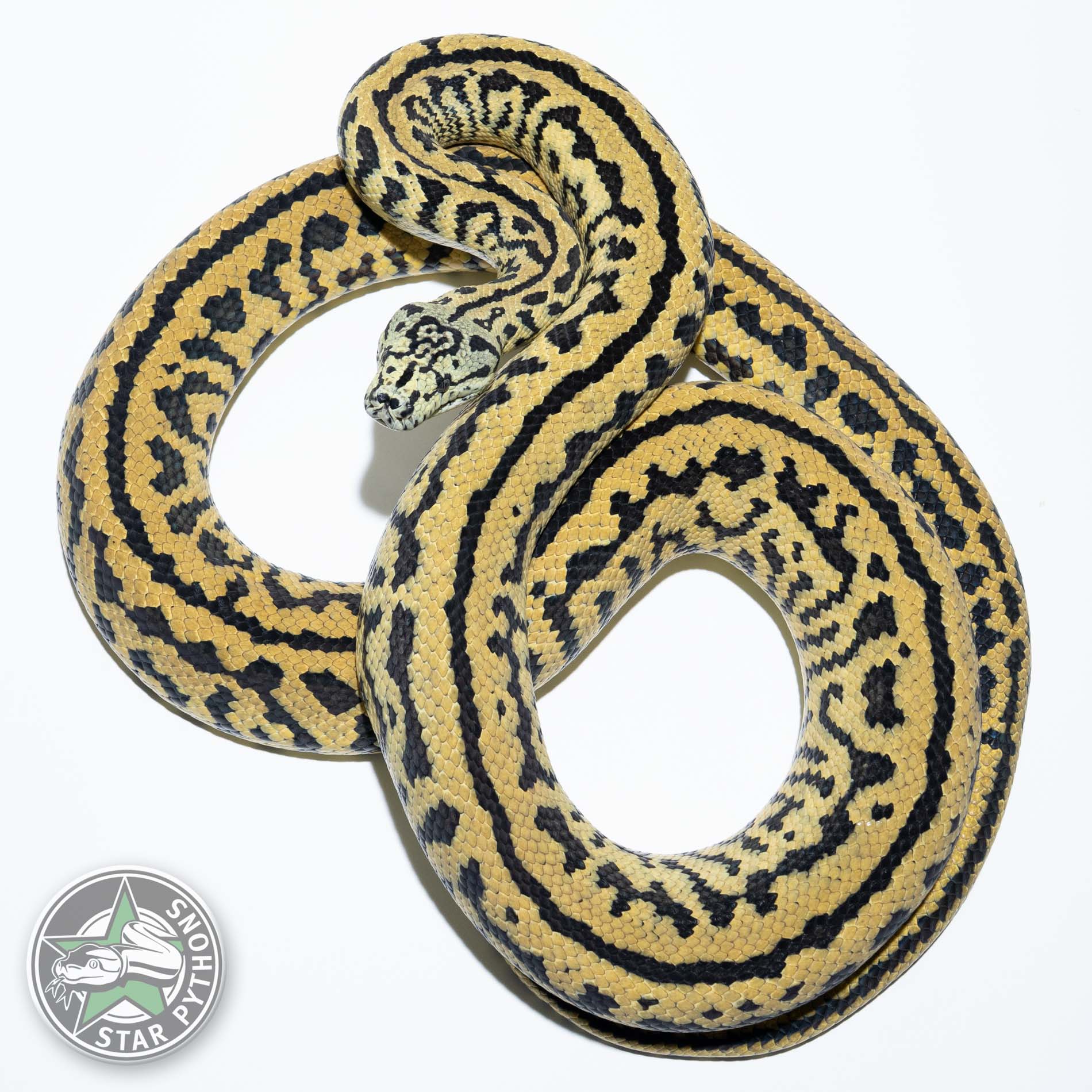
Zebra Jaguar Carpet Python (Morelia spilota) – Jungle × Coastal designer morph with bold fragmented cross-banding on vivid yellow

Zebra is an incomplete dominant mutation from the Jungle carpet python (Morelia spilota cheynei); Jaguar is an incomplete dominant mutation from the Coastal carpet python (M. s. mcdowelli). Combining the two requires crossing between subspecific backgrounds, making the Zebra Jaguar a designer morph in the strict sense. The visual result reflects the interaction of two fundamentally different patterning forces: Zebra produces broad, irregular dark cross-bands that sweep across the body in a strongly banded arrangement, while Jaguar disrupts and fragments any continuous structure. Together, the bands are broken open – wide black zones interrupted by yellow gaps and inclusions, creating a jagged, high-contrast pattern of alternating dark and light that reads as boldly banded rather than structured in any wild-type sense. The intensity of black and yellow, and the scale of the pattern elements, give the Zebra Jaguar a visual weight unlike any other combination in the complex. The neurological component of the Jaguar allele remains present regardless of the Zebra background.

Hypo Zebra Jaguar

Hypo Zebra Jaguar Carpet Python (Morelia spilota) – triple incomplete dominant combination with softened contrast and warm ochre tones

The triple combination of Hypo, Zebra, and Jaguar draws from two subspecific lineages: Zebra originates in the Jungle carpet python (M. s. cheynei), while Hypo and Jaguar are both Coastal (M. s. mcdowelli) mutations. All three are incomplete dominant, and their effects interact visually in a distinctive way: the high contrast of the Zebra Jaguar is substantially moderated by the Hypo component, lifting the black toward warm brown and grey and shifting the ground colour to a pale, creamy ochre. The structural patterning remains recognisable as Zebra Jaguar in origin, but the intensity is significantly reduced. The result occupies a visual middle ground that is distinct from all three single-gene combinations – softer than a Zebra Jaguar, more structured than a Hypo Jaguar, and characteristically muted in a way that reads as refined rather than reduced.

Redline Albino Jaguar

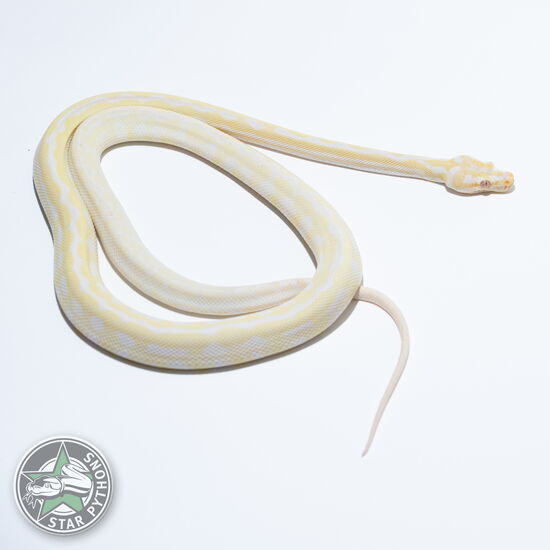
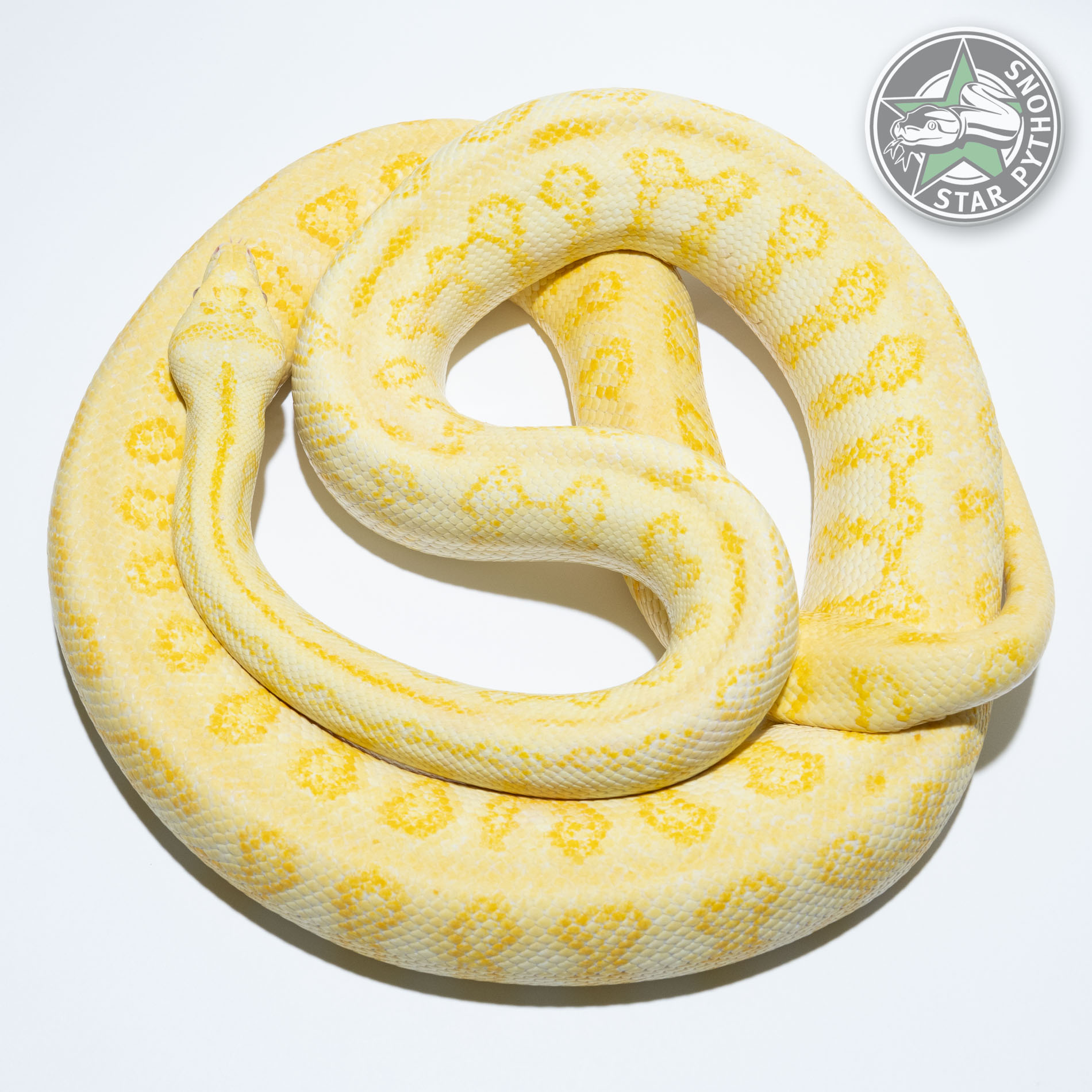
Redline Albino Jaguar Carpet Python (Morelia spilota) – amelanistic Jaguar combination from selectively bred high-saturation lineage

Albino (M. s. variegata, recessive) eliminates melanin entirely; Jaguar (M. s. mcdowelli, incomplete dominant) disrupts the structural arrangement of dark pigment. When combined, the melanin that Jaguar fragments and displaces is removed altogether by the Albino component, leaving the xanthophore-derived yellows and oranges with no dark counterpart. The result is an intensely luminous animal in vivid sulphur-yellow, with pattern elements visible only as subtly differentiated lighter rosettes against the yellow ground – the ghost of the Jaguar structure rendered entirely in warm tones. The Albino component here is from our documented Redline lineage, selected over generations for deep, saturated color. Because Albino is Darwin-origin and Jaguar is Coastal-origin, this combination draws from two subspecific backgrounds – a designer morph that requires het documentation on the Albino side to plan reliably.

Caramel Axanthic Jaguar

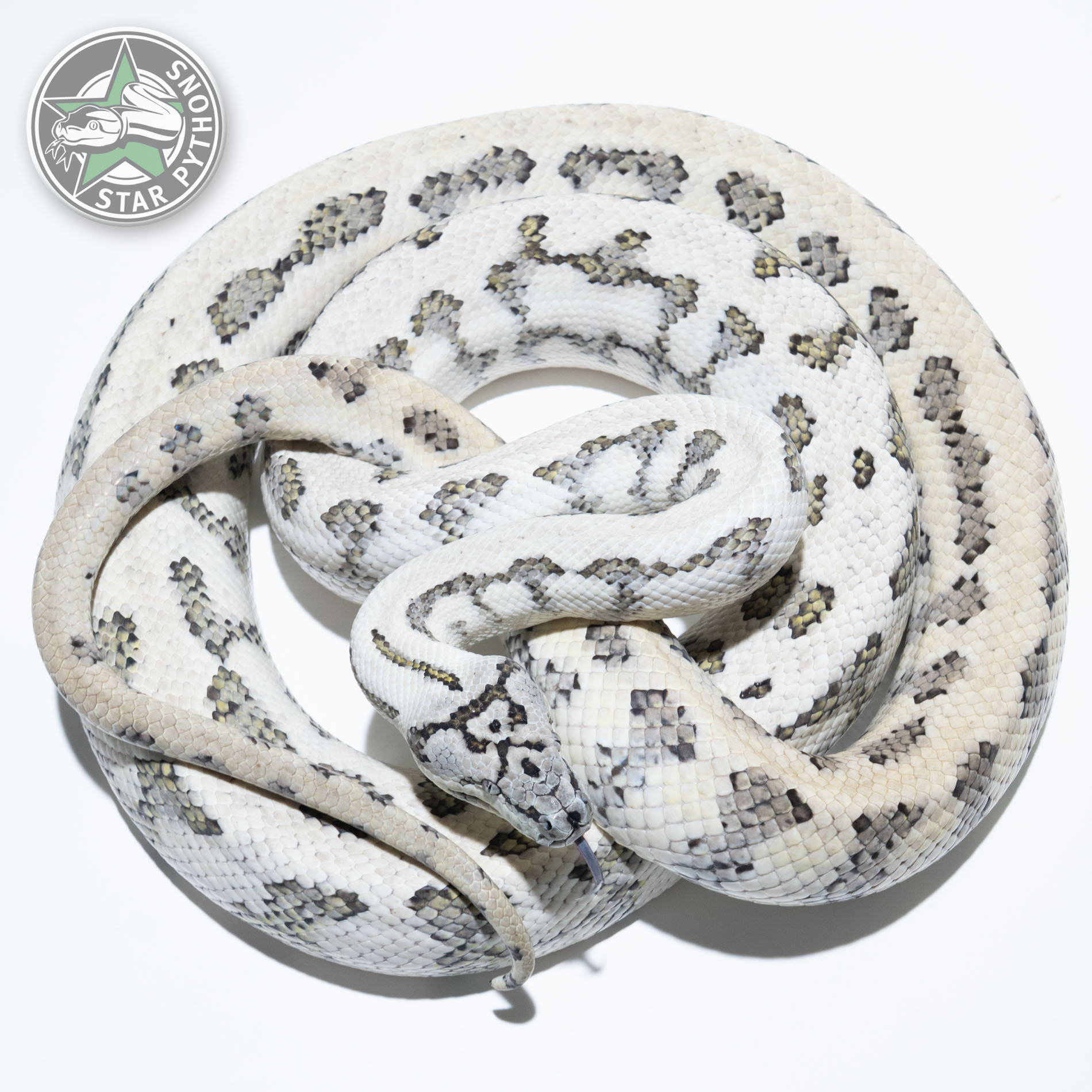
Caramel Axanthic Jaguar Carpet Python (Morelia spilota) – triple combination morph with near-white appearance and reduced dark fragments

Three independent mutations act simultaneously in this combination: Caramel (incomplete dominant, M. s. mcdowelli, reducing and warming dark pigment), Axanthic (recessive, Papuan/IJ or Coastal, significantly reducing yellow pigment), and Jaguar (incomplete dominant, M. s. mcdowelli, fragmenting pattern). Caramel and Axanthic together produce a pale, almost monochrome animal in which warm grey tones replace vivid contrast; the Jaguar component then dissolves what structured patterning remained. The result is an extremely pale, near-white animal with fine dark-grey fragments scattered across the dorsum – visually minimal, with a quiet elegance that rewards close observation. A note on nomenclature: the Caramel Axanthic combination is sometimes mislabelled as Ghost in the hobby. Ghost is specifically the combination of Hypo (not Caramel) with Axanthic; the two are genetically distinct and not interchangeable in a breeding program.

Axanthic Zebra Jaguar

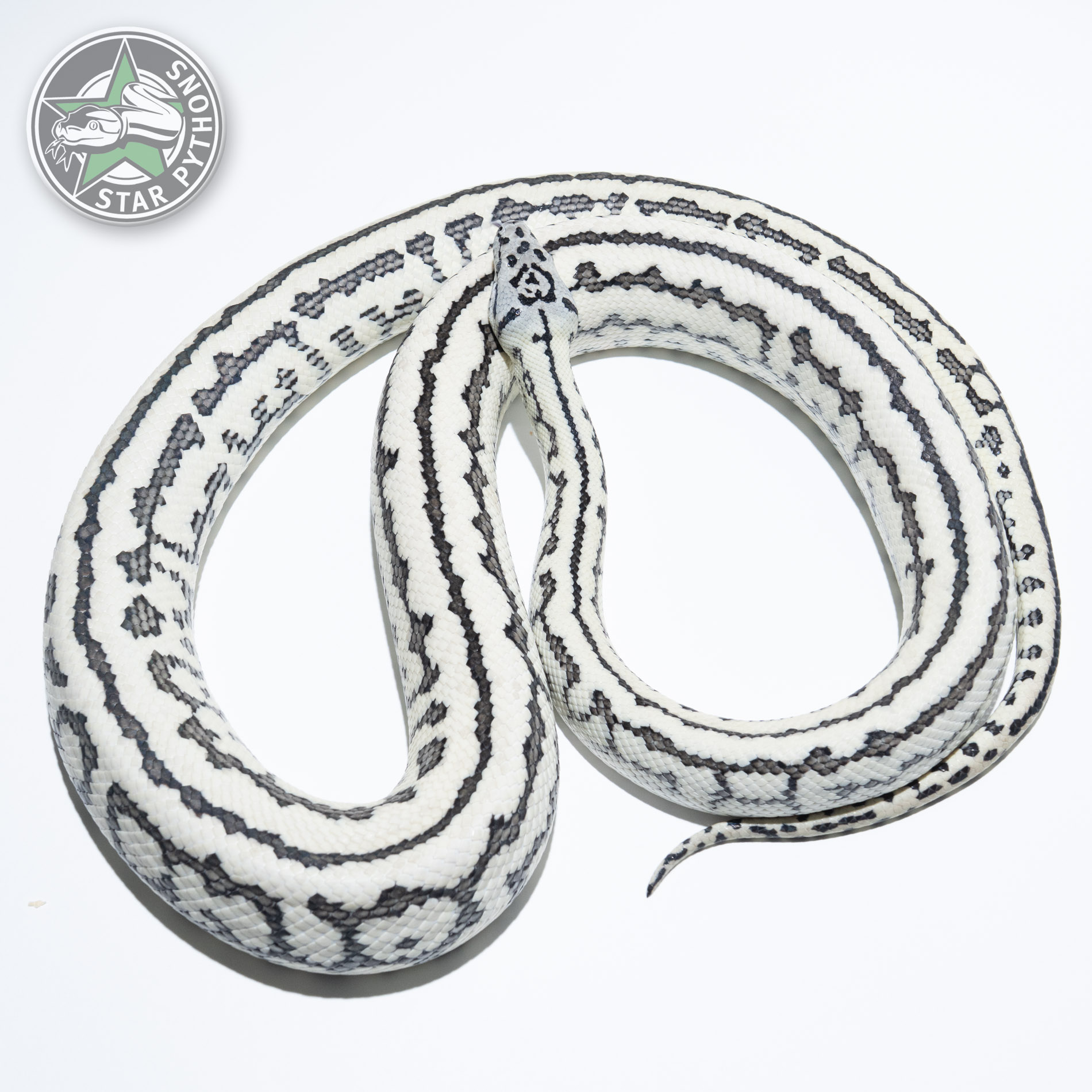
Axanthic Zebra Jaguar carpet python male (Morelia spilota), hatched 2023 – StarPythons

Axanthic (available in both Papuan/M. s. harrisoni and Coastal/M. s. mcdowelli lineages, recessive) significantly reduces yellow pigment; Zebra (M. s. cheynei, incomplete dominant) intensifies and restructures dark expression into broad cross-bands; Jaguar (M. s. mcdowelli, incomplete dominant) fragments the dorsal pattern. The combination draws from multiple subspecific backgrounds, making it a multi-lineage designer morph that requires careful het documentation to plan. Visually, the result is one of the most graphically striking phenotypes in the Jaguar complex: the broad, jagged banding of the Zebra Jaguar is rendered in sharp black on a clean white ground, with no yellow remaining to soften the contrast. What gives the standard Zebra Jaguar its vivid warmth is entirely absent here – the Axanthic component reduces the combination to pure black and white, with the structural boldness of the Zebra reading at full intensity against the pale ground. Producing this combination requires the Axanthic allele to be present in both parents, with lineage documentation essential for multi-generation planning.

Snow Jaguar

Snow Jaguar Carpet Python (Morelia spilota) – double recessive Albino Axanthic Jaguar combination approaching white with pink eyes

Snow is the combination of Albino (Darwin, M. s. variegata, recessive) and Axanthic (available in both Papuan/M. s. harrisoni and Coastal/M. s. mcdowelli lineages, recessive) – two separate recessive mutations that together eliminate both the melanin and the yellow pigment systems. Adding Jaguar (M. s. mcdowelli, incomplete dominant) to the Snow background removes whatever residual pattern structure the double recessive combination would otherwise retain. The result approaches white from three directions simultaneously: no melanin, no yellow, no pattern. What distinguishes the Snow Jaguar from the lethal homozygous Super Jaguar – which is also white – is the eye colour: Snow animals carry the pink to red eyes of the Albino, not the black eyes of the leucistic Super Jaguar. Producing Snow Jaguars requires parents heterozygous for both recessive alleles and carrying the Jaguar gene, making multi-generation planning with fully documented het backgrounds on all three genes essential.

What is the Jaguar Mutation?

The Jaguar mutation is a pattern- and pigmentation-altering gene that acts on the distribution and density of melanophores – the dark pigment cells responsible for the typical patterning of wild-type carpet pythons. The mutation results in pattern reduction, particularly along the dorsal surface, while simultaneously reducing dark pigment overall and giving affected animals a much lighter appearance than wild-type individuals (Mutton & Julander, 2022).

The degree of pattern disruption varies between individuals and is influenced by background genetics and selective breeding history. High-expression animals can appear almost patternless across the dorsum; lower-expression animals retain significant but clearly disrupted and fragmented dark elements. This individual variability is a characteristic feature of the Jaguar phenotype and distinguishes it from recessive colour mutations such as Albino or Axanthic, where the visual outcome is considerably more predictable.

An important distinction regarding subspecific background: The Jaguar mutation has a single origin in the Coastal carpet python (Morelia spilota mcdowelli) – the only subspecies in which the mutation has arisen naturally. It has not appeared independently in any other subspecies. Jaguar animals on Darwin (M. s. variegata) or Irian Jaya (M. s. harrisoni) backgrounds are therefore designer morphs in the strict sense – the result of deliberate crossing of the original mcdowelli-origin Jaguar line into animals of other subspecific lineage. The base colour and overall appearance differ substantially depending on the subspecific background, but the characteristic pattern disruption is recognisable regardless. For breeders who maintain subspecies-pure projects, the full lineage behind a Jaguar animal is therefore as important as its morph status.

Biology and Genetics

The Jaguar mutation is inherited as an incomplete dominant autosomal trait. A single copy of the allele – a heterozygous animal – already produces the characteristic Jaguar phenotype. Unlike recessive mutations, where a single copy is entirely masked by the wild-type allele, one Jaguar allele is sufficient to substantially alter pattern formation and melanophore distribution. Heterozygous animals are the standard "visual Jaguar" seen in the hobby.

The phenotypic difference between one and two copies of the allele is dramatic, and directly informative about the underlying biology. Heterozygous animals show a strongly reduced but still present melanophore pattern; homozygous animals – the Super Jaguar – are entirely white, leucistic. This dose-response relationship is the key to understanding what the Jaguar gene does: it does not interfere with melanin synthesis itself (as Albino does), but rather with the migration, survival, or establishment of melanophores in the skin during embryonic development.

This distinction matters biologically. Melanophores in the skin are neural crest-derived cells: they originate in the dorsal neural tube and migrate outward during embryogenesis to reach their final positions in the integument. If that migration or establishment is disrupted, the skin lacks melanophores – not because they cannot produce pigment, but because they were never properly positioned there. A single Jaguar allele disrupts this process partially; two alleles disrupt it completely. The retinal pigment epithelium of the eye, which derives from the neuroectoderm rather than the neural crest, is unaffected – which is why Super Jaguars have black eyes despite an entirely white body. This is the defining feature that distinguishes leucism from albinism, and it places the Jaguar mutation unambiguously in the context of neural crest development.

The precise molecular identity of the Jaguar gene has not been published in the peer-reviewed literature as of the time of writing. The incomplete dominant inheritance mode, the leucistic super form, and the neurological associations are well established through decades of breeding outcomes and clinical observation, but the underlying gene and its mechanism of action at the molecular level remain to be characterised in Morelia spilota.

The Homozygous Form: Super Jaguar

When two Jaguar alleles are combined – through a Jaguar × Jaguar pairing – a proportion of offspring will inherit one copy from each parent, producing a homozygous Super Jaguar. These animals are fully leucistic: the body is entirely white, the pattern is absent, and the eyes are black. The black eyes are diagnostically important: they confirm that melanin synthesis is intact, and that the white phenotype results from a failure of melanophore migration or establishment in the skin – not from an inability to produce pigment.

Super Jaguars are invariably lethal. Many leucistic individuals die at various points during incubation; only a small proportion develop to full term, and of those, some pip the egg but die within a few hours of emergence (Mutton & Julander, 2022, p. 518). Full-term animals that do hatch appear thin, and the ventral surface between the heart and the throat is visibly concave – an external indicator of the underlying pulmonary malformation (Mutton & Julander, 2022, p. 518). The most likely explanation for the lethal nature of this form is poor lung development (Mutton & Julander, 2022, p. 518). Despite concerted efforts by breeders to outcross around this outcome, the homozygous leucistic condition has proven incompatible with life outside the egg (Mutton & Julander, 2022, p. 518).

The lethality of the Super Jaguar is, developmentally speaking, a further indication of the scope of the Jaguar allele's effects. Neural crest cells contribute not only to peripheral pigment cells and neural structures but also to components of the cardiopulmonary system. A gene that disrupts neural crest development sufficiently to eliminate all skin melanophores may plausibly also affect other neural crest-dependent tissues – including those required for viable pulmonary development.

For breeders, the practical implication is straightforward: every Jaguar × Jaguar pairing will statistically produce 25 % Super Jaguar offspring, none of which will survive. This is an unavoidable consequence of the genetics and should be factored into breeding decisions.

Neurological Associations: Wobble Syndrome

Jaguar carpet pythons are associated with a neurological condition commonly referred to in the hobby as wobble syndrome. Affected animals show varying degrees of balance and coordination impairment: lateral head tremors, corkscrewing or twisting movements of the head and neck, an impaired righting reflex, and reduced strike accuracy. Symptoms are often more pronounced during states of arousal such as feeding, and vary considerably between individuals (Rose & Williams, 2014). Every Jaguar animal carries the neurological component to some degree. The severity ranges from subtle, intermittent head instability that may only be apparent under stress, to persistent and pronounced dysfunction at rest (Rose & Williams, 2014). There is no confirmed way to predict neurological severity from the pattern phenotype alone.

The mechanistic basis of wobble in Jaguar carpet pythons has not been directly investigated. No published µCT, MRI, or histological study has characterised the neuroanatomy of affected Morelia spilota Jaguar animals to date. The mechanism therefore remains an open question.

The best available model for comparison comes from work on the Spider morph of the ball python (Python regius), where µCT imaging has demonstrated clear morphological abnormalities of the inner ear in all affected individuals examined: the semicircular canals were widened, the ampullae enlarged and deformed, and the sacculus distinctly smaller and lacking a coherent macula sacculi (Starck et al., 2022). The authors of that study explicitly discuss the possibility that selecting for colour and pattern alterations may be linked to neural-crest-associated developmental malformations of the statoacoustic organ in vertebrates generally (Starck et al., 2022). Whether an analogous inner ear pathology exists in Jaguar Morelia spilota is unknown; the two mutations, the two species, and the two inheritance modes are distinct, and direct extrapolation is not scientifically warranted.

What can be said on the basis of established developmental biology is the following. Neural crest cells give rise to both melanophores and peripheral glial cells, including the glial component of the cochleovestibular (VIIIth cranial) ganglion, which develops in close association with neural crest-derived glial precursors (Whitfield, 2015; Méndez-Maldonado et al., 2020). The Jaguar phenotype itself – and in particular the fully leucistic Super Jaguar – provides direct evidence that the Jaguar allele substantially disrupts neural crest cell migration or establishment during embryogenesis. A gene that disrupts neural crest development to this degree may plausibly affect other neural crest-derived cell populations simultaneously, including those associated with vestibular function. This is the neural crest hypothesis: a developmentally coherent framework that accounts for the co-occurrence of the pigmentation phenotype and the neurological signs within a single genetic change, and one explicitly invoked in the context of morph-associated neurological conditions in pythons (Starck et al., 2022).

This hypothesis is strongly supported by the Spider/Python regius data and is consistent with broader vertebrate developmental biology (Starck et al., 2022; Méndez-Maldonado et al., 2020). For Jaguar Morelia spilota, it remains a well-grounded working hypothesis rather than a demonstrated mechanism. Systematic investigation – ideally µCT or MRI of the inner ear region combined with genetic characterisation of the Jaguar locus – would be needed to test it directly.

For keepers and breeders, the practical implications of the wobble vary considerably depending on the individual animal. The majority of Jaguar carpet pythons are not obviously affected under normal conditions: they feed reliably, grow at a normal rate, reproduce successfully, and show no signs that would compromise day-to-day husbandry (Mutton & Julander, 2022). Neurological signs in mildly affected individuals may only become apparent under specific circumstances – most commonly during feeding, when the heightened arousal state briefly unmasks an otherwise subclinical instability (Rose & Williams, 2014). Standard carpet python husbandry is entirely appropriate for these animals; no special enclosure modifications are required.

The neurological component of the Jaguar gene also raises an ethical dimension that every breeder must weigh independently. Because the wobble is inseparable from the gene itself and its severity cannot be predicted in advance, breeding Jaguar carpet pythons carries an inherent possibility of producing animals with more pronounced neurological signs. Whether that risk is acceptable is a question each breeder must answer for themselves, informed by their own assessment of animal welfare and the available evidence.

History of the Jaguar Mutation

The Jaguar mutation was first documented in a Coastal carpet python (Morelia spilota mcdowelli) – the only subspecies in which the mutation has arisen naturally – in a private collection in Norway, where it arose in the breeding programme of Jan Eric Engell. The founding animal was identified in 1994 after several years of working with Coastal carpet pythons. Engell named the mutation "Jaguar" in 1997, at which point he also began investigating whether the trait was recessive or incomplete dominant through controlled pairings.

In 1998, he bred the founding Jaguar to an unrelated female Coastal carpet python. The clutch produced only four viable eggs, one of which hatched as a Jaguar – confirming the incomplete dominant nature of the gene. The following year, 1999, the same pair produced twelve offspring: four wild-type and eight Jaguars. All twelve animals were exported to the United States, where they formed the basis of the North American Jaguar breeding population and commanded significant prices at the time.

The morph subsequently spread to European collections during the early-to-mid 2000s. Because the incomplete dominant nature of the gene means that every carrier is a visual Jaguar – there are no phenotypically normal het animals – the morph dispersed relatively quickly once founder animals were available.

All Jaguar animals on Darwin (M. s. variegata), Irian Jaya (M. s. harrisoni), or other subspecific backgrounds trace back to deliberate outcrossing from the original mcdowelli line. The Jaguar mutation has not been documented to arise independently in any other subspecies.

Inheritance: Practical Expectations

The Jaguar gene is incomplete dominant. A single copy produces a visual Jaguar; two copies produce the homozygous Super Jaguar, which is leucistic and invariably lethal. This gives rise to three genotypic categories:

  • Visual Jaguar (heterozygous): one copy of the Jaguar allele; characteristic disrupted pattern and enhanced yellow ground colour; neurologically affected to variable degree
  • Super Jaguar (homozygous): two copies; fully leucistic white with black eyes; invariably lethal, typically within hours of hatching, due to pulmonary malformation
  • Normal (non-carrier): no Jaguar allele; wild-type patterning; neurologically unaffected

Standard pairing outcomes:

  • Jaguar × Normal → statistically 50 % visual Jaguars, 50 % normals. No non-visual carriers – because the gene is incomplete dominant, every carrier is a visual Jaguar.
  • Jaguar × Jaguar → statistically 25 % Super Jaguars (lethal), 50 % visual Jaguars, 25 % normals.
  • Normal × Normal → all offspring normal.

The practical takeaway: unlike recessive morphs, there are no "het Jaguar" animals. Every animal carrying the allele expresses it visually. This simplifies genetic tracking considerably – but it also means that Jaguar × Jaguar pairings will always produce lethal Super Jaguar offspring, which is an important consideration in pairing selection.

FAQ - Jaguar Carpet Pythons

Is the Jaguar mutation found only in Coastal carpet pythons?

The mutation originated in a Coastal (M. s. mcdowelli) individual in Norway and has not been documented to arise independently in any other subspecies. Jaguar animals on Darwin or Irian Jaya backgrounds exist but are the result of deliberate outcrossing from the original mcdowelli line – designer morphs rather than independent discoveries.

Is the wobble always present in Jaguar carpet pythons?

Yes – to some degree. Every heterozygous Jaguar animal shows neurological signs, but severity varies widely between individuals (Rose & Williams 2014). Some animals show only subtle, intermittent head instability under stress; others show persistent, pronounced coordination deficits. There is no confirmed way to select against neurological severity while maintaining the Jaguar phenotype, as the neurological component appears inseparable from the gene itself.

Can a Jaguar carpet python live a normal life?

For the vast majority of Jaguar carpet pythons, the answer is yes – without qualification. In practice, most animals show no obvious neurological signs under normal husbandry conditions and live entirely normal lives: they feed reliably, grow at a normal rate, and reproduce successfully (Mutton & Julander 2022). A smaller proportion shows mild, intermittent instability that only becomes apparent under specific circumstances such as feeding, without meaningfully affecting quality of life. Only a small minority of individuals is more severely affected to a degree that requires any adjustment to husbandry. Quality of life should always be assessed on an individual basis, but the experience of breeders working with this morph over decades reflects that severely affected animals represent the exception rather than the rule.

Are there any published studies specifically on Jaguar carpet pythons and wobble?

Not as of the time of writing. The neurological association is documented in veterinary and hobby literature, but no peer-reviewed anatomical or genetic study has characterised the mechanism in Morelia spilota Jaguar animals specifically. The best available comparative data comes from work on the Spider ball python, where µCT imaging has demonstrated inner ear malformations as a morphological correlate of wobble (Starck et al. 2022). Whether an analogous mechanism operates in Jaguar carpet pythons is an open and uninvestigated research question.

What exactly is a Super Jaguar, and why does it die?

A Super Jaguar is a homozygous animal with two copies of the Jaguar allele. It is fully leucistic – entirely white with black eyes – because melanophore migration into the skin is completely absent at both gene doses. The black eyes distinguish it from albinism: melanin synthesis is intact, but skin melanophores never established during development. Super Jaguars die due to a malformation of the lungs, which fail to develop correctly; many die during incubation, and those that reach full term typically die within hours of hatching (Mutton & Julander 2022). No Super Jaguar has been documented to survive.

Why does the Super Jaguar have black eyes if it is entirely white?

The retinal pigment epithelium of the eye derives from the neuroectoderm – the same embryonic tissue that forms the brain and spinal cord – rather than from the neural crest. It is therefore not affected by the Jaguar allele, which disrupts neural crest-dependent melanophore migration. The skin lacks melanophores; the eye retains its normal pigment. This is the defining difference between leucism and albinism.

References

Méndez-Maldonado, K., Vega-López, G. A., Aybar, M. J., & Velasco, I. (2020). Neurogenesis from neural crest cells: molecular mechanisms in the formation of cranial nerves and ganglia. Frontiers in Cell and Developmental Biology, 8, 635. https://doi.org/10.3389/fcell.2020.00635

Mutton, N., & Julander, J. (2022). The more complete carpet python: A comprehensive guide to the natural history, care, and breeding of the Morelia spilota complex. ECO Publishing. ISBN 978-1-938850-42-4.

Rose, M. P., & Williams, D. L. (2014). Neurological dysfunction in a ball python (Python regius) colour morph and implications for welfare. Journal of Exotic Pet Medicine, 23, 234–239. https://doi.org/10.1053/j.jepm.2014.06.002

Starck, J. M., Schrenk, F., Schröder, S., & Pees, M. (2022). Malformations of the sacculus and the semicircular canals in spider morph pythons. PLOS ONE, 17(8), e0262788. https://doi.org/10.1371/journal.pone.0262788

Whitfield, T. T. (2015). Development of the inner ear. Current Opinion in Genetics & Development, 32, 112–118. https://doi.org/10.1016/j.gde.2015.02.006

Available Jaguar Carpet Pythons for Sale

Sex
Category
Morph
This beautiful male Axanthic Granite het Albino carpet python with id 24-033 is for sale.
Animal ID: 24-033

Axanthic Granite het Albino

1.900 € US$ 2,100 ₩ 2,899,000

Details

This beautiful male Snow het Granite carpet python with id 24-029 is for sale.
Animal ID: 24-029

Snow het Granite

2.100 € US$ 2,100 ₩ 3,299,000

Details

This beautiful female Sunglow carpet python with id 25-526 is for sale.
Animal ID: 25-526

Sunglow

1.400 € US$ 1,800 ₩ 1,399,000

Details

This beautiful female Albino Tiger carpet python with id 25-180 is for sale.
Animal ID: 25-180

Albino Tiger

700 € US$ 750 ₩ 999,000

Details

This beautiful male Zebra het Albino carpet python with id 25-173 is for sale.
Animal ID: 25-173

Zebra het Albino

225 € US$ 450 ₩ 599,000

Details

This beautiful female Albino (Redline) carpet python with id 25-165 is for sale.
Animal ID: 25-165

Albino (Redline)

310 € US$ 450 ₩ 599,000

Details