


FAQ - Axanthic Carpet Pythons
What is the difference between axanthic and albino?
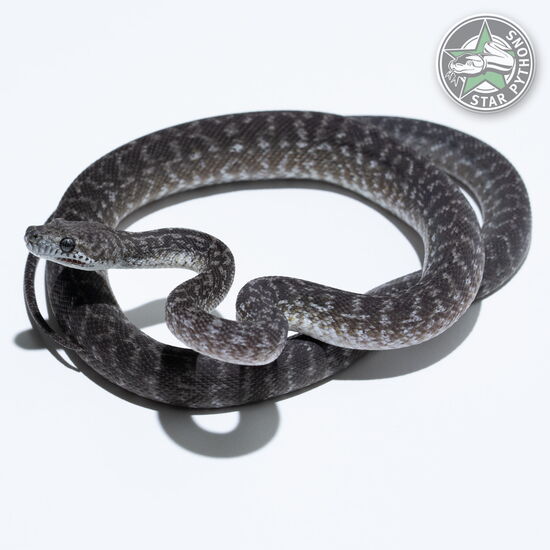
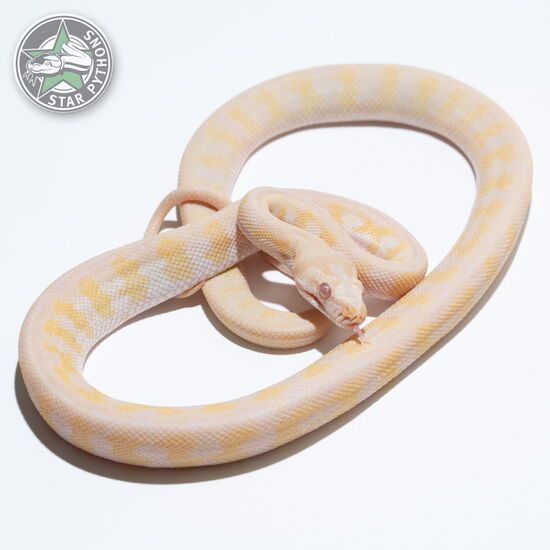
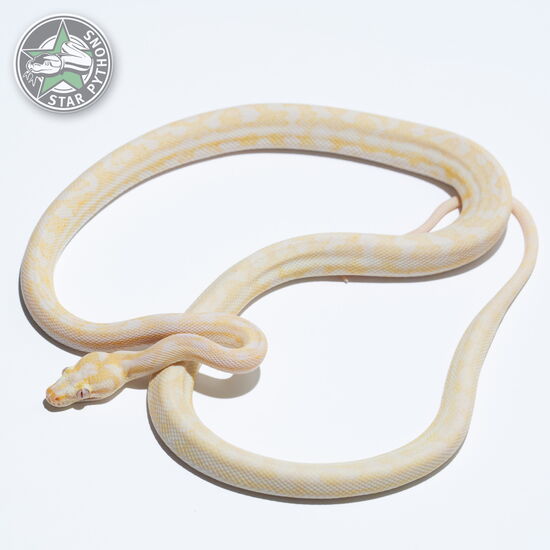
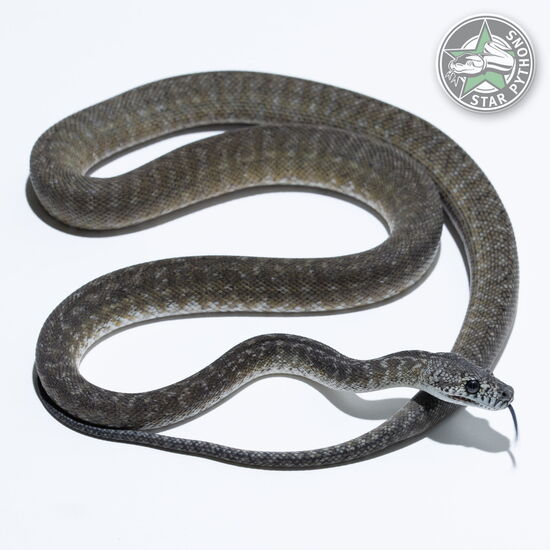
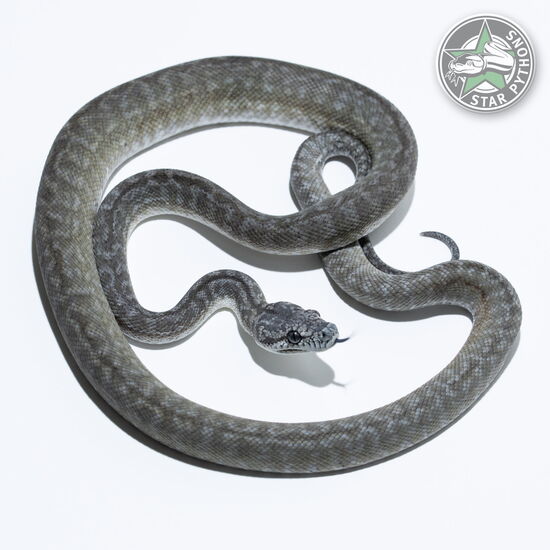
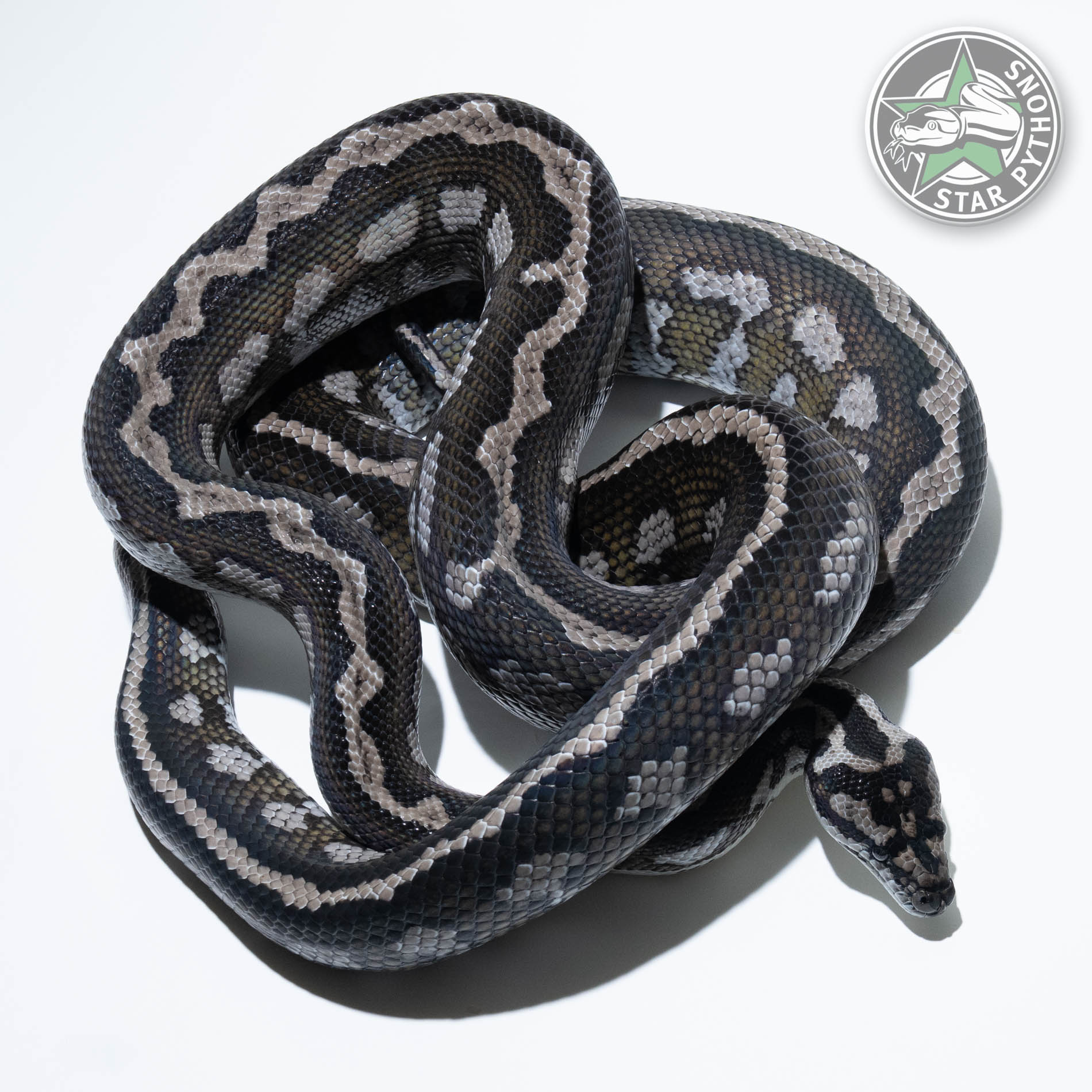
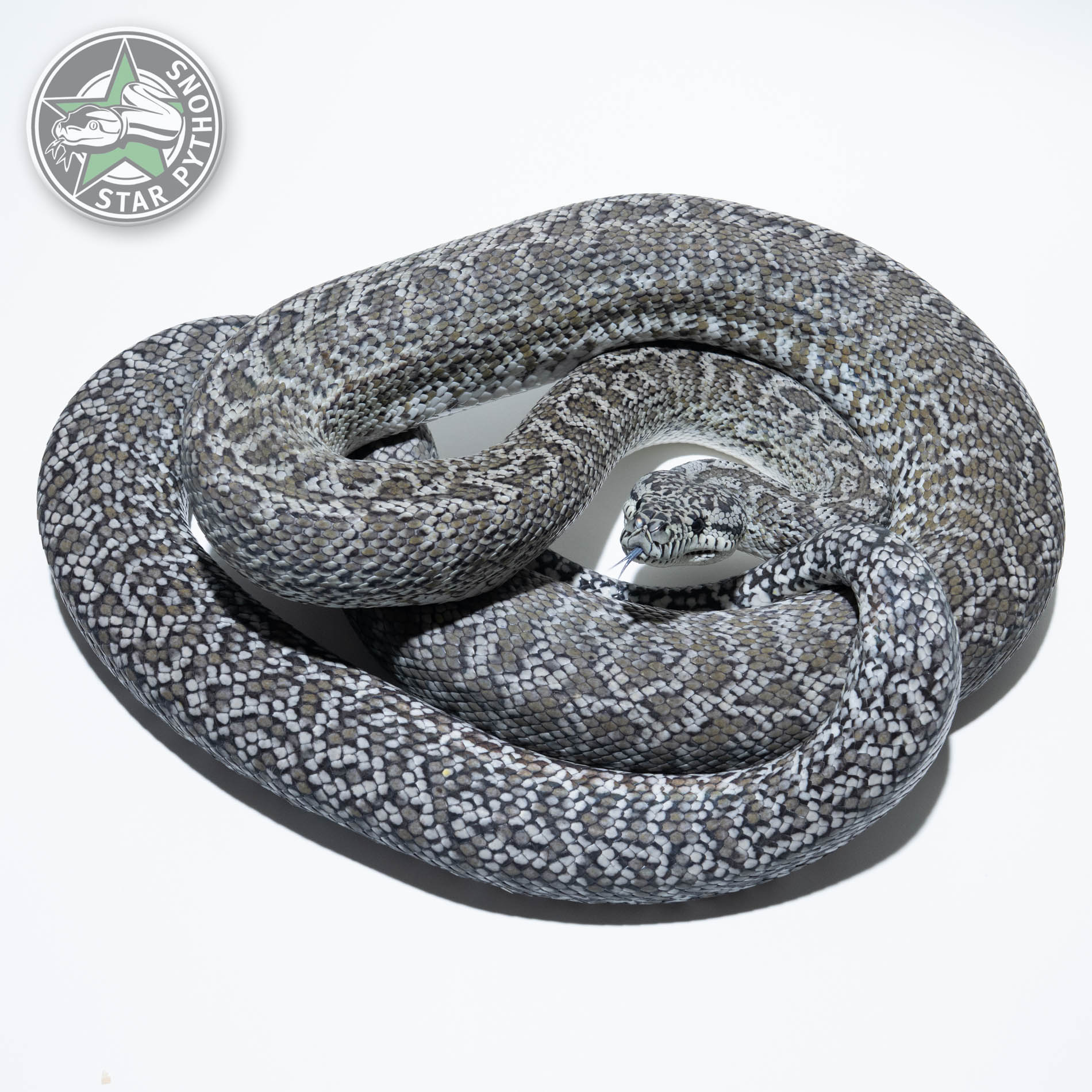
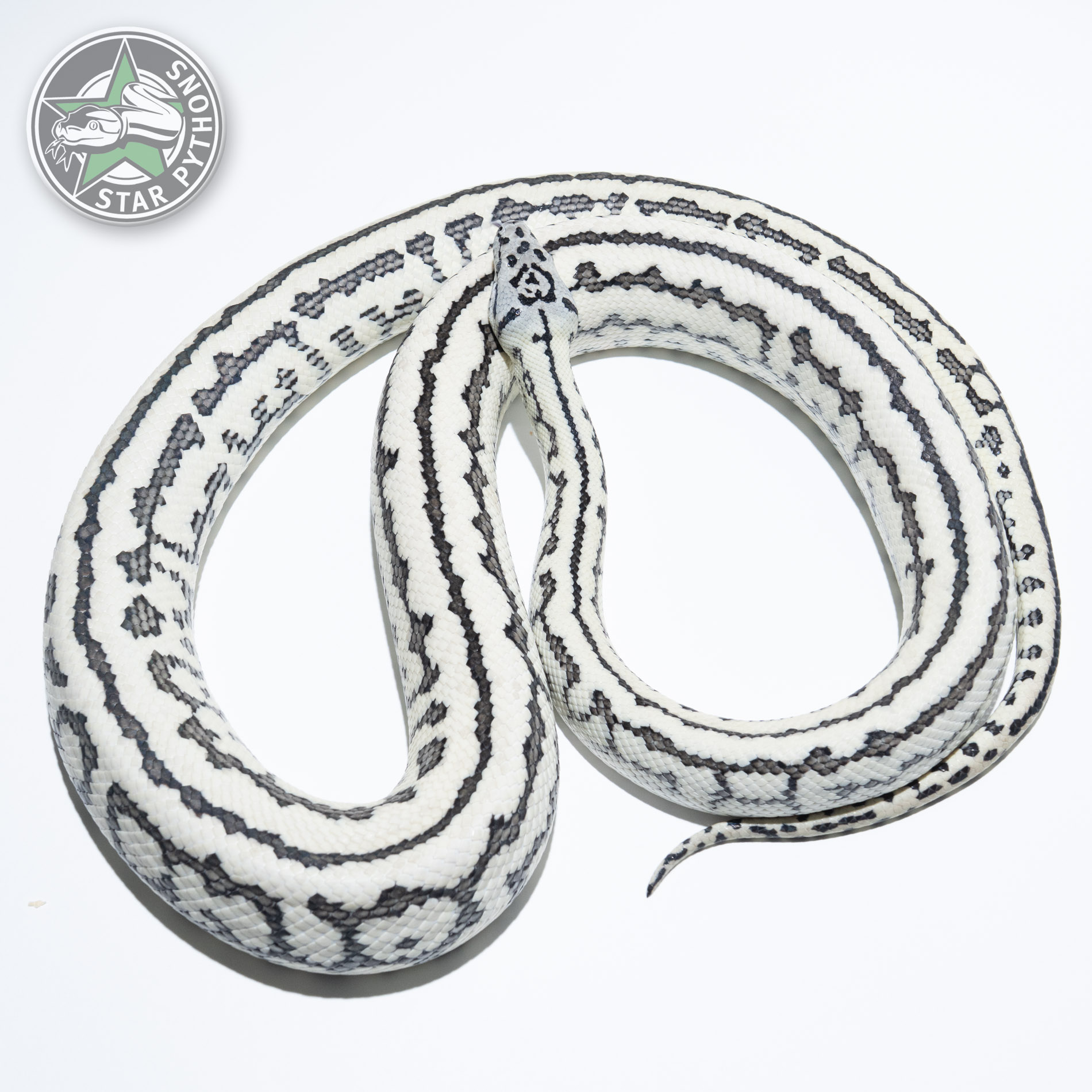
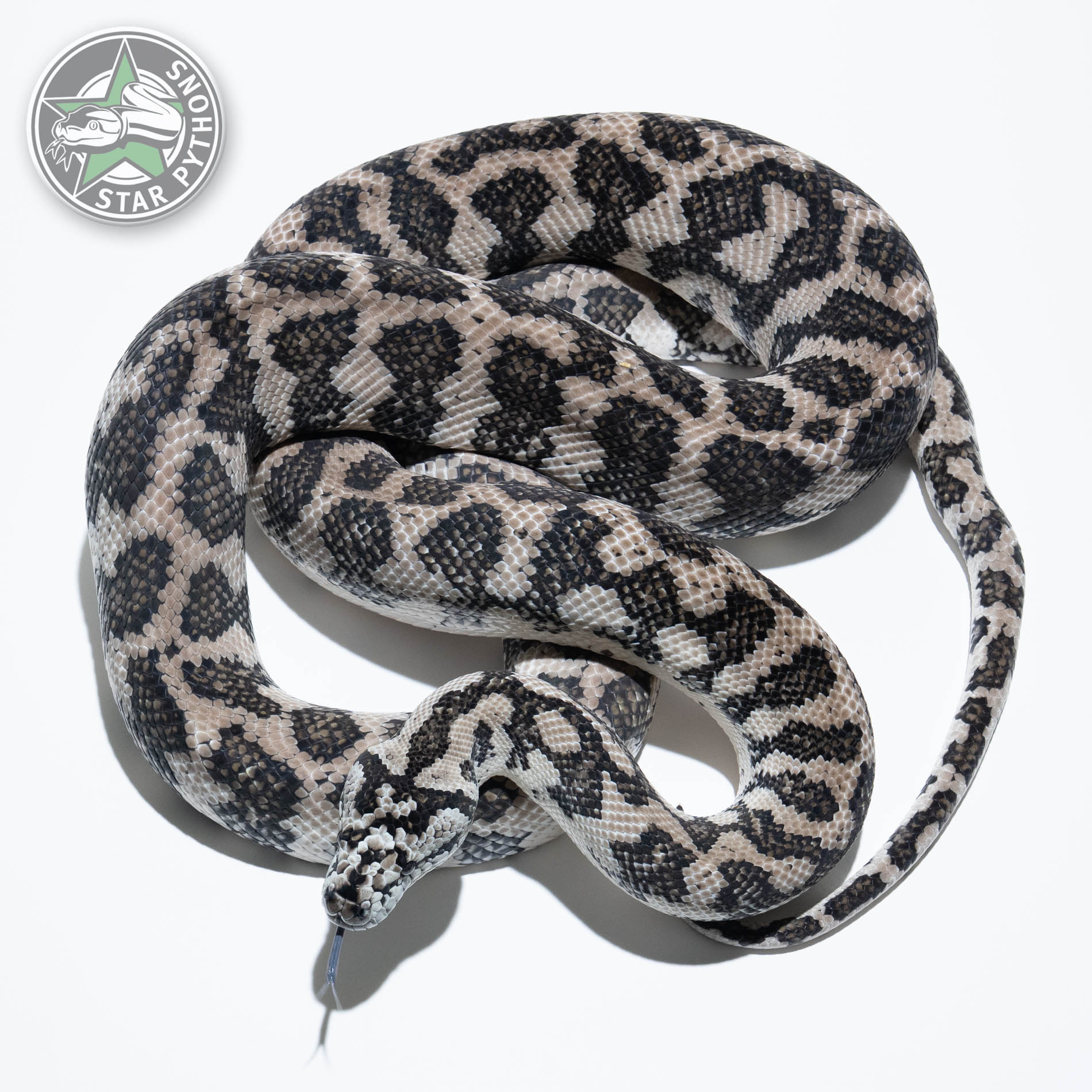
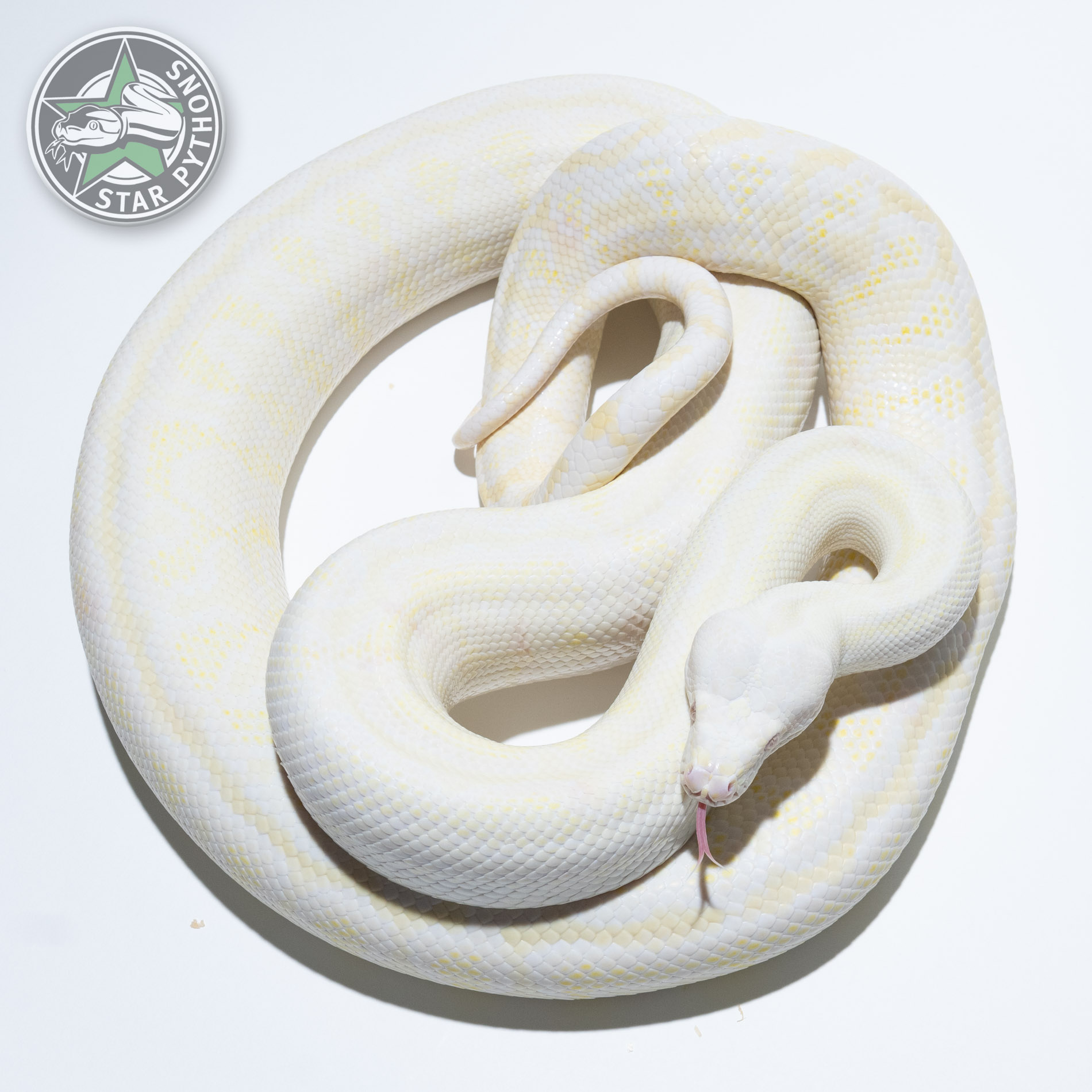
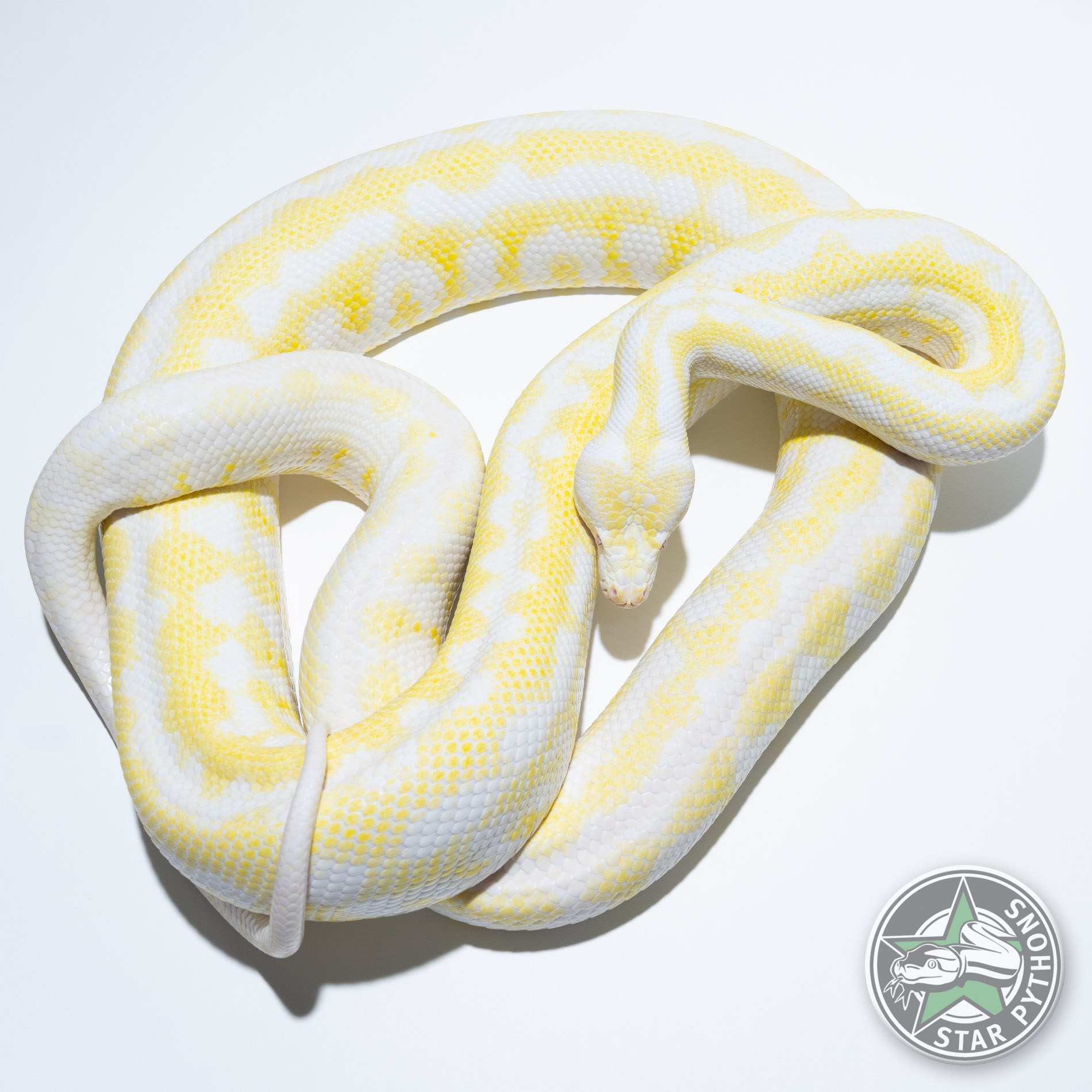
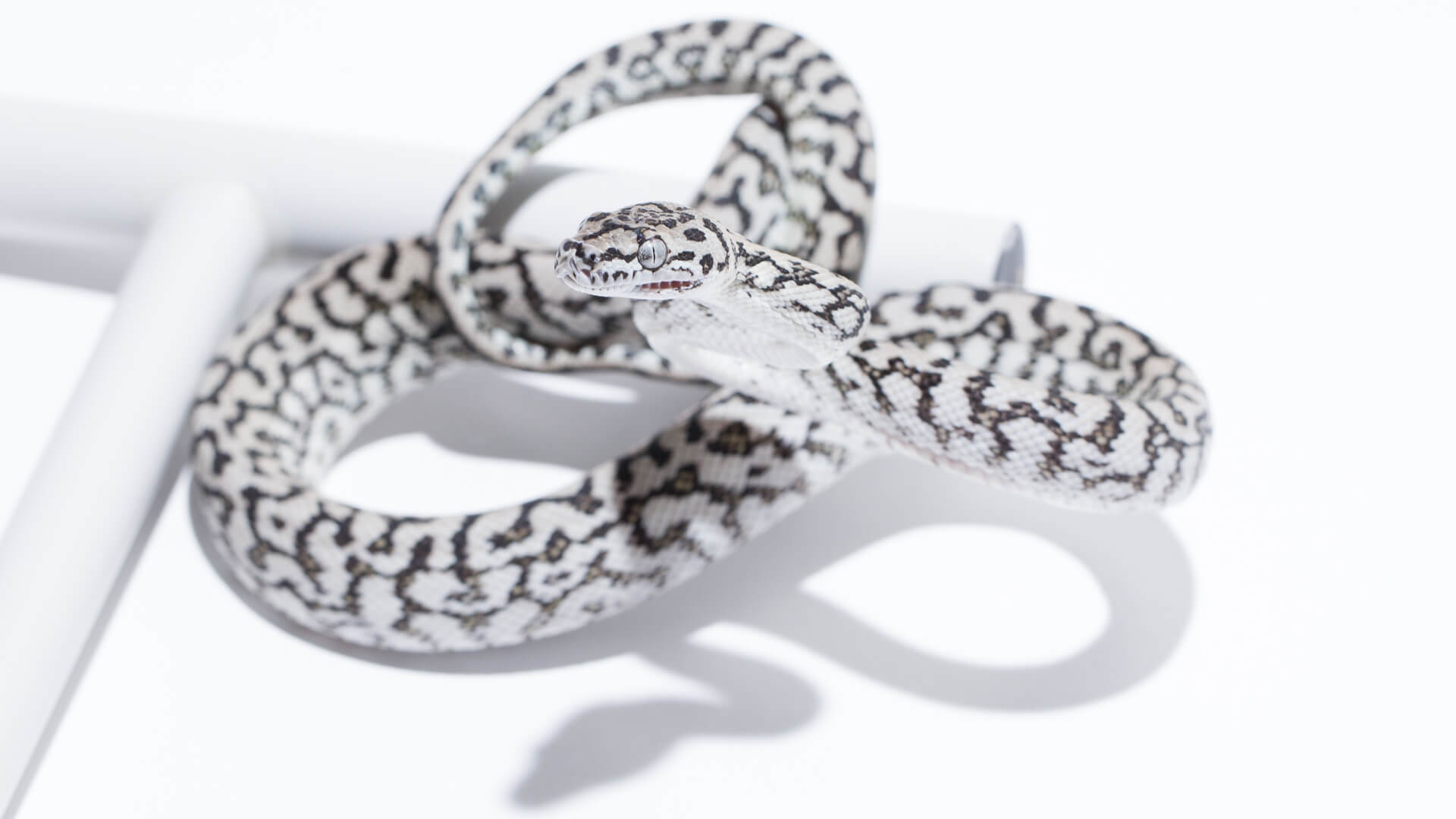
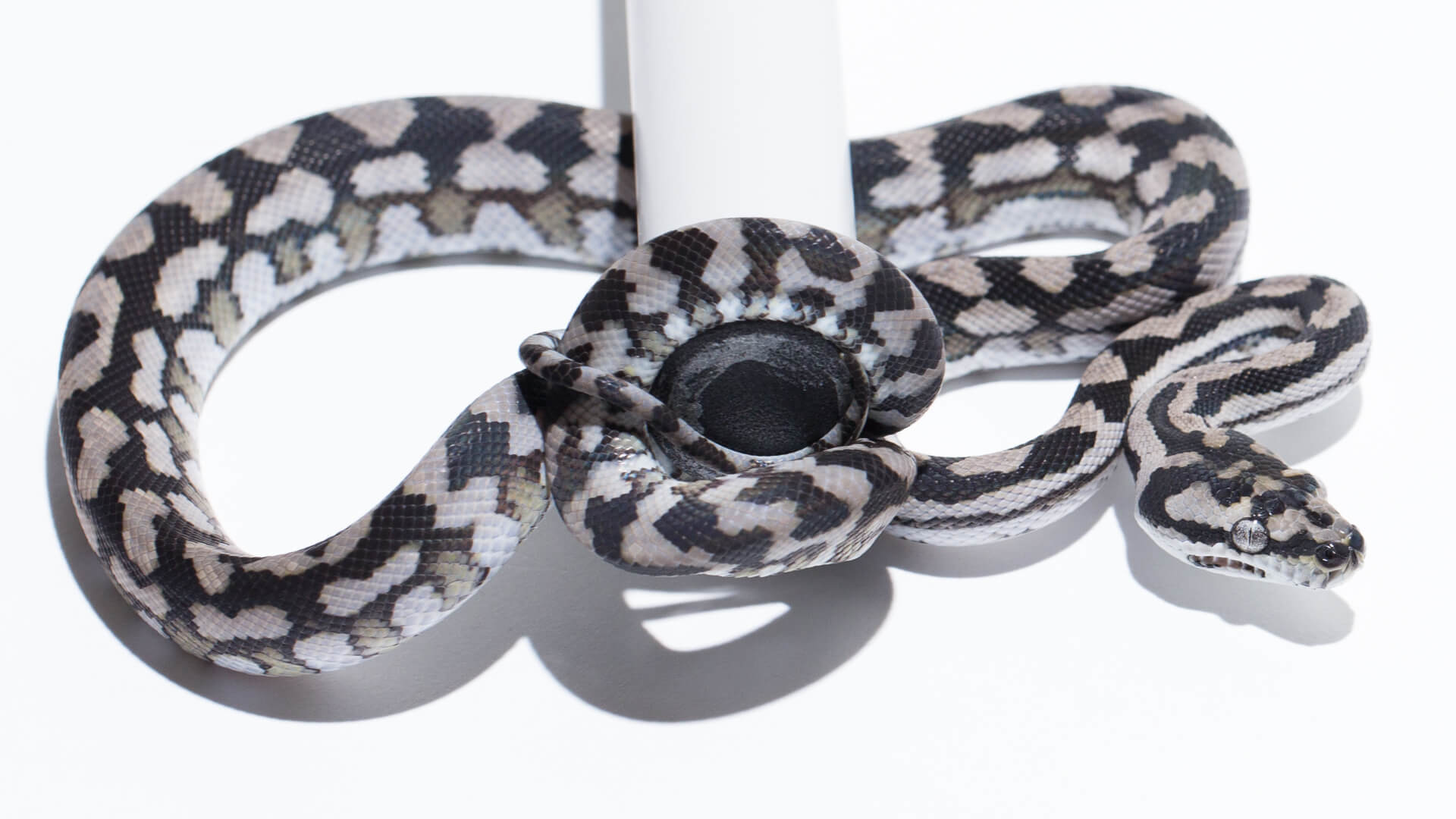
Albinism and axanthism affect different pigment systems. Albinism eliminates melanin – the dark pigment responsible for contrast and banding – leaving an animal dominated by yellow, orange, and white tones from the remaining xanthophores. Axanthism works in the opposite direction: it reduces or eliminates yellow pigmentation while leaving the melanin system intact, producing a cool silver-grey to charcoal animal with preserved dark pattern contrast. The two mutations are genetically independent and can be combined: an animal carrying both albino and axanthic in visual form is called a Snow – a near-white animal where both dark and yellow pigment pathways are simultaneously suppressed.
Are axanthic carpet pythons harder to keep than normal ones?
No – the fundamental husbandry requirements are identical. Axanthic carpet pythons eat, thermoregulate, and behave like any other carpet python. Unlike albinos, they are not light-sensitive because their melanin system – including iris pigmentation – functions normally. The only consideration is aesthetic rather than medical: axanthic animals sometimes show a faint olive or warm undertone under certain lighting conditions, which is normal and does not indicate a health issue. In short, if you can keep a wild-type carpet python, you can keep an axanthic.
Can you tell if a carpet python is het axanthic by looking at it?
Not reliably. Some breeders report subtle yellow reduction in heterozygous animals – a slightly cooler overall tone compared to confirmed non-carriers. However, carpet pythons show exceptionally wide natural colour variation, even within the same clutch from wild-type parents. This makes "het recognition by eye" practically unreliable: a naturally cooler wild-type animal can look identical to a genuine het. Our recommendation is to treat het status as a genetic claim backed by documented pairing records, not as a visual assessment. If an animal is sold as het axanthic, ask for the parent documentation.
Is axanthic recessive or intermediately inherited?
In practice, axanthic in carpet pythons behaves most consistently as a simple autosomal recessive trait: two copies are needed for a visual animal, and het-to-het pairings produce approximately 25% visual offspring. Some sources, notably Mutton and Julander (2022), have argued that certain axanthic forms may show subtle intermediate expression in heterozygotes – a slightly cooler appearance compared to non-carriers. Even if this effect exists as a statistical trend, it is extremely difficult to separate from normal variation in a species with such broad baseline colour range. For practical breeding decisions, treating axanthic as recessive remains the most reliable approach.
Why do some axanthics show a hint of olive or green?
A faint olive or greenish undertone is occasionally visible in some axanthic individuals, particularly along the flanks or under warm artificial lighting. This is not a sign of impurity or poor quality – it reflects the interaction between residual yellow pigment (which is reduced but not always completely eliminated) and the underlying dark melanin and reflective iridophore layers. The degree of residual yellow varies between individuals and lines, and can also shift subtly with age, shedding cycle, and lighting conditions. Selective breeding over generations can progressively reduce this effect, which is one reason why well-established axanthic lines often appear "cleaner" than first-generation animals.
Are the Coastal and Papua axanthic lines compatible?
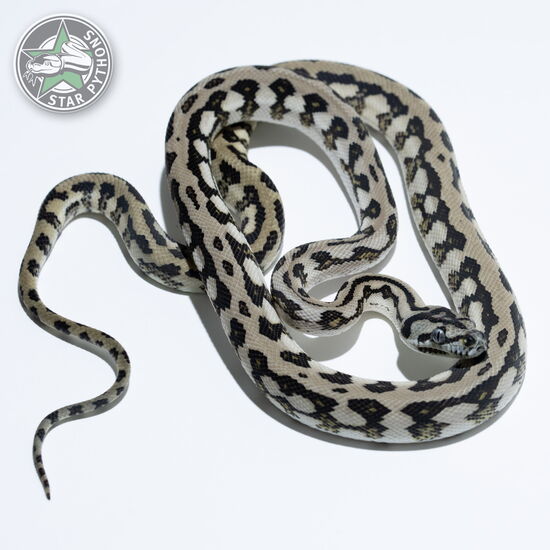
Yes. The two established axanthic lines in the carpet python hobby – Coastal (M. s. mcdowelli) and Papua/Irian Jaya (M. s. harrisoni) – are confirmed allelic, meaning they involve the same genetic locus. Crosses between visual Coastal and visual Papua axanthics produce visual axanthic offspring. This makes them fully compatible in breeding projects from a genetic standpoint. The visual outcome of line crosses will reflect the mixed subspecific background: animals may show intermediate characteristics between the typically lighter Coastal phenotype and the deeper-toned Papua expression. Both lines and their crosses are equally valid for combination projects with other morphs.
What is a Ghost – and how does it relate to axanthic?
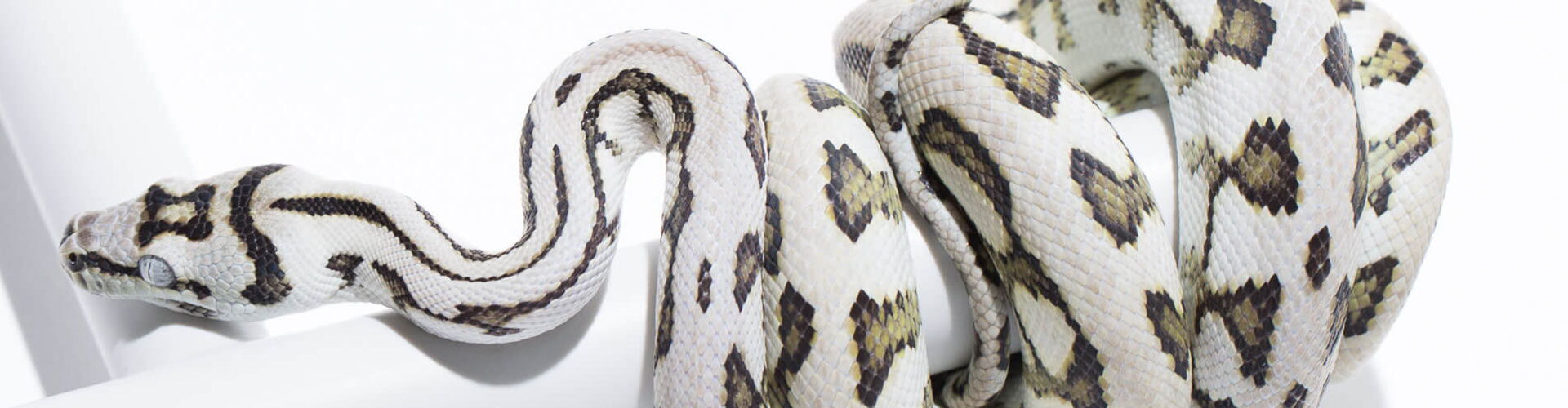
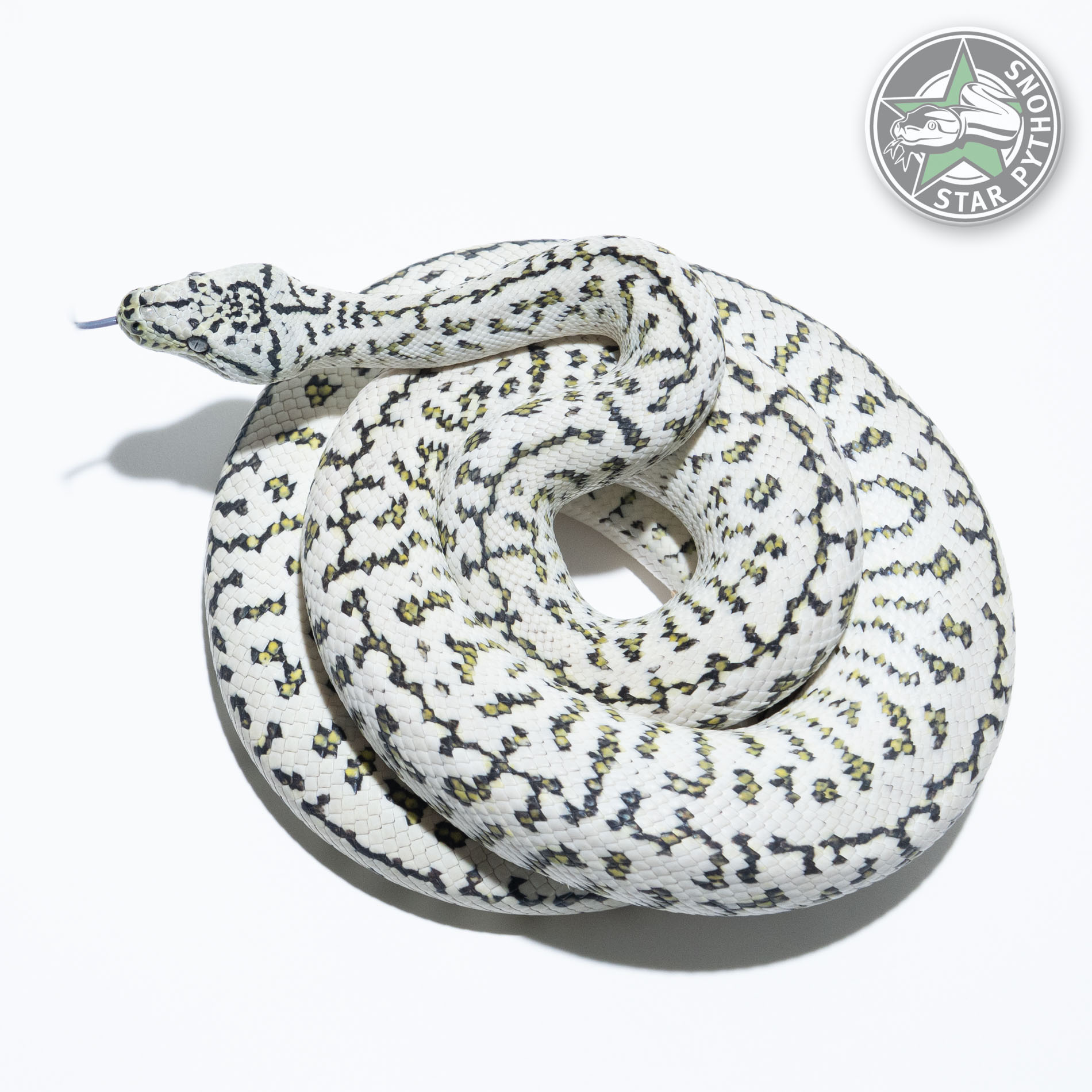
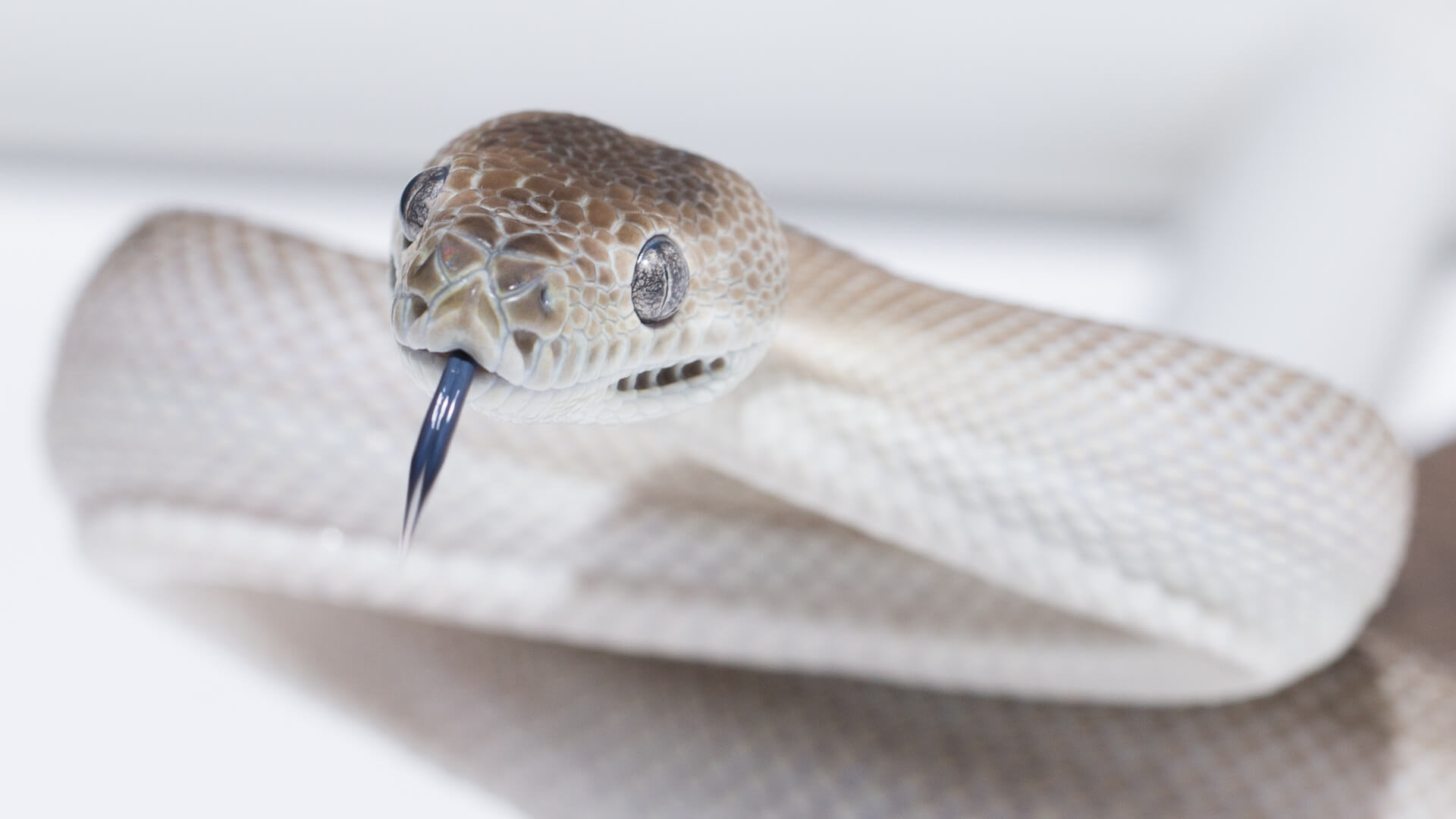
Ghost is the combination of two separate mutations: Hypo (intermediately inherited, reduces melanin expression) and Axanthic (recessive, reduces yellow pigmentation). Where Hypo alone brightens an animal by softening dark tones, and Axanthic alone produces a silver-grey animal by removing yellow, the combination of both results in a pale, silvery-white animal with a washed-out, "ghostly" appearance that gives the combination its name. Producing a visual Ghost requires the Axanthic to be homozygous (from both parents), while even a single copy of Hypo already contributes a visible effect. Ghosts are one of the most popular axanthic combinations and serve as the foundation for more complex multi-gene projects like Ghost Zebra Jaguars and Moonglows.