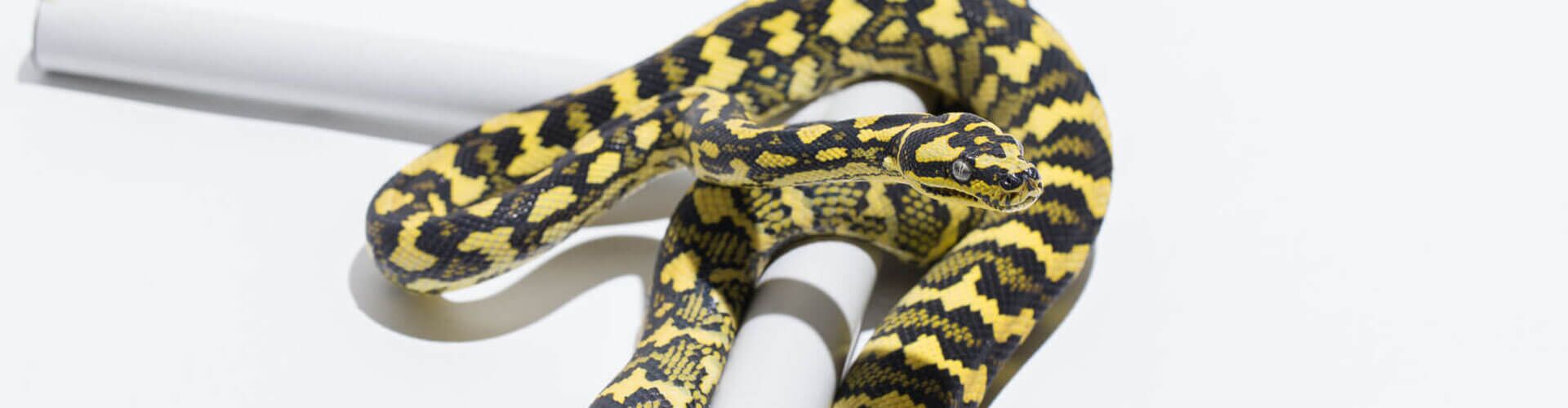
Carpet Python Subspecies – The Morelia spilota Complex
A note on subspecies taxonomy: The subspecies of the Morelia spilota complex presented on this page follow traditionally recognized designations — the same standard used in herpetoculture for many years, CITES documentation, and established breeding records worldwide. It is worth noting that the phylogenetic boundaries within this complex are subject to ongoing scientific debate. Phylogenomic analyses have shown that the M. spilota complex diversified relatively recently and rapidly, which partly explains why molecular distinctions between some subspecies — including the status of M. s. harrisoni and M. s. cheynei — remain scientifically unresolved (Esquerré et al., 2020; Ciavaglia et al., 2015). We follow traditional nomenclature here for clarity and practical consistency, and will revise our designations as scientific consensus develops.
The Morelia spilota complex is one of the most diverse and widespread python groups in the world. Its members inhabit an enormous range of habitats across Australia and New Guinea — from tropical rainforests and humid coastal regions to arid interior landscapes and temperate woodlands. This ecological breadth is reflected in remarkable variation in size, color, and pattern across the complex, making carpet pythons one of the most visually diverse snake groups kept in captivity today.
At StarPythons, we work with all major subspecies of the Morelia spilota complex: M. s. variegata (Darwin Carpet Python), M. s. spilota (Diamond Python), M. s. cheynei (Jungle Carpet Python), M. s. harrisoni (Irian Jaya Carpet Python), and M. s. mcdowelli (Coastal Carpet Python). Our collection is completed by Morelia bredli, the Centralian Carpet Python — a closely related species from the arid ranges of central Australia.
Our breeding program follows two distinct but complementary approaches. For our wild-type lineages, subspecies purity is a core principle — each line is maintained with fully documented ancestry, preserving the natural diversity within the Morelia spilota complex. At the same time, the majority of our breeding program is dedicated to carpet python morphs: genetically defined color and pattern variants that are developed through targeted crosses between subspecies. This deliberate combination of different genetic backgrounds is what makes it possible to produce the wide range of morph combinations that carpet pythons are celebrated for today.
Whether you are looking for a pure wild-type animal with documented lineage or a striking morph combination, feel free to browse our currently available animals or get in touch for personal advice.
Morelia spilota variegata - Darwin Carpet Python
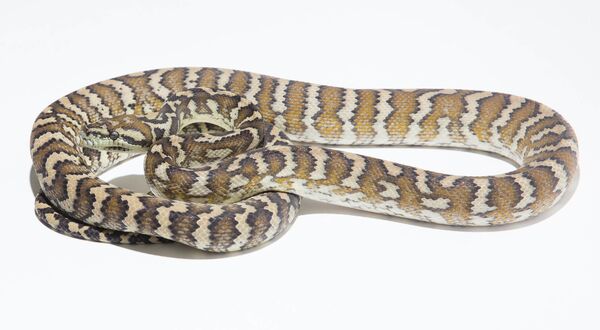
Darwin Carpet Pythons, Morelia spilota variegata, inhabit the northern coast of Australia between the Kimberley in the west and the Cape York peninsula in the east...
Morelia spilota spilota - Diamond Python
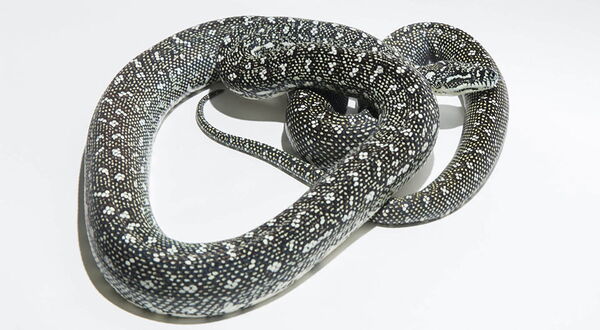
Morelia spilota spilota, commonly known as the Diamond Python, inhabit the east coast of Australia between the north-eastern corner of Victoriaand an area approximately 185 miles north of Sydney...
Morelia spilota cheynei - Jungle Carpet Python
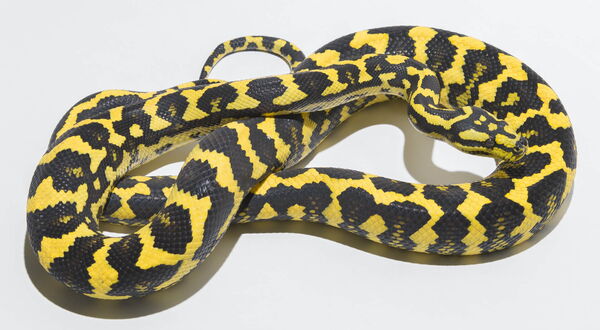
Jungle Carpet Pythons are probably the most popular Carpet Pythons. Their main habitat are the beautiful rain forests in north-eastern Queensland, roughly between Cairns and Townsville...
Morelia spilota harrisoni - Irian Jaya Carpet Python
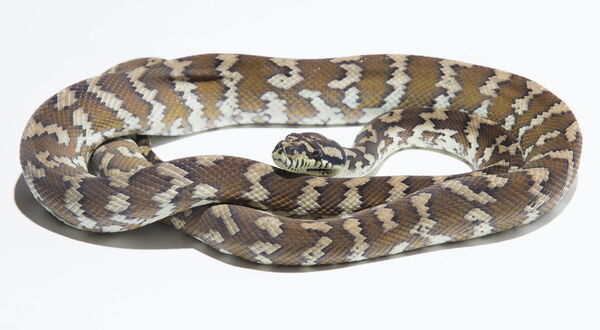
The "IJ" Carpet Python, Morelia spilota harrisoni, is the only Carpet Python that lives outside of Australia. Their habitat is the Island of New Guinea north of Australia, where this subspecies...
Morelia spilota mcdowelli - Coastal Carpet Python
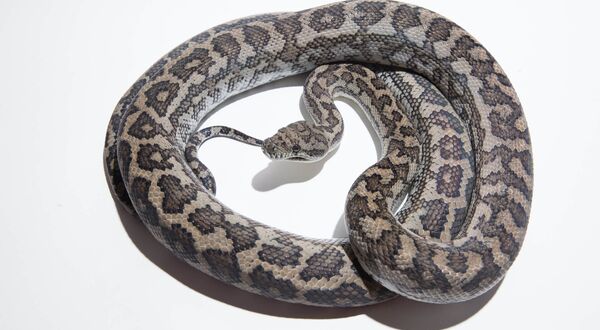
Coastal Carpet Pythons, Morelia spilota mcdowelli, populate a very large area from the northern Cape York Peninsula in Queensland, down the east coast of Australia to the north-easter...
Morelia bredli - Centralian Carpet Python
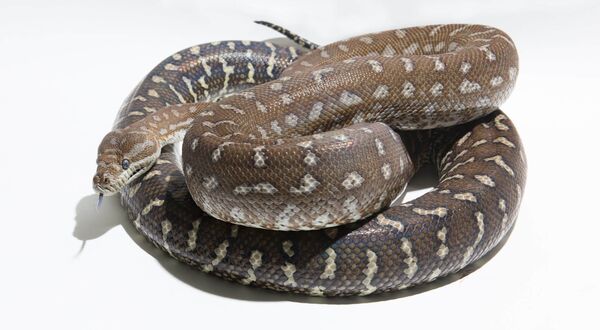
The habitat of Morelia Bredli, also known as the Centralian Python or Centralian Carpet Python, is located around Alice Springs in the south of the Northern Territory...
Latest Carpet Pythons for Sale
References
Ciavaglia, S.A., Tobe, S.S., Donnellan, S.C., Henry, J.M. & Linacre, A.M.T. (2015). Molecular identification of python species: Development and validation of a novel assay for forensic investigations. Forensic Science International: Genetics, 16, 64–70. https://doi.org/10.1016/j.fsigen.2014.12.002
Esquerré, D., Donnellan, S., Brennan, I.G., Lemmon, A.R., Lemmon, E.M., Zaher, H., Grazziotin, F.G. & Keogh, J.S. (2020). Phylogenomics, biogeography, and morphometrics reveal rapid phenotypic evolution in pythons after crossing Wallace's Line. Systematic Biology, 69(6), 1039–1051. https://doi.org/10.1093/sysbio/syaa024