FAQ - Jaguar Carpet Pythons
Is the Jaguar mutation found only in Coastal carpet pythons?
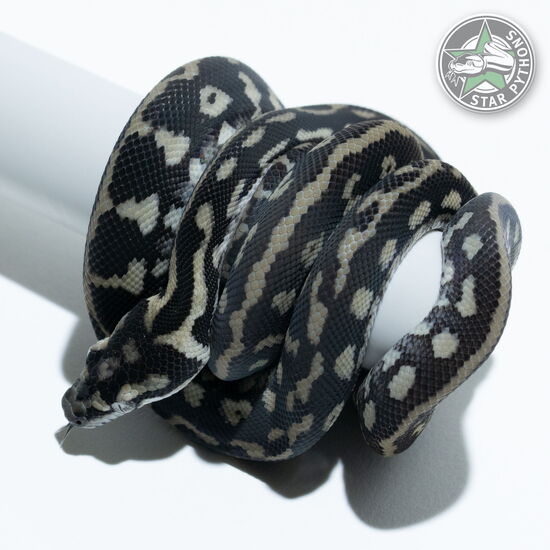
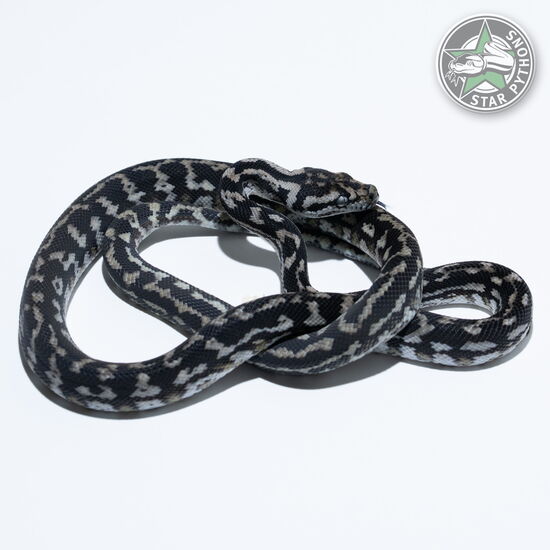
The mutation originated in a Coastal (M. s. mcdowelli) individual in Norway and has not been documented to arise independently in any other subspecies. Jaguar animals on Darwin or Irian Jaya backgrounds exist but are the result of deliberate outcrossing from the original mcdowelli line – designer morphs rather than independent discoveries.
Is the wobble always present in Jaguar carpet pythons?
Yes – to some degree. Every heterozygous Jaguar animal shows neurological signs, but severity varies widely between individuals (Rose & Williams 2014). Some animals show only subtle, intermittent head instability under stress; others show persistent, pronounced coordination deficits. There is no confirmed way to select against neurological severity while maintaining the Jaguar phenotype, as the neurological component appears inseparable from the gene itself.
Can a Jaguar carpet python live a normal life?
For the vast majority of Jaguar carpet pythons, the answer is yes – without qualification. In practice, most animals show no obvious neurological signs under normal husbandry conditions and live entirely normal lives: they feed reliably, grow at a normal rate, and reproduce successfully (Mutton & Julander 2022). A smaller proportion shows mild, intermittent instability that only becomes apparent under specific circumstances such as feeding, without meaningfully affecting quality of life. Only a small minority of individuals is more severely affected to a degree that requires any adjustment to husbandry. Quality of life should always be assessed on an individual basis, but the experience of breeders working with this morph over decades reflects that severely affected animals represent the exception rather than the rule.
Are there any published studies specifically on Jaguar carpet pythons and wobble?
Not as of the time of writing. The neurological association is documented in veterinary and hobby literature, but no peer-reviewed anatomical or genetic study has characterised the mechanism in Morelia spilota Jaguar animals specifically. The best available comparative data comes from work on the Spider ball python, where µCT imaging has demonstrated inner ear malformations as a morphological correlate of wobble (Starck et al. 2022). Whether an analogous mechanism operates in Jaguar carpet pythons is an open and uninvestigated research question.
What exactly is a Super Jaguar, and why does it die?
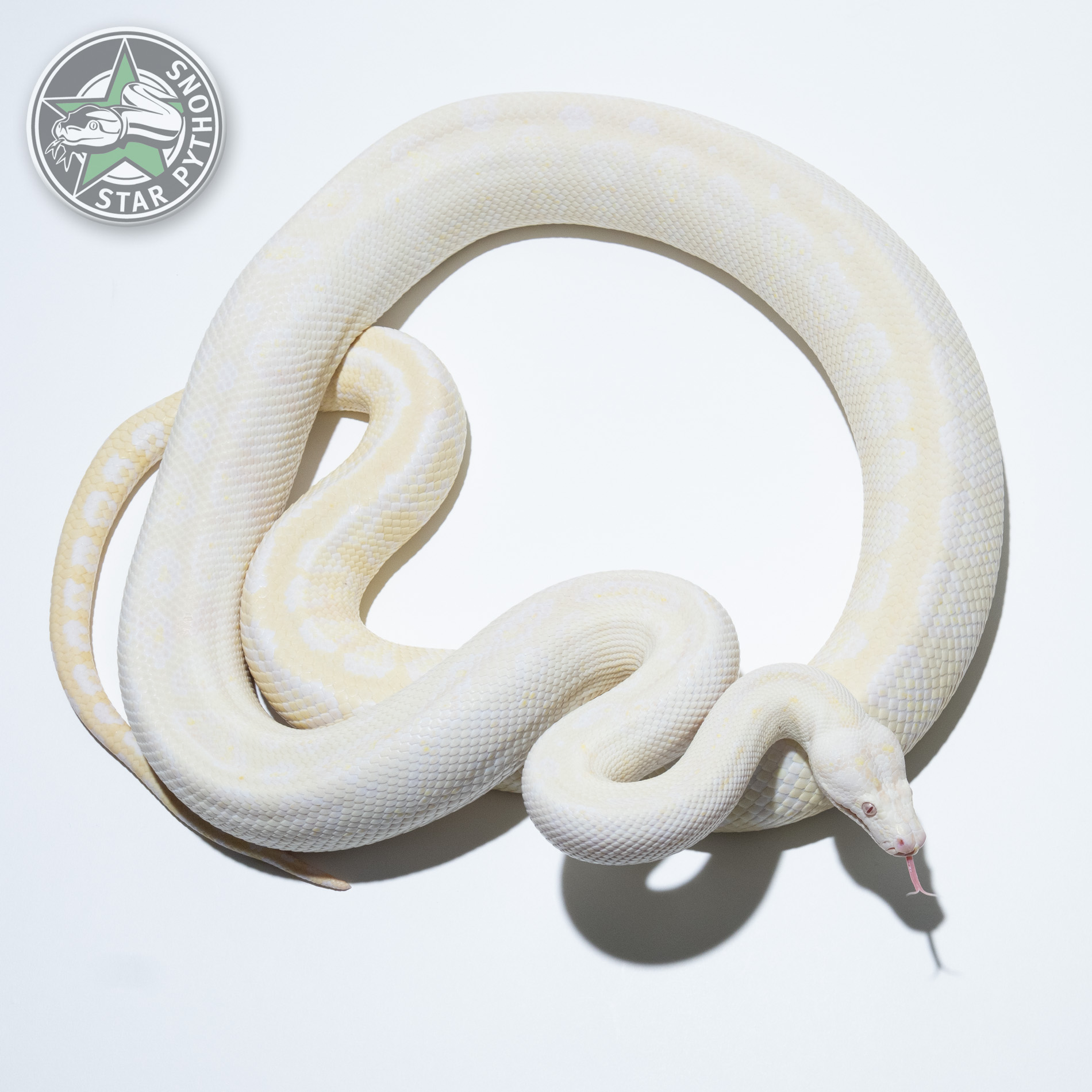
A Super Jaguar is a homozygous animal with two copies of the Jaguar allele. It is fully leucistic – entirely white with black eyes – because melanophore migration into the skin is completely absent at both gene doses. The black eyes distinguish it from albinism: melanin synthesis is intact, but skin melanophores never established during development. Super Jaguars die due to a malformation of the lungs, which fail to develop correctly; many die during incubation, and those that reach full term typically die within hours of hatching (Mutton & Julander 2022). No Super Jaguar has been documented to survive.
Why does the Super Jaguar have black eyes if it is entirely white?
The retinal pigment epithelium of the eye derives from the neuroectoderm – the same embryonic tissue that forms the brain and spinal cord – rather than from the neural crest. It is therefore not affected by the Jaguar allele, which disrupts neural crest-dependent melanophore migration. The skin lacks melanophores; the eye retains its normal pigment. This is the defining difference between leucism and albinism.