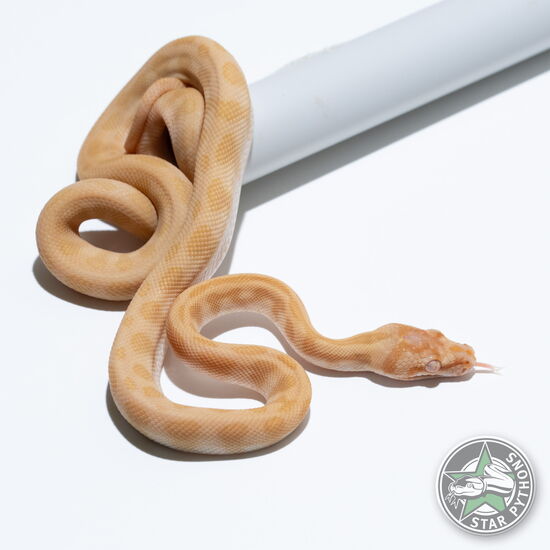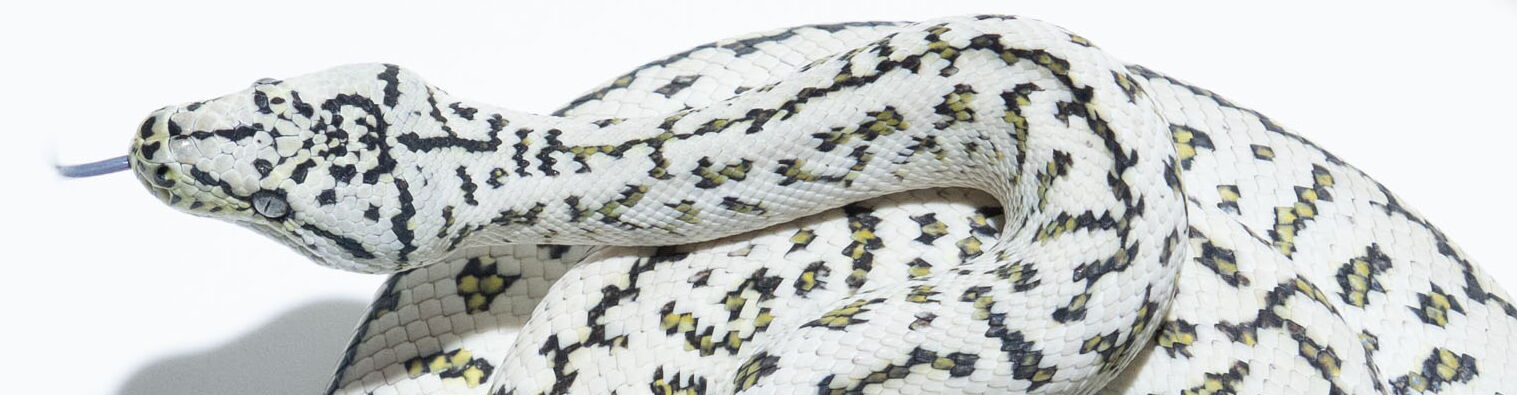
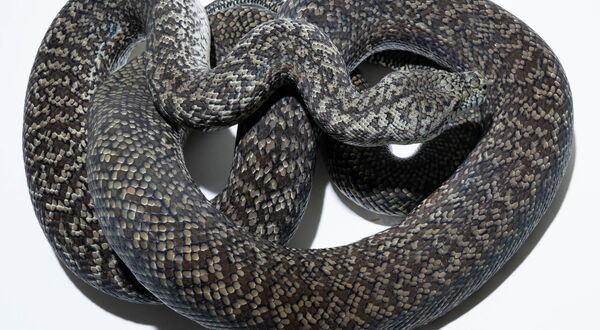
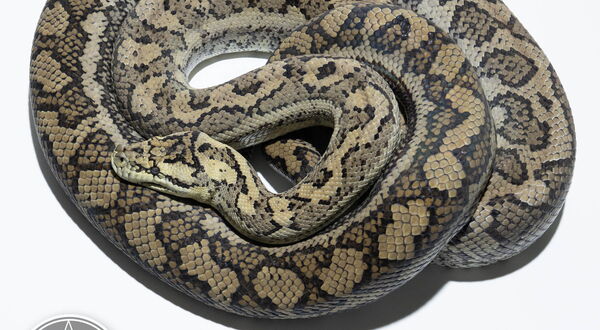
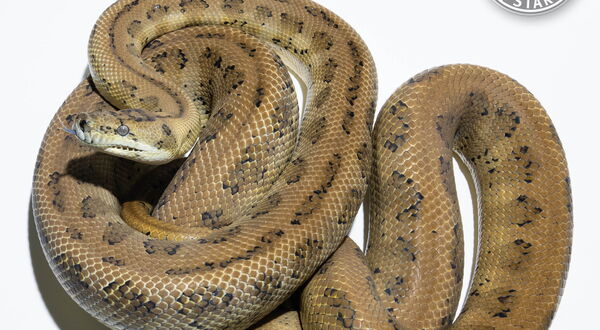
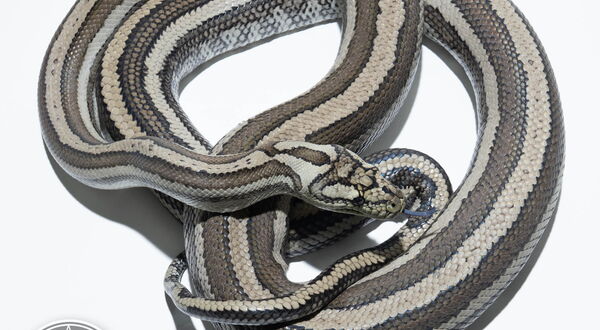
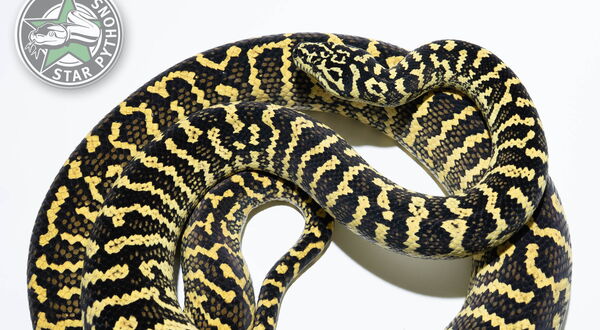
Axanthic Granite Jaguar carpet python male (Morelia spilota), hatched 2024 – StarPythons

Carpet Python Morphs

A note on subspecies taxonomy: The color and pattern mutations described on this page are assigned to subspecies of the Morelia spilota complex following traditionally recognized designations — the same standard used in herpetoculture for decades, CITES documentation, and established breeding records worldwide. It is worth noting, however, that the phylogenetic boundaries within this complex are subject to ongoing scientific debate. Phylogenomic analyses have demonstrated that the M. spilota complex diversified relatively recently and rapidly, which partly explains why molecular boundaries between subspecies — including the status of M. s. harrisoni and M. s. cheynei — are not always sharply defined (Esquerré et al., 2020; Ciavaglia et al., 2015). We retain traditional designations here for clarity and practical consistency, and will update our nomenclature as scientific consensus develops.

Natural vs. Designer Morphs

At StarPythons we distinguish between two categories of Carpet Python morphs: natural (pure) morphs and designer morphs (hybrids).

Natural morphs are color or pattern mutations that originated and can be reproduced within a single subspecies lineage. A well-documented example is the Granite mutation in Irian Jaya Carpet Pythons (Morelia spilota harrisoni) — as long as lineage records confirm the animals come from a pure IJ line, the mutation is considered natural and subspecies-pure.
Designer morphs combine mutations that originate from different subspecies — animals that would never meet in the wild. The Albino Granite, for example, crosses Darwin Albinos (M. s. variegata) with IJ Granites (M. s. harrisoni). The ocean between northern Australia and Papua New Guinea makes a natural encounter virtually impossible; this combination can only exist in captivity.

The key factor in both cases is traceable lineage documentation. With reliable records, some combinations can still be pure — IJ Axanthic Granites, for instance, are possible because both Axanthic (Papuan line) and Granite are documented mutations within M. s. harrisoni. We are very happy to work with these stunning animals. When choosing your first morph, focus on genetics, expected adult appearance, and ethical considerations — particularly relevant for Jaguar-related combinations. Take a look at our currently available animals to see what we have in stock.

Morph Overview

Below is a quick reference of the most established Carpet Python morphs we work with at StarPythons, including inheritance, subspecies origin, and key visual traits.

Morph Inheritance Origin (subspecies) Key visual traits Notes
Albino recessive Darwin (M. s. variegata) No black pigment; high contrast whites and yellows Verify line — Darwin vs. hybrid origin
Axanthic recessive Papuan / IJ (M. s. harrisoni) and Coastal (M. s. mcdowelli) Reduced or absent yellow; grayscale appearance Always specify line; Papuan and Coastal Axanthic are compatible
Caramel incomplete dominant Coastal (M. s. mcdowelli) Warm caramel and brown tones; altered contrast Sometimes confused with Hypo by beginners; genetically distinct
Granite recessive Papuan / IJ (M. s. harrisoni) Dense micro-speckling; "granite" pattern noise Cornerstone gene for many designer combinations
Hypo incomplete dominant Coastal (M. s. mcdowelli) Reduced melanin; cleaner pattern; bright super form Line consistency and adult appearance matter significantly
Jaguar incomplete dominant Coastal (M. s. mcdowelli) Bold broken pattern; striking in combinations Avoid Jaguar × Jaguar — super form is non-viable
Tiger polygenic Coastal (M. s. mcdowelli) Longitudinal striping enhanced through line selection Not a single-gene mutation; intensified by selective breeding
Zebra incomplete dominant Jungle (M. s. cheynei) Irregular striping; Super Zebra lack pattern Powerful pattern morph; excellent in combinations

Explore Each Morph in Detail

Albinos

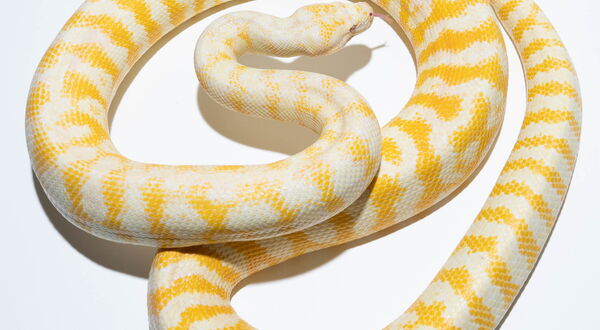
Albino carpet python (Morelia spilota variegata) – tyrosinase-negative color mutation with white and yellow patterning | StarPythons

The simple recessive, tyrosinase-negative (T-), Albino mutation first occurred in Darwin Carpet Pythons, Morelia...

Learn more

Axanthics

Axanthic carpet python (Morelia spilota harrisoni) – recessive mutation with reduced yellow pigment and grayscale appearance | StarPythons

Axanthism, a strongly reduced yellow pigmentation, is a simple recessive mutation that was first seen in Coastal Carpet...

Learn more

Caramels

Caramel carpet python (Morelia spilota mcdowelli) – incomplete dominant mutation with warm caramel and brown tones | StarPythons

The incomplete-dominant Caramel morph was found in Coastal Carpet Pythons, Morelia spilota mcdowelli. They are distinguished...

Learn more

Granites

Granite carpet python (Morelia spilota harrisoni) – recessive mutation with dense micro-speckling from the Piet Nuyten lineage | StarPythons

The simple recessive Granite mutation spontaneously occurred in Irian Jaya Carpet Pythons, Morelia spilota harrisoni...

Learn more

Hypos

Hypo carpet python (Morelia spilota mcdowelli) – pure Coastal hypomelanistic morph with reduced dark pigmentation | StarPythons

Hypomelanistic Carpet Pythons, also known as „Hypos“, belong to the newest Carpet Python morphs available to us outside of Australia...

Learn more

Jaguars

Jaguar carpet python (Morelia spilota mcdowelli) – incomplete dominant mutation with bold broken pattern | StarPythons

The incomplete-dominant Jaguar mutation was found in Coastal Carpet Pythons, Morelia spilota mcdowelli, in a private collection in Norway...

Learn more

Tigers

Tiger carpet python (Morelia spilota mcdowelli) – polygenic pattern mutation with broad dorsal and lateral striping | StarPythons

The Tiger morph is a polygenic pattern mutation in Coastal Carpet Pythons (Morelia spilota mcdowelli), producing distinctive longitudinal...

Learn more

Zebras

Zebra carpet python (Morelia spilota cheynei) – incomplete dominant mutation with irregular striping, German Bloodline | StarPythons

Zebra Carpet Pythons randomly popped up in captive bred Jungle Carpet Pythons, Morelia spilota cheynei, in a private collection in Europe...

Learn more

Choosing the Right Morph

Selecting a morph is about adult appearance, genetics, and responsible breeding. If you are looking for a straightforward starting point, established recessives like Albino, Axanthic, or Granite are a solid choice — provided the animals come with documented lineage. For pattern morphs, Zebra and Jaguar produce some of the most visually striking combinations available in the Carpet Python hobby today. Browse our currently available animals to find your next Carpet Python.

FAQ - Carpet Python Morphs

Which morphs keep strong contrast as adults?

Albino and many Axanthic-based animals often retain high contrast. That said, line and individual variation matter; asking for adult photos of relatives is helpful.

What is the difference between a “natural” morph and a “designer” morph?

A natural morph is a color/pattern mutation that exists and can be reproduced within one subspecies lineage. A designer morph combines mutations from different subspecies and therefore relies on captive breeding plus documented lineage records.

Can a morph combination be “pure” even if it looks like a designer?

Yes — if both genes are documented within the same subspecies lineage. A common example is IJ/Papuan Axanthic Granite, where both Axanthic and Granite can be traced in Morelia spilota harrisoni lines.

What does “recessive” mean in Carpet Python morph genetics?

A recessive morph is only visible when a snake inherits two copies of the gene—one from each parent. Animals with just one copy look normal but are heterozygous ("het") and can pass the gene on. In practice, recessive projects are predictable, but visual results depend on whether both parents carry the gene.

What’s the difference between incomplete dominance and true codominance?

A simple analogy is flower color genetics: if red × white produces pink, that's incomplete dominance (the heterozygote is intermediate). In true codominance, both traits show clearly at the same time—think of a pattern where red and white appear side-by-side, not blended into a single intermediate color. That's why most reptile traits called "co-dominant" are more accurately described as incomplete dominant.

Are there morph-specific care differences?

In most cases, baseline Carpet Python husbandry stays the same. Differences are usually about adult appearance and responsible breeding, not special temperatures or feeding "because of the morph".

Is it ethical to breed Jaguar Carpet Pythons? What about “wobble”?

Jaguar Carpet Pythons can be bred responsibly, but it's important to address the so-called "wobble"—a term keepers use for variable neurological signs such as head tilt, reduced coordination, or occasional disorientation, often more noticeable under stress or during feeding. The severity can range from barely noticeable to significant, and while many animals appear only mildly affected, any individual may show signs at some point. Comparable "wobble" discussions are well documented in other morph projects (e.g., Spider Ball Pythons), where stress and arousal can influence how strongly symptoms present.

Are Caramel and Hypo the same morph?

No. Caramel and Hypo are two distinct mutations — they can look somewhat similar in "brightness" or reduced darkness, but they are not interchangeable genetically or in naming. They are separate incomplete dominant traits with their own characteristic expression and combinations.

What does “Ghost” mean — and why isn’t Caramel Axanthic a Ghost?

In terminology, Ghost = Hypo + Axanthic. A Caramel Axanthic is not a Ghost, even if it appears pale or "clean." For consistent communication, "Ghost" should only be used for Hypo-based Axanthic animals.

Why are animals sometimes mislabeled as “Ghost”?

Because some combinations (especially Caramel + Axanthic) can resemble the "clean" look people associate with Ghost. But the label must follow the genetics: Ghost is defined by Hypo + Axanthic, not by a similar-looking phenotype.
References

Ciavaglia, S.A., Tobe, S.S., Donnellan, S.C., Henry, J.M. & Linacre, A.M.T. (2015). Molecular identification of python species: Development and validation of a novel assay for forensic investigations. Forensic Science International: Genetics, 16, 64–70. https://doi.org/10.1016/j.fsigen.2014.12.002

Esquerré, D., Donnellan, S., Brennan, I.G., Lemmon, A.R., Lemmon, E.M., Zaher, H., Grazziotin, F.G. & Keogh, J.S. (2020). Phylogenomics, biogeography, and morphometrics reveal rapid phenotypic evolution in pythons after crossing Wallace's Line. Systematic Biology, 69(6), 1039–1051. https://doi.org/10.1093/sysbio/syaa024

Latest Carpet Pythons for Sale

This beautiful male Hypo het Axanthic carpet python with id 25-257 is for sale.
Animal ID: 25-257

Hypo het Axanthic

800 € US$ 900 ₩ 1,299,000

Details

This beautiful female Caramel Axanthic Tiger (pure Coastal) carpet python with id 25-551 is for sale.
Animal ID: 25-551

Caramel Axanthic Tiger (pure Coastal)

800 € US$ 850 ₩ 1,299,000

Details

This beautiful male Sunglow Jaguar carpet python with id 25-078 is for sale.
Animal ID: 25-078

Sunglow Jaguar

1.600 € US$ 2,100 ₩ 3,099,000

Details